
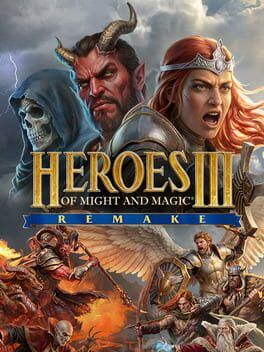
Ubisoft has announced Heroes of Might and Magic III Remake for 2027, rebuilding the 1999 turn-based strategy classic in 3D while promising campaign, multiplayer, editor, and community-map support.
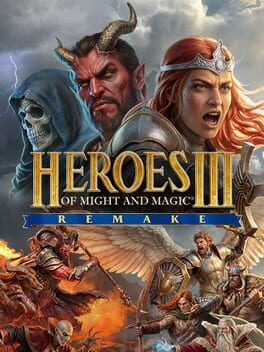
Image: IGDB
Store links: Heroes of Might and Magic III Remake on Steam
Ubisoft is remaking the most dangerous kind of classic
Ubisoft has announced Heroes of Might and Magic III Remake, a full rebuild of the 1999 turn-based strategy RPG for 2027 on PC, PlayStation 5, and Xbox Series X|S. The concrete news is straightforward. The tension is not. Ubisoft is remaking the entry that multiple outlets describe as the series’ best-regarded or definitive fan favorite, while promising to modernize its presentation without disturbing the systems that kept players building towns, chaining heroes, and calculating army growth for decades.
According to Ubisoft’s own announcement, Heroes of Might and Magic III Remake is being rebuilt from the ground up in Snowdrop, replacing the original fixed 2D isometric view with a fully 3D world and free camera control. Ubisoft also lists 4K visuals, dynamic lighting, real-time weather, shifting seasons, a modern audio system, voice acting, layered music, and new cues tied to combat, spellcasting, and morale shifts.
That is a large technical and sensory swing for a game whose identity is tied to readability, tile-by-tile map logic, and a very particular tempo of turns. PCGamesN reports that the turn-based gameplay that made the original work will remain untouched, while Ubisoft’s announcement says the remake will add quality-of-life improvements, new features, and planning and decision-making tools. Those statements are compatible on paper, but they define the central question before launch: where does convenience end and strategic texture begin?
What is actually included in the Heroes of Might and Magic 3 remake
Ubisoft says the remake includes the original game’s continent, the original campaigns, and both major expansions, Armageddon’s Blade and The Shadow of Death. That matters because Heroes of Might and Magic III has already had a prior refresh, the 2015 HD Edition noted by PCGamesN, but the new project is being presented as a more complete, ground-up remake rather than a visual cleanup.
The faction list is also confirmed. Ubisoft names Dungeon, Fortress, Stronghold, Necropolis, Inferno, Castle, Tower, Rampart, and Conflux, meaning all nine iconic factions are part of the package. Console Creatures similarly reports that the remake features nine factions, each with its own playstyle and creatures.
The campaign structure is being changed. Ubisoft says the story is now woven into a single, continuous experience, with a new introductory prologue campaign intended to ease players into the world and mechanics. Rock Paper Shotgun, which says it played the remake for a few hours, describes this as a new three-mission prelude before players move into the original campaign and the two expansions. Console Creatures also reports a unified story with a new prologue, epilogue, and cinematics, while Ubisoft’s own article specifically confirms the prologue and fully produced cinematics. An epilogue may be part of the broader campaign presentation, but Ubisoft’s supplied announcement text here does not explicitly list it.
The official platform plan is clearer. Ubisoft lists PS5, Xbox Series X|S, and PC for 2027. Neowin reports that the PC version is planned for Ubisoft Connect, Steam, and the Epic Games Store, and Noisy Pixel adds that the remake will be available through Ubisoft+. PCGamesN reports that there is no exact release date or price yet, and that the game is already available to wishlist on Steam.
Why Heroes 3 remains the benchmark for turn-based strategy
The case for Heroes 3 as a benchmark is not built on nostalgia alone. It comes from the way its systems create long-term decisions from simple, legible ingredients. Rock Paper Shotgun describes the core loop as an unusual blend of turn-based strategy and RPG: hero generals move across a board-like adventure map, collect resources, interact with buildings and guarded objects, level up through combat, and improve their stats through passive upgrades. Those resources feed town construction and army growth, while tactical battles resolve on a grid.
The important strategic trick is scarcity. Rock Paper Shotgun notes that, unlike some strategy games where players can hire as many troops as they can afford, Heroes strongholds spawn a set number of units. That single economy rule turns time into a resource. You are not simply asking whether you can afford an army. You are asking whether to recruit now, whether to wait for growth, whether to split stacks, whether to risk a fight with a weakened hero, and whether a mine, artifact, or secondary town is worth losing tempo elsewhere.
The remake’s promise to retain all nine factions is central to that identity. Factions in Heroes are not cosmetic rosters. They shape army composition, map pressure, spell priorities, town development, and how quickly a player can convert local resources into military advantage. Ubisoft’s announcement does not detail balance adjustments, so it is too early to say how closely the remake will preserve the original metagame. The confirmed inclusion of the factions and expansions, however, suggests Ubisoft understands that Heroes 3’s reputation lives in the interaction between adventure-map economy, hero growth, creature production, and tactical combat.
The other proof is community endurance. Ubisoft says the remake will preserve compatibility with thousands of maps and campaigns made by players over the past 25 years. Rock Paper Shotgun reports that Ubisoft demonstrated original map files being imported into the remake’s map creator, which then built a modern-looking level from the old data. For a strategy game, that is a stronger legacy signal than a remastered texture sheet. It means the remake is being judged against an active body of scenarios, habits, and player-made design language.
The 3D rebuild is the biggest opportunity and the biggest risk
Ubisoft’s Snowdrop rebuild gives the Heroes of Might and Magic 3 remake its marketable upgrade: 4K visuals, 3D environments, free camera control, weather, lighting, and seasons. Neowin attributes development to Ubisoft’s Chengdu and Shanghai studios and quotes Ubisoft developers describing the visual and audio work as an attempt to balance nostalgia and modernity. The publisher’s own post frames the new presentation as a way to bring Erathia’s biomes and battlefields up to modern standards.
For many remakes, that would be the easy win. For a turn based strategy remake, presentation is also interface. Heroes 3 depends on players rapidly parsing passable terrain, town locations, creature stacks, mines, roads, one-way gates, and battle odds. A 3D free camera can make maps more dramatic, but it must not make information harder to read. If a player has to rotate the camera to confirm what was instantly clear in 2D, the remake has taxed the decision layer.
Rock Paper Shotgun’s hands-on impression is encouraging on tone. The outlet says Ubisoft has done a faithful job recreating the much-loved turn-based strategy RPG and argues that the remake understands the original’s high-fantasy look, from pristine heroes to unrepentant villains. That is a reported early impression, not a final verdict. The sharper test will come from dense maps, late-game armies, and imported community scenarios where clarity matters more than scenery.
Audio changes are another watch point. Ubisoft confirms voice acting, layered tracks, ambient effects, and sonic cues tied to gameplay events such as morale shifts. Those cues could help new players read battle state more intuitively. They could also change the rhythm of a game many veterans know by pace and repetition. The safest expectation is that these systems are designed to support feedback rather than change rules, since no source here reports new combat mechanics.
Community maps may decide whether veterans trust this remake
The most consequential confirmed feature may be original community-map compatibility. Ubisoft says thousands of maps and campaigns created over 25 years will be playable from day one, with updated editor tools and a new in-game UGC hub for discovering, downloading, and sharing content. Rock Paper Shotgun calls out the ability to import original map files into the new map creator, which is a practical bridge between legacy players and the remake’s new toolset.
That is smart product strategy. It gives the remake a library of content beyond Ubisoft’s campaigns and reduces the risk that veterans treat the new version as a museum piece. It also creates a technical obligation. Imported maps need to preserve pathing, object placement, guard logic, resource pacing, and scenario intent. A map balanced around a choke point, a one-day movement threshold, or a specific creature stack can change if the conversion alters readability or geometry in subtle ways.
The editor and UGC hub also suggest Ubisoft is designing the remake as a platform for long-tail play. Neowin reports that an editor will ship with the remake, while Ubisoft confirms updated tools and sharing features. For a strategy audience, this is where launch support often matters as much as launch content. If the editor is powerful and compatibility is reliable, the remake inherits decades of design. If conversion is inconsistent, the feature becomes a promise players have to test map by map.
There is one related availability note for series preservation. Neowin reports that the original Heroes of Might and Magic III Complete has arrived on Steam for the first time alongside the remake announcement. For players deciding whether to wait, that gives the old game a clearer modern storefront path while Ubisoft finishes the remake.
Multiplayer modernization will change the pace, even if the rules stay familiar
Ubisoft confirms up to eight players in a revamped online mode, improved matchmaking, a simultaneous turn system, and the return of Hot Seat. Console Creatures also reports online and local play for up to eight players. For a Might and Magic strategy game, simultaneous turns are a practical answer to a very old problem: downtime. Large Heroes matches can become a waiting-room exercise when every player resolves scouting, town management, combat, and hero movement sequentially.
The design risk is timing pressure. Classic Heroes multiplayer is shaped by turn order, scouting information, and the moment when two players’ expansion paths collide. Simultaneous turns can preserve early-game pace, especially while players are far apart, but the implementation needs clear rules for conflict, vision, and contested objectives. Ubisoft has confirmed the feature, but the source material does not yet explain how simultaneous turns stop, resolve, or transition when players interact directly.
Hot Seat returning is a good sign for preservation. It acknowledges that Heroes has always had a social format outside ranked online play. Local pass-and-play is slow, but it fits the board-game texture Rock Paper Shotgun identifies in the original. The remake’s online tools may be where Ubisoft wins new players, while Hot Seat helps avoid alienating the audience that treated Heroes 3 as a shared household strategy ritual.
Balance is still an open file. No source here confirms faction rebalancing, spell changes, creature-stat edits, economy tuning, or campaign difficulty adjustments. Until Ubisoft explains that layer, players should assume the announced modernization is focused on presentation, campaign flow, usability, multiplayer infrastructure, audio, and content tools rather than a redesigned competitive meta.
What to watch before launch in 2027
The practical picture is this: Heroes of Might and Magic III Remake is announced for 2027 on PS5, Xbox Series X|S, and PC, with PC storefront reporting pointing to Ubisoft Connect, Steam, and Epic Games Store. No exact release date, PC requirements, console performance targets, upgrade path, or price has been confirmed in the supplied sources. PCGamesN specifically notes that price and exact date remain unconfirmed.
Players should watch for four concrete disclosures before committing. First is interface footage from real maps, especially busy late-game scenarios, because the 3D camera must serve strategic readability. Second is the exact scope of quality-of-life and planning tools. Ubisoft has confirmed them, but has not detailed examples in the provided announcement text. Tools that reduce friction are welcome. Tools that expose too much hidden calculation could flatten part of Heroes 3’s decision economy.
Third is community-map conversion quality. Ubisoft’s compatibility pledge is ambitious and valuable, but veteran confidence will come from seeing difficult legacy maps imported without broken pathing, pacing, or scenario logic. Fourth is multiplayer rules documentation, especially how simultaneous turns behave when heroes approach the same objective or enemy movement becomes relevant.
The Heroes 3 remake announced by Ubisoft is therefore neither a simple nostalgia play nor a guaranteed safe win. The confirmed package is substantial: original campaigns, both expansions, all nine factions, 3D Snowdrop visuals, modern audio, online play, Hot Seat, editor tools, UGC support, and legacy map compatibility. The unresolved question is whether those upgrades respect the original’s strategic economy as carefully as they refresh Erathia’s surface. For a game that remains a benchmark because every turn is a chain of resource, movement, and risk calculations, that is the whole campaign before launch.