
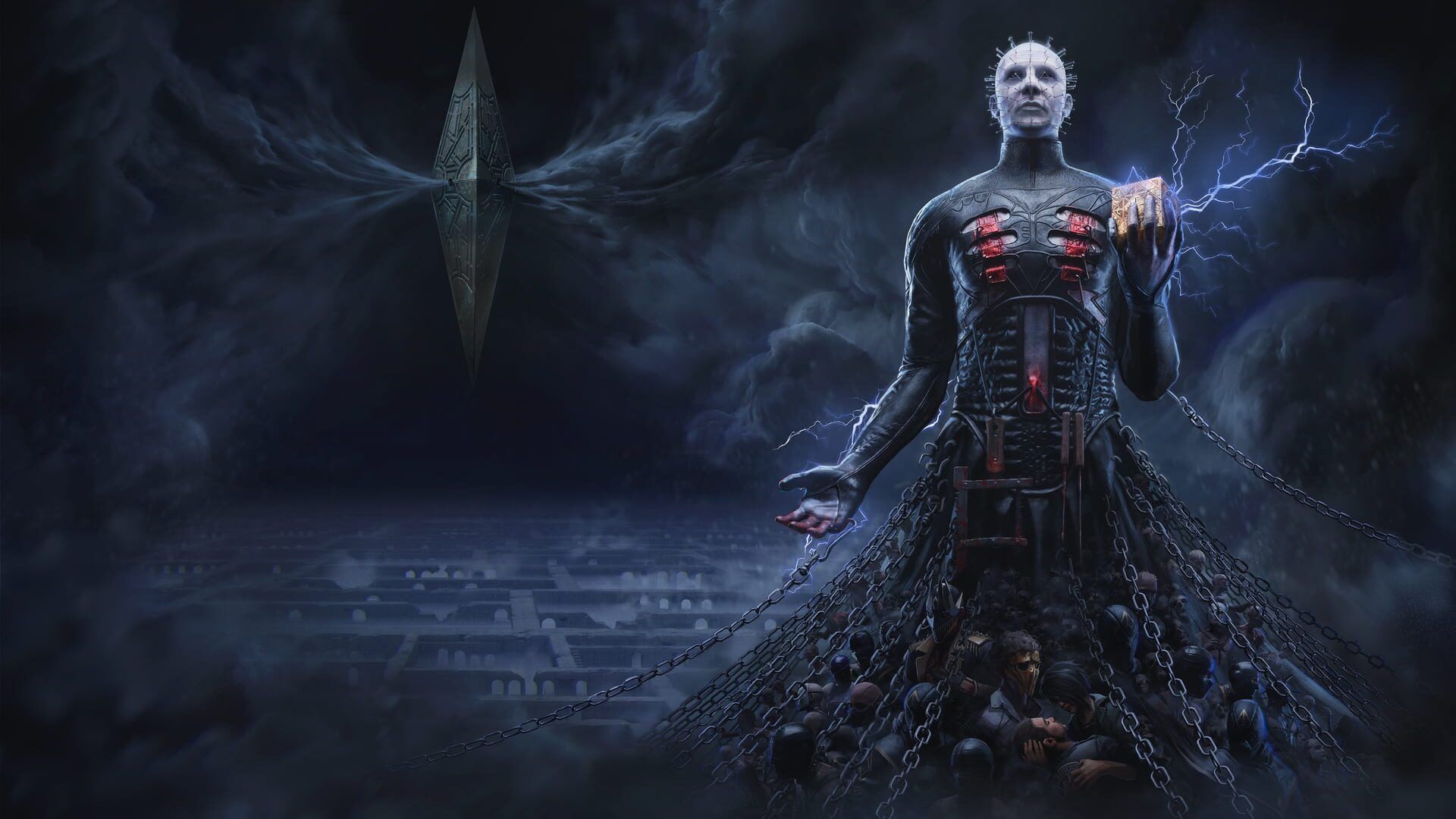

Saber Interactive’s new Hellraiser: Revival trailer sells a twisted love story built around Pinhead, the Cenobites and first-person survival-horror, staking out space beside Alien: Isolation and Robocop: Rogue City instead of the usual asymmetrical multiplayer template.
Hellraiser has always treated love as something sharp enough to draw blood. Clive Barker’s original story and films tangled desire, devotion and mutilation into one awful knot. The new “love story” trailer for Hellraiser: Revival takes that heritage and wraps it around a Valentine’s Day bow, then pulls the ribbon tight until it hurts.
This latest look at Saber Interactive and Mad Head Games’ first person survival-horror spin on Hellraiser is a Valentine’s spotlight that actually understands the license. It is not another asymmetrical multiplayer chase. It is a single player, story-led descent into the Labyrinth where romance is both motive and weapon.
A love story bound to a puzzle box
The trailer frames everything through Aidan and Sunny, a couple who clearly started in a very human place. We see fragments of tenderness and domesticity, but every moment feels already contaminated by the box. Saber leans hard into the idea that this relationship is a slow sacrifice, not just a tragic backstory.
Sunny becomes the object of the Cenobites’ “devotion,” a prize dragged into their world. Aidan’s love is what pulls him in after her. Rather than positioning him as a random victim, the trailer casts him as someone who has already bargained with forces he does not understand. That choice to center mutual obsession rather than simple victimhood fits Hellraiser in a way few of the films after the original have managed.
At the core is the Genesis Configuration, a new puzzle box for the game. Voiceover and snippets of dialogue make it clear this is not only a key to the Labyrinth, but a conduit for power. The love story hook works because Aidan’s feelings for Sunny are now bound to this object. Every time he twists its pieces to survive, he is deepening the same pact that stole her away.
Translating Cenobites into first person survival horror
Hellraiser: Revival is not hiding behind suggestion or off-screen horrors. The trailer is all first person, all physical. Sabers interpretation of the Cenobites is about presence. They dominate the frame, filling your view with pale flesh, hooks, leather, and the clink of chains. You are always at human height, looking up into their geometry of wounds.
Pinhead is introduced with deliberate restraint. The camera lingers on the familiar grid of nails and carved flesh, but the performance is about control more than jump scares. Saber and Mad Head seem to understand that Pinhead works best as a judge and negotiator. In-game that likely translates into sequences where the player is immobilized or constrained while he talks, forcing you to listen and look, not run.
Other Cenobites, some recognizable in silhouette and others seemingly original to the game, fill out the encounters. Here their design matters as much for gameplay as for shock value. Heavy, slow figures look built for stalking segments in narrow corridors, while more agile monstrosities glimpse through shifting walls and alcoves, hinting at ambushes and chase scenes through the Labyrinth’s shifting architecture.
The Labyrinth itself is treated almost like the biggest Cenobite of all. The trailer shows corridors of veined stone, industrial chambers hung with meat and chains, and impossible vistas where human-scale stairways open onto cosmic voids. That environmental design supports the first person angle by constantly framing the player at the point where mundane space tears open into something ritualistic.
Moment to moment: what the trailer shows of actual play
Beneath the Valentine’s theming the trailer is careful to seed real gameplay detail. Most of what we see suggests a blend of exploration, stealth, and tactical combat, chained together by scripted set pieces.
In exploration shots Aidan moves slowly through tight halls and puzzle-box inspired rooms. Lighting is sparse and specific: single swinging bulbs, candles on altars, slivers of daylight slicing across dark interiors. These spaces are filled with interactable objects, cult paraphernalia, and scattered bodies, hinting at environmental storytelling instead of boilerplate key hunting.
Stealth segments look like they lean into that sense of vulnerability. We see Aidan inching around corners while hooks drag bodies down adjacent corridors, and one shot places a Cenobite directly ahead, back turned, as the player ducks into the dark to avoid detection. There is less noise and HUD clutter here than in a typical action horror game, suggesting that line of sight and audio cues are critical.
Combat, when it occurs, is brutal and deliberate. The trailer briefly shows melee attacks and improvised weapons tearing through cultists rather than Cenobites themselves. The obvious implication is that regular humans are fodder while true denizens of the Labyrinth are closer to bosses or unkillable stalkers. This dynamic mirrors the films, where Cenobites seldom die and instead appear as inevitable consequences.
The Genesis Configuration appears as the mechanic that stitches these layers together. Quick cuts show Aidan manipulating the box, sending arcs of energy down corridors, forming temporary barriers, or stunning enemies long enough to escape. There are flashes of what looks like time-slowing and spectral vision, too, hinting that the box provides different modes that guide both navigation and survival.
All along the way Sunny is present through both visuals and voice. Bloody apparitions, distorted memories, and direct pleas crackle over the soundscape, keeping that central relationship in view even when Pinhead is not. The trailer wants you to understand that every fight and escape is an act of devotion as much as self-preservation.
Structure: a guided descent instead of a multiplayer loop
Revival is very clearly positioned as a campaign driven title. Saber describes it as a single player, story focused survival horror game and the trailer supports that pitch.
There are strong hints of chapter based progression. We see Aidan in recognizably different “phases” of torment. Early on he is in relatively grounded environments: apartments, alleys, mundane basements infiltrated by cult symbols. Later shots move to full Labyrinth vistas, Cenobite temples, and impossible machinery. The staging suggests a classic downward spiral structure, starting in the human world and ending somewhere close to Leviathan’s domain.
Cutscene fragments show both in-engine and cinematic angles, which implies a fairly traditional flow of exploration, encounter, then narrative beat. Where some licensed horror games use environmental storytelling to stay cheap, this trailer shows facial animation, voice performance, and storyboarded sequences that push the love story to the front.
The Genesis Configuration also likely provides a form of progression. There are several short clips of the box in different configurations, each glowing with new patterns. That points to unlockable abilities and upgrades that change how you approach rooms you would otherwise just sneak through. It aligns naturally with classic survival horror pacing: new powers open new routes and new kinds of danger.
There is no sign of co-op or competitive hooks. No lobbies, no role selection, no on screen indicators of teammates. Saber is not chasing the Dead by Daylight crowd, which matters a great deal for what this Hellraiser game wants to be.
Where Hellraiser: Revival fits in the current wave of licensed horror
Licensed horror has split into two broad approaches in the last decade. On one side you have the asymmetrical multiplayer boom, led by Dead by Daylight and followed by titles like Friday the 13th, The Texas Chain Saw Massacre, and Evil Dead: The Game. On the other you have narrative driven, mostly single player projects such as Alien: Isolation, The Exorcist: Legion VR, and RoboCop: Rogue City, which lean into atmosphere and story.
Hellraiser: Revival is very clearly reaching for that latter category. The love story trailer underlines that Saber and Mad Head want to tell one contained, authored nightmare that players move through once or twice, not a forever game defined by balance passes.
That single player focus suits Hellraiser’s strengths. The Cenobites work best as rare, moment defining encounters rather than endlessly repeatable antagonists. In a multiplayer lobby Pinhead has to become a pawn that can be countered and humiliated over and over. In Revival he gets to remain a cosmic sadist who appears on his own schedule and leaves marks that linger.
It also puts the game in conversation with adaptations like RoboCop: Rogue City, which surprised people by taking its license seriously and building a focused, era-faithful shooter around it. If Revival can deliver on moment to moment tension, keep the Genesis Configuration from becoming a simple power fantasy, and land Aidan and Sunny’s story with some emotional weight, it has a real shot at becoming the Alien: Isolation moment Hellraiser has never quite had.
The Valentine’s Day trailer is cleverly pitched as proof of concept. It sells tenderness and torment in the same breath, shows that Saber is not afraid of graphic imagery, and makes a strong case for Hellraiser as a series built for personal, intimate horror rather than party-lobby scares. The hooks here are emotional as much as physical, and that might be what finally drags this license into a truly great game.