
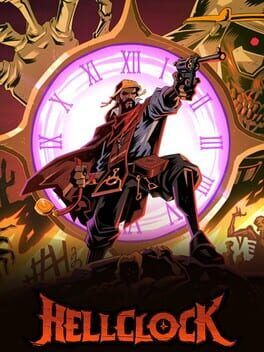

How Rogue Snail’s 19th‑century Brazilian action RPG uses endless loot, time‑twisted runs, and buildcrafting to stake an early claim on Nintendo Switch 2.
Hell Clock is one of the first smaller indie projects to plant a flag on Nintendo’s next-generation hardware. Coming from Rogue Snail, the studio behind Relic Hunters, it blends tight action RPG combat with roguelike runs and a striking 19th-century Brazilian setting. On paper it reads like Diablo meets Hades, filtered through real history and a focus on “endless loot” buildcrafting. As an early announced title for Switch 2, it also offers a glimpse at how mid-sized indies aim to leverage the extra power of Nintendo’s new system.
A Roguelike Wrapped Around an Action RPG Core
At its heart, Hell Clock is built like a classic action RPG. You control Pajeú, a knife-wielding warrior who can mix quick melee slashes, heavy bell-smashing attacks and gunfire from a sidearm. Enemies swarm in close, projectiles fill the screen and every room becomes a combat puzzle of dodges, positioning and crowd control.
Layered over that is a modern roguelike structure. Each descent is a self-contained “run” with randomized progression, loot drops and build-defining upgrades. You push through interconnected dungeons, deciding when to dive deeper for better rewards or retreat before the difficulty spikes out of control. Death kicks you back up to the surface, but knowledge and some meta-progression carry over so the next run feels stronger, not repetitive.
The time mechanic ties this all together. Every second counts. The longer a run goes the more intense things become, but your potential rewards also scale up. This creates a constant risk-versus-reward tension. You can try to blitz through quickly with an aggressive glass cannon build or play more cautiously at the cost of missing peak loot opportunities. For players used to the run structures of Hades or Dead Cells, Hell Clock’s twist is that time itself is part of the buildcrafting puzzle.
19th-Century Brazil as a Dark Fantasy Battleground
Where most roguelites default to generic fantasy or sci-fi, Hell Clock grounds its world in a specific historical moment. The game is inspired by the War of Canudos, a real 19th-century conflict in Brazil, when a backlands community that resisted the newly formed Republic was crushed by government forces.
You play as Pajeú, a warrior fighting to rescue the soul of his executed mentor, known as The Counselor. His head has been taken and his soul trapped, and your repeated descents into hostile zones are attempts to break the occult machinery behind that injustice. Each run is framed as a time-warping dive into the horrors born from Brazil’s past, present and future.
That setting gives Hell Clock a tone that stands apart from the usual roguelite fare. Instead of mythic Olympus or abstract void worlds, you are battling undead oppressors and demonic reflections of colonial and republican violence. Relics are not just stat sticks. They are ancient artifacts tied to resistance, culture and memory. The backdrop of a real conflict lets Rogue Snail mix folklore, spiritualism and political history into a dark fantasy that has roots instead of just vibes.
For Switch 2, that could pay off visually. Environments can draw on dusty backlands, fortified encampments, ritual spaces and warped versions of 19th-century Brazilian architecture. With more processing headroom than the original Switch, the developers can push denser crowds of enemies, more dynamic lighting and spell effects that underline the supernatural aspect of this history-infused world.
Endless Loot and Deep Buildcrafting
The developers are positioning Hell Clock as a playground for build tinkerers. Runs revolve around collecting Relics, Blessings and Tools that all feed into an "endless loot" ecosystem.
Relics are powerful items tied to resistance and myth that define your core playstyle. You then imbue those Relics with Tools to layer on extra effects. A relic that improves knife attacks could gain on-hit explosions, lifesteal or time-slowing bursts, depending on the Tool you socket into it. On top of that, you discover Blessings during runs that evolve your build in more radical directions, shifting a grounded ARPG foundation into a cascade of supernatural powers.
Rogue Snail is also toying with risk-reward item systems through Corruption. You can corrupt Relics to unlock high-impact modifiers that might supercharge a build or saddle it with nasty drawbacks. That kind of high-variance loot is a natural fit for roguelites, where experimentation and wild synergies keep repeated runs fresh.
Endgame systems like Hell Mode, Penances, Promises and Constellations look set to act as knobs for difficulty and rewards. By stacking specific Penances and pursuing certain Constellations, you can tailor late-game runs to focus on particular damage types, mobility options or survivability strategies. For players who squeezed hundreds of hours out of Hades weapon aspects or Dead Cells mutations, Hell Clock hints at a similarly deep layer of theorycrafting to chase on Switch 2 and PC.
Modes, Accessibility and What We Still Do Not Know
Rogue Snail has already outlined several options that show an awareness of different playstyles. There is a Relaxed Mode that eases time pressure for players who prefer exploration and methodical combat to constant timers. At the other end of the spectrum, Hardcore Mode is designed to lean into high-stress runs where every mistake matters.
The story campaign is structured as a three-act narrative, which is noteworthy in a genre that often treats story as a thin framing device. Finishing that campaign is just the start. Endgame Ascension, Hell Mode and the meta-systems around them are built to extend replayability well past the credits, which is crucial for long-term engagement in a crowded roguelite market.
There are still some big unknowns. The Nintendo Everything reveal confirms a Switch 2 version but does not give a release window for that platform, even though other databases currently list July 2025 as a general launch target. It is not clear if Switch 2 will get a simultaneous launch with PC or if it might follow later, once optimization is complete.
Monetization details are also missing. Nothing points toward live-service hooks or microtransaction-heavy design, and Rogue Snail’s past work leans more toward traditional premium releases. Even so, it is not yet confirmed whether Hell Clock will arrive as a straight one-and-done purchase or if it will be supported with paid DLC, expansions or cosmetic packs.
Co-op is another open question. The focus so far is on a single player experience and there has been no concrete mention of online or local multiplayer. Given the studio’s background with co-op shooters and looters, it is a feature fans are watching closely.
How Switch 2 Could Elevate a Mid-Sized Roguelite
What makes Hell Clock interesting from a hardware perspective is how early it has been attached to Switch 2. That puts it in a small but important category of games that will quietly define the baseline of what mid-sized studios can do on Nintendo’s next device.
Unlike huge AAA launches that often chase ultra-realistic assets, a game like Hell Clock can funnel extra CPU and GPU budget into what actually matters for a top-down roguelite. The promise on Switch 2 is thicker enemy waves, more projectiles and faster, more responsive combat without sacrificing resolution or input latency. Effects like time dilation, particle-heavy spell explosions and dynamic lighting on dense crowds are the sort of things that strained the original Switch. They are precisely the systems that give a hectic ARPG its crunchy feel.
If Rogue Snail can hit high, stable frame rates on Switch 2, even in its most chaotic rooms, Hell Clock could quietly become a showcase for how the new hardware makes fast-paced roguelites feel better moment to moment. Strong rumble feedback, reduced loading between rooms and clean image quality in handheld mode would all reinforce that sense of physicality, finally giving Switch players a portable experience closer to playing on PC.
The extra storage and memory of the new system also give the team more room for enemy variety, animation sets and environment permutations. Since roguelikes live or die on how fresh runs feel after dozens of hours, that kind of systemic variety is arguably more important here than any single big-budget graphical flourish.
Wishlist: Features That Could Help Hell Clock Stand Out
Even with its unique setting, Hell Clock will be launching into a very busy roguelite market. For it to stand out, there are several features that would help it fully capitalize on its premise and on the power of Switch 2.
First, a meaningful co-op mode would immediately broaden its appeal. Even a separate two-player roguelite mode, whether local or online, where partners sync Relic builds and share time-based risk decisions, could turn Hell Clock into a go-to couch game on Switch 2. If the team goes this route, smart scaling of difficulty and rewards so that a duo does not trivialize time pressure is essential.
Second, deep, transparent buildcrafting tools would reinforce the “endless loot” promise. In-game explanations of how Relics, Tools, Blessings and Corruptions interact, along with a practice environment or codex, would make it easier for theorycrafters to iterate on builds instead of relying solely on trial and error. Per-run statistics, timelines of key moments and saved build templates could make post-run analysis a fun part of the loop.
Third, a strong commitment to accessibility and customization would help it find a wider audience. This includes remappable controls, difficulty sliders beyond the relaxed and hardcore toggles, colorblind options that keep dense combat readable and generous aim-assist choices for ranged-heavy builds. Since time pressure is built into the core fantasy, adjustable time multipliers could also help players who like the concept but struggle with strict timers.
Fourth, a robust meta-progression structure that respects player time would go a long way. Unlocks tied to skill expression rather than sheer grind, multiple viable starting loadouts and narrative payoffs that unfold across many runs would keep players invested for months. Seasonal challenge towers or rotating modifiers could extend this without resorting to aggressive monetization.
Finally, leaning harder into the historical roots of the setting could give Hell Clock an identity that no rival can copy. Lore entries that clearly connect enemies and relics to real events, optional story encounters that unpack the politics of the War of Canudos and collaborations with Brazilian historians or artists would deepen the world rather than just using history as a loose aesthetic.
Early Days, Promising Signs
Hell Clock is still mostly a pitch and a trailer, but what is there already paints a compelling picture. Fast action RPG combat, roguelike time pressure, a 19th-century Brazilian backdrop and a heavy emphasis on experimental loot all point toward something with real personality. As one of the early named titles for Nintendo Switch 2, it has a chance to show how much better a tightly designed, mid-sized roguelite can feel when it is not fighting against old hardware limits.
Questions remain about its exact launch timing on Switch 2, its approach to monetization and whether co-op will join the feature list. If Rogue Snail can answer those while delivering on the promise of deep buildcrafting and a truthful, punchy take on its historical inspirations, Hell Clock could carve out a distinct place in the next wave of roguelites on Nintendo’s new system.