
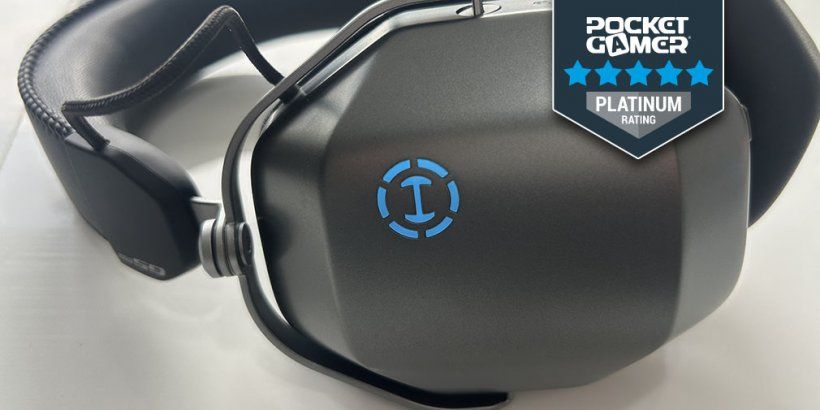

The Hecate G5 Max is a $149.99 wireless gaming headset with THX Spatial Audio+, 305-hour battery claims, and a mobile-friendly question: does it suit cloud and handheld play, or only a PC desk?
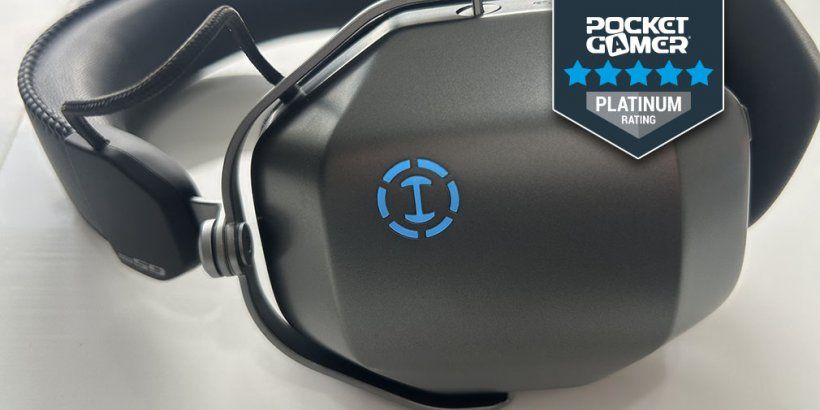
Image: pocketgamer.com
A headset with huge battery claims, and one important category correction
The Hecate G5 Max is now being covered as a $149.99 wireless gaming headset in the United States, according to ecoustics and XiaomiToday, with Edifier positioning it around THX Spatial Audio+, low-latency wireless support, Hi-Res Audio certification, LHDC 5.0 support, and a claimed battery life of up to 305 hours in Bluetooth mode with the lighting turned off.
That last number is the hook. For players who jump between a phone, a laptop, a handheld PC, and a couch screen, battery anxiety can quietly ruin the whole setup. A headset that can survive long stretches without constant charging fits the way cloud gaming and handheld gaming actually happen: short sessions, late-night returns, a forgotten cable, and one more run before bed.
There is a catch in the search intent around this device. The Hecate G5 Max is a headset, not a mobile gaming controller. It will not give your phone console-style sticks, triggers, or a clamp. If you are looking for an Android gaming controller or a cloud gaming controller, this is the audio half of that portable kit rather than the control half. That distinction matters because the G5 Max’s best confirmed features solve hearing, chat, comfort, and endurance, not input latency or controller feel.
The strongest confirmed fit is PC-first play with mobile spillover
Edifier’s most clearly defined high-end feature is THX Spatial Audio+. ecoustics reports that the G5 Max supports THX Spatial Audio+ for headsets, creating a 7.1.4 virtual surround field intended to help users place footsteps, environmental effects, and overhead sounds more accurately in supported Windows 11 titles. Funky Kit similarly describes THX Spatial Audio+ as a feature aimed at directional cues, including sounds from above, in supported Windows 11 games.
That wording is important. The spatial audio pitch is strongest for PC players, especially those running Windows 11 games that can take advantage of the feature set. Pocket Gamer’s Jupiter Hadley, in a Hecate G5 Max review, wrote that the spatial implementation was “done extremely well” and singled out the ability to hear height information, including sound from above. That is the kind of detail that can change a tense platforming gauntlet, a stealth section, or a competitive match, where audio direction is part of how the game communicates danger.
For mobile and cloud players, the picture is more conditional. Cloud gaming can benefit from good positional audio, but none of the provided sources confirms platform-level spatial support for Android cloud apps, iOS cloud shortcuts, Steam Deck, Switch, PlayStation, or Xbox. The G5 Max may still function as a wireless headset through Bluetooth where supported, but the headline THX Spatial Audio+ argument is documented around Windows 11 support, not a phone-mounted handheld setup.
For handheld habits, the battery claim is the practical headline
Guru3D reports that the G5 Max uses a 2,000 mAh rechargeable battery rated for up to 305 hours of playback under specified conditions. ecoustics gives the more specific condition that Edifier’s 305-hour figure applies in Bluetooth mode with the lighting turned off. Pocket Gamer’s review also points to the 305-hour quote and says the reviewer had not needed to recharge the headset since starting to use it.
That does not prove every user will get 305 hours. Lighting, volume, connection mode, codec, microphone use, and the difference between Bluetooth and 2.4 GHz wireless can all affect real-world runtime, and the sources do not provide a full independent drain test across every mode. Still, the reported endurance is highly relevant for the kind of player who treats gaming hardware like a rotating toolkit. A telescopic controller may stay in a bag. A phone may become a handheld for Game Pass or remote play. A laptop may appear for an indie demo festival. A headset with very long quoted Bluetooth life reduces one point of failure in that chain.
This is where the G5 Max makes the most sense for mobile-minded players. It is less about replacing a dedicated Android gaming controller and more about making the rest of the portable setup feel less compromised. If your games lean on sound cues, atmosphere, or voice chat, the battery claim gives the headset a stronger case than a flashy RGB-first accessory.
Comfort and microphone design matter for cloud sessions too
Pocket Gamer’s hands-on account describes the Hecate G5 Max as extremely comfortable, with padding around the ears and headband, pivoting ear cups, and a design that could be worn for a long time without pressure. The same review notes that the detachable microphone worked clearly enough for friends to hear the reviewer and could be removed when not needed.
Those are small details with large practical consequences. Cloud and handheld play often happens away from a perfect desk setup. You might be on a sofa, in bed, at a kitchen table, or using a phone clip at an angle no ergonomic designer would proudly endorse. A heavy or clampy headset can make a technically impressive device feel wrong after twenty minutes. A detachable mic is also useful if you split time between multiplayer chat and single-player exploration, because it lets the headset behave less like permanent competitive gear when you are playing something quieter.
Funky Kit reports that the G5 Max integrates dual ENC microphones alongside a detachable 9.75 mm unidirectional microphone, with AI noise cancellation intended to isolate the user’s voice and reduce background noise. That claim comes from launch-style coverage rather than an independent lab test in the provided material, so it should be treated as Edifier’s feature positioning. Pocket Gamer’s reported experience, however, does support the simpler buyer question: the removable mic worked clearly in normal use.
The controls are on the earcup, not in your hands
Pocket Gamer reports that the left side of the headset houses the main physical controls: power, a double-tap option for Bluetooth mode, a volume dial, mute, the charging point, and the port for the removable microphone. ecoustics also reports that the Edifier Connex app on iOS and Android can switch between 2.4 GHz and Bluetooth modes, while HECATE Driver software gives users audio controls such as EQ, Bass Boost, Vocal Clarity, and Volume Normalization.
For players searching “Hecate G5 Max review” while trying to build a phone-as-console setup, this is the dividing line. The G5 Max gives you headset controls, wireless modes, audio tuning, and chat flexibility. It does not address thumbstick quality, analog trigger travel, button layout, phone fit, passthrough charging, or controller mapping. If your current problem is that touch controls make action games feel mushy, buy a controller first.
If your current problem is that your earbuds lag, die quickly, isolate poorly, or make group chat sound thin, the G5 Max is closer to the right product. It belongs beside a controller in a cloud gaming setup, not in place of one.
The platform question is still the one to check before buying
The G5 Max’s spec sheet, as reported by ecoustics and Funky Kit, includes Bluetooth support, LHDC 5.0, and a 2.4 GHz wireless mode. Pocket Gamer also notes that the headset includes a dongle for computer connection. Those details point toward flexibility, but they do not confirm every platform a handheld player may care about.
The sources supplied for this article do not confirm compatibility with Nintendo Switch, PlayStation Portal, Steam Deck, Xbox consoles, iPhone USB-C dongle use, or specific Android handhelds. They also do not confirm whether THX Spatial Audio+ functions outside the supported Windows 11 environment described by ecoustics and Funky Kit. That gap should shape buying expectations. A cloud-first player should check the exact device chain before spending $149.99: phone Bluetooth behavior, app support, dongle compatibility, chat routing, and whether the games they play actually benefit from spatial processing.
There is also a timing wrinkle in the coverage. Guru3D reports U.S. availability beginning July 1, 2026, at a suggested retail price of $149.99, while XiaomiToday states that the Hecate G5 Max is available in the United States for $149.99. Funky Kit’s launch coverage is dated July 3, 2026. Taken together, the provided sources support a U.S. launch at $149.99, but readers should verify live retailer stock and regional pricing before treating that as universal availability.
Who should consider the Hecate G5 Max
The Hecate G5 Max is easiest to recommend, based on the available reporting, to players whose habits overlap PC and portable play. If you play supported Windows 11 titles, care about positional audio, use voice chat, and also want a headset that can follow you into Bluetooth sessions on a phone or tablet, its feature set lines up neatly. Pocket Gamer’s praise for comfort, spatial sound, battery endurance, and the detachable microphone gives the hardware more credibility than the spec sheet alone.
It is a weaker fit if your priority is a pure mobile controller purchase. Search terms like mobile gaming controller, Android gaming controller, and cloud gaming controller point to a different need: physical inputs. The G5 Max can complement that setup, especially for cloud gaming at home, but it cannot make touchscreen controls feel like a console pad.
The smart buying stance is to treat the Hecate G5 Max as an audio upgrade for a hybrid player. Its confirmed strengths are long quoted Bluetooth life, PC-focused spatial audio, flexible wireless modes, comfort, and a removable mic. Its unresolved questions are platform compatibility beyond the sources’ Windows and Bluetooth framing, real-world battery life across every mode, and how much of the THX feature set survives when you leave the PC ecosystem. For the right player, that is still a compelling lane: better sound for the games you already carry between screens.