
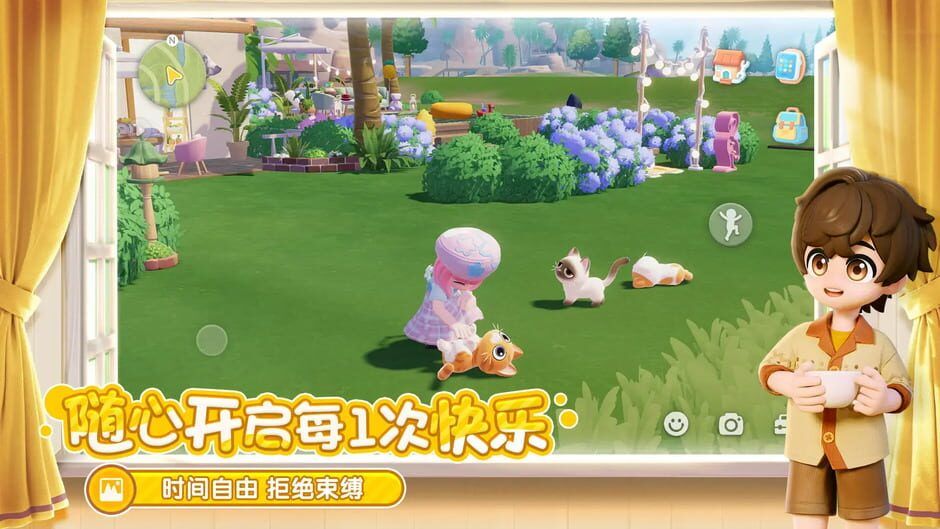

Heartopia’s Winter Frost season, My Little Pony crossover, and daily Onsen egg hunts show an aggressive live‑service strategy. We break down how often events hit, how rewards like the Frostspore skin and Harmony vehicles are structured, and whether this pace fits a cozy-life sim or quietly undermines it.
Heartopia sells itself as a place to slow down. You build a house, fish off the pier, share outfits with friends, and log off feeling like you tended a tiny digital life, not an endless checklist.
Yet only a few weeks into launch, Heartopia is already running like a full live‑service MMO. A six‑week Winter Frost season has layered on timed cosmetics and multi‑week collections. The My Little Pony collab stacks gacha vehicles and community tasks on top. Onsen egg hunts rotate daily locations that push you to log in “today or miss out.”
Taken together, they form a clear live‑service strategy: cozy on the surface, but structurally more like Genshin or Honkai in a smaller, friendlier coat.
This feature looks beyond basic guides and walks through how these early events are built, how often they demand your attention, and whether that cadence enhances or erodes Heartopia’s promised slow life.
Winter Frost Season: A Cozy Map Wrapped Around A Tight Schedule
Winter Frost Season is the spine that a lot of early Heartopia content hangs from. It brings snow to key areas, limited fish and bugs, and event‑specific cosmetics that vanish when the season does.
Guides break Winter Frost into multiple phases, with new activities layered in weekly: Frostspore fish, Frostspore butterflies, snowman challenges, and the Onsen egg hunt. It looks like a typical seasonal pass, but the details reveal how prescriptive the game can be day to day.
The Frostspore skin shows this clearly. Instead of a simple milestone reward (“reach X friendship level” or “attend Y festivals”), NintendoSmash’s guide explains that it’s locked behind a specific Winter Frost interaction pattern. You need to repeatedly trigger the Cold status by transforming into a snowman through an event object, and you must do it in a defined sequence before the season ends.
Mechanically, it is cute. You run around as a snowman, lean into the wintry vibe, and unlock a look that screams “you had to be there in winter 2026.”
Structurally, it firmly establishes that Heartopia’s best cosmetics are not just about long‑term chill play but about learning event‑specific rules and hitting them inside a seasonal window. Miss the winter puzzle, and that skin simply is gone or significantly harder to obtain later.
This is the underlying pattern for Winter Frost: multiple micro‑systems that feel whimsical in isolation, but cumulatively create a dense timeline of checklists that cozy fans may feel obligated to clear.
The Onsen Egg Hunt: Daily FOMO In A Bathrobe
Polygon’s coverage of the Onsen Egg Hunt hits a different piece of the design: daily treasure‑hunt style tasks in a very small, very soothing area.
The Onsen zone is one of Heartopia’s most relaxed spaces. Steam floats off hot springs, NPCs chat quietly, and the music softens. It should be the perfect fantasy spa day. Instead, the egg hunt transforms it into a rotating scavenger loop.
Each reset, a single Onsen “promise” egg spawns at a specific coordinate. Polygon and other sites now maintain up‑to‑date lists of exact locations for “today’s egg,” turning a hidden‑object game into a daily chore. You warp in, run to the pixel‑perfect tile, tap to collect, and leave.
This rhythm is classic live‑service daily design. The action is low effort, but the time window is tight. If you want the full reward track for egg‑related cosmetics and currency, you are meant to log in nearly every day while the hunt is active.
For some players, this actually improves the cozy feel. A one‑minute ritual in a virtual onsen can become the digital equivalent of watering a plant before bed. But the fragile line between ritual and obligation is doing a lot of work here. Once you are following Polygon for “today’s spot,” the design has tipped decisively into FOMO territory, not discovery.
Frostspore Skin And Event Cosmetics: Status Symbols For The Softest Grinders
The Frostspore skin sits alongside other Winter Frost rewards like special butterflies, snowman bubbles, and winter‑only recipes. These cosmetics are heavily tied to season‑bound mechanics, including specific status effects, timed spawns, and NPC quests that only appear during the event window.
Design‑wise, the Frostspore skin is clever. The process of turning into a snowman repeatedly in the event plaza puts you directly in the middle of the seasonal hub. You see other players showing off winter outfits, spot their pets, and casually compare progress. It is a social catalyst disguised as a cosmetic unlock.
It is also very clearly a badge of attendance.
Unlike core unlocks that you can chase at your own pace, the Frostspore skin telegraphs “I was there, paying attention during Winter Frost Season and I did the weird snowman ritual.” That sort of seasonal exclusivity is normal in live‑service RPGs. In a cozy‑life sim, it creates a quiet social hierarchy where latecomers or lapsed players visibly “missed” a chapter of the community’s shared story.
Nothing here is aggressive monetization by itself. Most of this winter content can be earned for free with time and attention. But it is a strong signal that Heartopia wants your attention on a schedule, not merely your affection when you feel like logging in.
My Little Pony: Collaboration As A Lifestyle Event, Not A Cameo
The Heartopia x My Little Pony collaboration is the clearest statement of the game’s live‑service ambitions so far.
On paper, it is a cozy collab fantasy. The Tree of Harmony appears on Whale Mountain, a rainbow slide drops you into a shared hub, and ponies bring pastel energy to an already soft‑colour world. Guides from NintendoSmash and others break the event into three main pillars: Rainbow Vehicle Collection, Harmony Tree Awakening, and Souvenir.
In practice, those pillars map directly onto the three core needs of a long‑running live‑service game: monetization, daily retention, and collection.
Rainbow Vehicle Collection: Gacha At Full Throttle
The Rainbow Vehicle Collection is built around a limited Exhibition Pass banner. Six “Rainbow Power” vehicles live across six separate card pools, each with its own pity curve. Drop rates hover in the high teens per featured vehicle, but the cost ramps aggressively from the first pull in a pool to the sixth.
Collect all six and you unlock the Harmony Core vehicle, a kind of meta‑reward that only exists for full completionists or heavy spenders.
There is nothing subtle here. This is a premium gacha constructed to capture whales and dedicated collectors inside a limited window. It is functionally similar to banners in gacha RPGs, just re‑skinned with pastel cars and friendship branding.
This sharply contrasts with Heartopia’s cozy positioning. A game about relaxed self‑expression is anchoring its first branded crossover around a high cost gacha ladder, where the most iconic collab item is locked behind full set completion.
Harmony Tree Awakening: Daily Ritual With A Stopwatch
The Harmony Tree is where the live‑service pacing design really shows its teeth.
Each day, you visit the Tree of Harmony via the rainbow ladder on Whale Mountain, claim three random elements, then water the tree to contribute energy and earn Harmony Energy Gems and other resources. The daily cap on gems, usually five per day from interaction and watering, translates directly into how many Souvenir pulls you can do.
Then the game layers on social resonance. By resonating with another player, you can share elements, fill out your missing set for the day, and in some cases return to the tree to water again, squeezing out more progress.
On the surface, this is wholesome. You cannot fully awaken the tree alone. You are nudged to emote at strangers, make friends, and coordinate visits. That fits the Heartopia fantasy of shared neighborhood life.
Underneath, it is a classic daily retention loop. The caps, the incremental energy thresholds, and the limited currency flow all point to a target number of logins across the event period. You are meant to come back every day, not binge on a lazy weekend.
Souvenir Badges: Completionist Pressure Dressed As Decor
The Souvenir side of the event leans on badge packs, each containing seven decorative items tied to the collab. You spend Harmony Energy Gems, mostly earned from the daily tree rituals, to pull from one or three packs at a time.
Finish a pack and you receive bonus Exhibition Passes to throw back into the banner. Mechanically, it is a closed loop: log in daily, do the tree routine for gems, spend gems on badges, and feed the resulting passes into the gacha. Emotionally, it wraps that loop in the language of scrapbooks and wall displays.
If you are the sort of player who wants your Heartopia bedroom wall to chronicle every event, the implicit pressure is clear. Miss a few days of tree visits, and an entire souvenir set could remain forever incomplete.
Cadence: How Often Are You “Supposed” To Play?
Looking across Winter Frost, Onsen eggs, and the MLP collab, a pattern emerges.
There is almost always something time‑sensitive happening. Winter Frost runs for roughly six weeks, with new tasks unlocking week by week. The MLP event stretches for more than a month with a pre‑event login campaign, daily tree rituals, and limited banners. Onsen egg hunts rotate at a daily cadence inside that same seasonal frame.
Heartopia’s calendar in its very first quarter looks more like a mature MMO than a new cozy sim. There are already overlapping loops: daily eggs, seasonal snowman antics, multi‑week collab progression, gacha banners with ticking clocks, and regular event shop refreshes.
For the slice of the audience that treats cozy games as their main hobby, this can feel like a gift. Log in with your tea, hit the onsen, visit the tree, chat at the winter plaza, and log off with clear progress in 20 minutes.
For players attracted by the genre’s promise of no pressure, it risks feeling like a subscription of guilt. The more tightly timed systems you introduce, the more every missed day represents tangible lost value: an egg, a badge, a bit of energy towards the tree, a snowman interaction towards your Frostspore unlock.
Does This Undermine Cozy Pacing?
Whether this model “fits” a cozy‑life game depends on which part of cozy you value.
If cozy means soft aesthetics, home building, and gentle interactions, then Heartopia is nailing it. The events are visually charming, packed with decorative payoff, and clever about using social spaces. Turning into a snowman on an icy event island, sliding down a rainbow ladder, or soaking in the onsen while searching for a shiny egg all reinforce the fantasy.
If cozy means low pressure, play‑when‑you‑can design, the early live‑service strategy is more worrying.
The limited nature of the Frostspore skin and similar cosmetics pushes you to engage within strict windows. The Onsen egg hunt transforms a relaxation space into a daily efficiency run, especially once you start following guides. The MLP collab brings in hard monetization edges with expensive banner sets and a meta‑vehicle reward that only a fraction of the audience will ever realistically obtain.
None of this is unique within the broader industry. It is unusual inside a genre that has historically prioritized player‑paced progress and evergreen content over rotating, unrepeatable rewards.
Where Heartopia Could Find A Better Balance
The good news is that Heartopia is still new, and live‑service models can shift quickly in response to feedback. Based on these early events, there are several ways the game could better harmonize its systems with its cozy identity without abandoning long‑term support.
One approach would be to turn strictly time‑limited cosmetics like the Frostspore skin into prestige‑timed unlocks. You could earn a special frame or variant for doing the snowman ritual during Winter Frost, but the base skin itself would funnel into a slower, year‑round path afterward through the fishing log or a crafting tree.
Daily hunts like the Onsen eggs could persist with a rotating schedule, but reward structures might emphasize milestones over streaks. Instead of needing dozens of specific days, you could hit thresholds based on any 10 or 20 eggs found across the event period, even if you miss several resets.
For collaboration banners, a portion of the MLP items could be folded into non‑gacha acquisition. Story quests around the Tree of Harmony could award at least one or two iconic cosmetic pieces outright, keeping the premium banner focused on collectors rather than locking the entire visual identity of the event behind a roll.
Underneath all of that is a philosophical question Heartopia will have to answer: is it a cozy world that happens to be live‑service, or a live‑service grinder that wears a cozy disguise?
Right now, the aesthetics say one thing and the event calendar says another. How the team tunes future seasons, crossovers, and egg‑hunts will decide which voice players ultimately believe.