
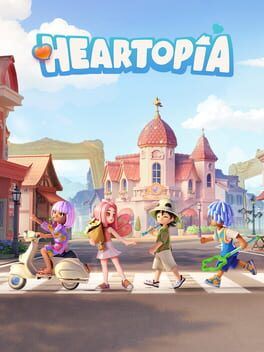

With Heartopia’s full launch set for January 7, 2026 on PC and mobile, here’s how its cozy multiplayer world will handle cross‑platform play, what to expect from its free‑to‑play monetization, and the major improvements and events XD Games is lining up for and beyond release.
If the beta was Heartopia’s slow, gentle sunrise, January 7, 2026 is when the cozy multiplayer life sim finally switches the town’s lights on for good. XD Games is rolling out the full release on PC, iOS, and Android on the same day, with a Steam version to follow, and the studio is framing this not as an endpoint but as the true start of the game’s long‑term life.
For players just hearing about Heartopia now, the big questions are practical ones. How well will PC and mobile actually play together? How fair is the free‑to‑play model? And if you move in on launch week, what kind of support can you expect six months or a year down the line?
Cross‑platform play: one social town across PC and mobile
From the outset, Heartopia has been pitched as a social game rather than a platform‑specific one. The final closed beta already ran on PC and Android together, and XD Games has made it clear that launch will keep that unified structure in place.
PC and mobile share the same server ecosystem, which means one population, one evolving town, and one set of social systems. The version you log in on only changes how you interact with that world. On a phone, Heartopia is built around short, low‑pressure check‑ins: sending messages, tending a garden, decorating a room between commutes. On PC, the larger screen and direct controls make it easier to lean into lengthier sessions, roleplay meetups, and more complex social events.
For players worried about being siloed by platform choice, this is important. Your friends can be entirely mobile, entirely PC, or somewhere in between, and the intention is that you still share the same festivals, the same cafés, the same public spaces. Cross‑progression is equally central to the pitch. The accounts used in beta already carried over between platforms, and the launch structure is set up so that you can move from PC at home to mobile on the go without losing your character’s progress or social connections.
The one wrinkle at launch is the planned but later Steam release. For the short term, Heartopia will use XD’s own PC launcher, with the Steam build arriving after the January launch window. XD is presenting this delay as a logistical issue rather than a content split. The expectation is that, once the Steam client is live, it will plug into the same shared servers, preserving the cross‑play and cross‑progression that frame Heartopia as a single, continuous world rather than a series of separate shards.
A free‑to‑play model that leans on style over pressure
Heartopia is free‑to‑play, and that raises another obvious concern for prospective residents: how aggressively will it try to monetize your time in town?
The broad strokes are clear from the pre‑registration rewards and beta structure. Gold functions as your main soft currency, used for everyday necessities and small conveniences. Moonlight Crystals and Wishing Stars represent the more premium end of the economy. Exhibition Passes gate certain special attractions and events. The pre‑registration bundle is heavy on these items, which suggests they will be woven into regular play but not granted in huge quantities.
Where XD seems to be drawing the line is around power. Heartopia’s core loop is social and expressive. Your avatar, wardrobe, apartment, and routines are the focus, not combat stats or competitive ladders. That gives the team room to push monetization toward cosmetics and optional accelerators rather than progression walls.
Beta events and marketing materials emphasized outfits, décor packs, and themed accessories as earnable rewards, with closed beta veterans receiving unique cosmetics like the Blueberry Crossbody Bag and Star Mascot Head. That approach signals a desire to reward long‑term engagement and presence, not just big spenders. The full launch will expand that catalog, and you can expect a regular cadence of limited sets tied to seasonal events, in‑game exhibitions, and story updates.
There will almost certainly be time‑saving purchases that shorten crafting or collection arcs, particularly around housing and large‑scale decoration. The key question for launch is how strictly these stay in the realm of convenience rather than necessity. Because Heartopia is not trying to push players into power races or high‑stakes PVP, XD has more leeway to keep paywalls light and let the town breathe as a place you log into for comfort rather than obligation.
Launch‑day experience: a lived‑in city, not a barebones beta
XD has spent multiple closed tests pitching Heartopia as a slice‑of‑life story generator instead of a checklist of chores. For launch, the studio’s goal is to have the city feel lived‑in from the first login.
That means a broad selection of districts and social spaces available on day one, from relaxed hangouts to more curated roleplay spots. It also means character‑driven storylines ready to intersect with your daily routine. NPCs react to your choices, your behavior in conversations, and how you spend your time. Conversations and shared activities with other players are meant to feel like the real content loop instead of something you do between resource runs.
Real‑time daily routines carry over from the tests into launch. Shops open and close with the in‑game clock, events rotate through the week, and festivals mark out the larger calendar. Heartopia wants to be the kind of game where you know that a certain café fills up on Friday nights, or that particular players host open‑door gatherings in a favorite plaza at a set time.
From a systems perspective, this means cross‑platform matchmaking and social features need to be robust. The party‑finding tools, friend lists, and communication options all have to work seamlessly whether someone is on a touchscreen or a keyboard. Early tests already showed the importance of flexible emotes, text chat, and simple tools to organize group activities. Launch will expand and refine those tools so that the friction of forming and maintaining social circles is as low as possible.
Post‑launch plans: events, expansions, and deeper relationships
XD is not being shy about its long‑term ambitions. The studio is positioning Heartopia as a slow‑burn live service, something that grows alongside its community rather than peaking at launch and fading.
Regular limited‑time events are the most immediate pillar of that strategy. Expect seasonal festivals that paint the town in new colors, bring in themed décor and outfits, and introduce temporary activities that hook into the existing simulation. These are likely to be major drivers for both engagement and monetization. Long‑term players can collect exclusive items and memories tied to each festival, and newcomers get clear, low‑pressure entry points where social spaces are guaranteed to be lively.
Beyond one‑off events, XD is committing to ongoing story content. Heartopia’s cast is designed to stick around and develop over time. New character arcs, neighborhood subplots, and community‑wide storylines will roll out in updates, giving regulars a reason to keep checking in beyond pure routine. Because relationships and reputation matter to how NPCs treat you, these new threads can change how familiar spaces feel over months instead of days.
Another long‑term focus is expanding the tools that let players express themselves and collaborate. Deeper housing systems, more granular decoration tools, improved avatar customization, and shared projects like community gardens or co‑authored venues are all natural fits for the game’s ethos. The more ways players have to imprint themselves on the world, the stronger the social glue becomes.
On the technical side, the delayed Steam launch provides a natural milestone for broader optimization and UI improvements. PC quality‑of‑life requests from the beta, such as better mouse and keyboard support, more accessible interface scaling, and improved camera options, are likely to be revisited as XD prepares that version. Mobile users can expect parallel work on performance and battery use, as well as input options that make longer sessions more comfortable.
Why launch matters if you skipped the beta
If you did not touch Heartopia’s tests, January 7 is still a good time to start. Early adopters from the betas will have some keepsake cosmetics and a bit of familiarity, but the game is not being structured as a race where missing the first lap puts you hopelessly behind.
The absence of traditional combat progression and competitive ranking means Heartopia can afford a gentler on‑ramp. The first weeks and months after launch will be as much about discovering the shape of the town together as they are about unlocking features. New festivals and updates will provide fresh, shared experiences that do not require you to have been there since day one.
For players used to cozy games that are locked to a single platform or limited to solo play, the cross‑play structure is the clearest reason to keep an eye on Heartopia. Whether you prefer to curl up with a keyboard at night or check in from your phone during the day, the same city and the same social circle will be waiting.
Looking ahead, the real test for XD will not just be launching a charming, low‑pressure life sim, but sustaining one. If the team can keep monetization in check, steadily expand customization and social tools, and deliver regular events that feel more like neighborhood traditions than marketing beats, Heartopia has the potential to become one of the genre’s most enduring shared towns.
For now, January 7 is less a finish line and more a housewarming party. The doors are about to open. The question is how many players decide to stay and make this cozy city a real home.