
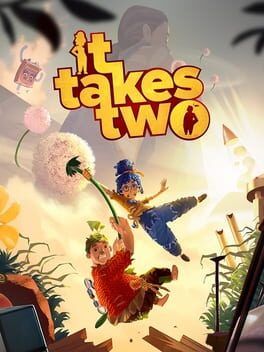
With It Takes Two, A Way Out, and Split Fiction topping 50 million sales, Hazelight Studios has quietly built one of the strongest premium co‑op catalogs in the industry. Here is what that success says about the commercial power of co‑op‑first design in a live‑service‑heavy market.
Hazelight Studios just crossed a line that very few independent outfits reach. Across A Way Out, It Takes Two, and Split Fiction, the Stockholm studio now reports more than 50 million copies sold. In a market where most of the growth narrative revolves around live service ecosystems and recurring revenue, a developer built around premium, narrative‑driven co‑op experiences is quietly charting a different path, and succeeding at scale.
A catalog built entirely around co‑op first design
Hazelight’s entire modern catalog has one structural throughline: every project is designed from day one for two players. Not single‑player with optional co‑op, not a campaign that doubles as a tutorial for a PvP endgame, but stories and mechanics that exist because there are always two human beings in the loop.
A Way Out positioned itself as a prison‑break thriller that could only be played in co‑op, either locally or online. It Takes Two doubled down on that philosophy with a more accessible, family‑friendly fantasy about a couple on the brink of divorce. Split Fiction continued the studio’s focus on tightly authored scenarios that treat co‑operation as the default state rather than a feature checkbox.
That consistency has turned Hazelight into one of the clearest case studies for how far a studio can go by committing fully to co‑op first design while still shipping traditional boxed‑style products.
How the 50 million breaks down
Hazelight has disclosed a rare level of granularity for its sales. The 50 million figure is not a single breakout hit with minor footnotes. It is a catalog that has found an audience, title after title, with one standout leader.
It Takes Two accounts for roughly 30 million units on its own. That puts it in line with or ahead of some of the most visible premium games in the world, the sort of company usually reserved for Pokémon or soulslike mega‑hits. When a structurally co‑op, story‑driven platform adventure can post those numbers, it undercuts the idea that only genre staples like shooters and open‑world RPGs can break into the top sales tier.
A Way Out contributes around 13 million units, substantial for a game that launched without a single‑player option and arrived before the studio’s brand was fully established. Split Fiction, Hazelight’s newest release, has already reached roughly 7 million units, signaling that the studio is not merely riding the long tail of one breakout success. Across the three, the curve looks healthy rather than top‑heavy, with each project building on the last.
That performance is particularly notable because it lives entirely within the premium framework. These are standard retail purchases or equivalents on digital storefronts, sometimes discounted over time, but not free‑to‑play funnels. The volume is coming from paid entry, not recurring microtransaction spend.
The economics of designing for two players at once
One of the quiet advantages in Hazelight’s model is how it treats each sale as a multiplier for audience reach. Every copy sold effectively commits two people to play, which creates a force‑multiplier effect for word of mouth. If one player convinces a friend to jump in, both are now evangelists for the brand, not just the buyer.
Hazelight has also leaned on friend pass style systems, where one purchase can invite a partner to play at no additional cost. On paper that sounds like a revenue sacrifice. In practice it works more like a conversion and marketing engine. Lowering the friction for the second player means each unit sold has a higher probability of being played quickly, completed, and talked about. The studio is trading a theoretical second sale for much stronger engagement and a wider halo of awareness.
For a narrative‑driven game, that matters. These are not products designed to hold attention for thousands of hours through content drip feeds. They aim for short to medium campaigns that people actually finish. The more pairs complete the story, the more likely it is those stories become part of the broader conversation, which in turn drives more sales down the line and across the catalog.
Co‑op as the core feature rather than a mode
In an industry where co‑op is often bolted on, Hazelight’s output is built on the assumption that two players are always present. That informs everything from level design to scripting to progression systems.
Puzzles and encounters are crafted so that both players are mechanically necessary at nearly all times. Cameras are framed with split screen as a first‑class constraint, not an afterthought. Narrative beats continually play off the friction and collaboration between both protagonists. The design challenge is not “how can co‑op work here,” but “how can co‑op be the entire point of this scene.”
This has implications for production as well. Building around a guaranteed second player allows Hazelight to rely on asymmetrical roles and one‑off mechanics that would be harder to justify in a replay‑centric live service. A sequence only needs to be memorable once, not repeated for hundreds of hours, which means the team can invest in bespoke setpieces without designing the systems to support infinite reuse.
The commercial success of this approach suggests that audiences are willing to pay full price for finite, heavily authored co‑op experiences when they feel distinctly tailored to playing together.
Standing out in a live service heavy landscape
Hazelight’s rise has coincided with an era where many publishers prioritize projects that can sustain multi‑year monetization arcs. Battle passes, cosmetics stores, and seasonal roadmaps dominate the discussion about where growth will come from.
By contrast, Hazelight’s portfolio operates almost entirely outside that framework. The value proposition is clear: buy once, get a complete co‑op story with no expectation of ongoing spend. There are no battle passes to complete, no limited time cosmetics to chase, and no content drops needed to justify continued engagement.
That clarity stands out in a marketplace where many players feel stretched thin across multiple live service obligations. For partners and parents, the simplicity of committing to a discrete co‑op campaign that can be finished in a few sittings is a powerful pitch. There is a start, a middle, and an end, and everyone at the couch or in the voice call is on the same page about what they are signing up for.
From an industry standpoint, Hazelight’s success challenges the assumption that the only reliable growth vector lies in recurring revenue. It shows there is still room for premium SKUs that do one thing very well, provided they serve a specific playstyle and social need.
Brand identity as a competitive advantage
Hazelight’s catalog also benefits from a coherent identity. Audiences now broadly understand what a “Hazelight game” entails before they see any detailed feature lists. It means narrative‑driven, structurally co‑op, mechanically playful experiences that treat collaboration and communication as the core verbs.
That reputation reinforces discovery. Someone who played A Way Out with a partner and enjoyed the experience has a clear reason to check out It Takes Two or Split Fiction when they appear. The games effectively market each other, not through shared universes or cross‑promotions, but through a consistent design philosophy and social function.
In a crowded release calendar, that kind of clarity is something many mid‑sized studios struggle to establish. Hazelight has done it by saying no to hybridization. There is no multiplayer shooter spinoff, no experimental free‑to‑play offshoot, no push into battle royale. The studio’s line is narrow but deep, and the sales numbers suggest that depth is resonating.
What this means for co‑op’s future in the premium space
Hazelight’s 50 million milestone will not single‑handedly reverse the industry’s tilt toward live services, but it does broaden the set of viable strategies for studios and publishers.
First, it confirms that co‑op first narratives can reach the highest commercial tier of premium releases without leaning on monetization beyond the box. Second, it demonstrates that friend pass style access can be additive, not cannibalistic, when built around games that are genuinely designed to be played together. Third, it highlights the strategic benefit of owning a clear niche in a market saturated with hybrid models and overlapping feature sets.
As Hazelight moves toward its fourth project, the key question is how far that model can stretch. Can the studio continue to innovate within its chosen lane without diluting the co‑op first identity that made its catalog a success story in the first place? The answer will matter not just for Hazelight, but for every team that sees in its trajectory a proof of concept that premium, authored co‑op experiences can still become blockbusters in their own right.