

Early access impressions of Hay Day Match, Supercell and Playabit’s Hay Day‑branded match‑three spin‑off, with a close look at how it reuses the farm IP, its puzzle design, and where its monetization might fit in Supercell’s broader mobile strategy.
Hay Day is one of Supercell’s most enduring hits, but every attempt to spin that sleepy countryside into a puzzle blockbuster has stalled out. Hay Day Pop came and went in soft launch, shut down in early 2021. Now Supercell is returning to the fields with Hay Day Match, a new match‑three spin‑off built by UK studio Playabit and supported by Supercell.
Soft launch is rolling out in India, Indonesia and the Philippines for a limited time, which gives us an early look at what Supercell and Playabit are actually testing: a more traditional match‑three built around Hay Day’s characters and cozy aesthetic, with a lighter meta and a monetization model that aims for something closer to Royal Match than to the experimental Hay Day Pop.
A familiar farm, reframed as a puzzle board
Hay Day Match is explicitly pitched as a relaxing, story‑driven match‑three game set in the Hay Day universe. You’re not rebuilding a ruined mansion or decorating a city. Instead, you are following a new character, Mavis, as she explores the countryside and gradually uncovers light narrative beats around the farm.
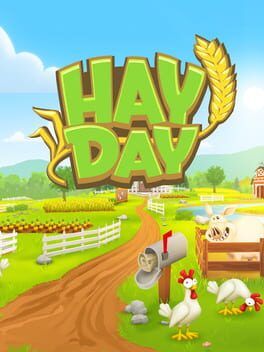
Visually and thematically it is straight out of classic Hay Day. Crops, animals and tools are turned into tile icons, while backdrops lift the same blue‑sky fields, barns and roadside stands from the 2012 original. This is very much a brand play. Supercell is leaning on an IP that has quietly generated over a billion dollars in lifetime revenue, and which still has a loyal audience in Asia. For players, the upside is immediate familiarity. For Supercell, Hay Day Match is a way of extending a valuable brand into a genre with enormous reach.
Where Hay Day Pop tried to weld puzzle play to a full‑blown base‑building loop, Hay Day Match looks more conservative. From early footage and descriptions, the farm is essentially a backdrop and progression wrapper instead of an interactive management layer. That keeps production scope down and makes it easier to ship content at the cadence match‑three players expect.
Core puzzle design: modern, juicy match‑three
Mechanically, Hay Day Match appears to chase the current standard for mobile match‑three. Boards are compact and colorful, with the kind of generous cascades, power‑up chains and screen‑filling effects that define hits like Royal Match and Homescapes.
Tile design leans on Hay Day staples. Think wheat sheaves, corn cobs, animal feed and other farm items, each with clear silhouettes to keep boards readable. Matching four or five tiles creates boosters that are visually tied to the farm theme, such as tractors or harvest tools that blast through rows and columns.
Level design in soft launch will likely track the usual difficulty curve. Early stages are almost frictionless, meant to front‑load dopamine and funnel players into a sense of mastery. The real test will be whether Hay Day Match can ramp up to the carefully tuned difficulty spikes that drive retries and, ultimately, spending, without feeling unfair.
One detail that stands out from early analysis is the meta structure. Rather than a heavy decoration system where every level win unlocks a new cosmetic choice, Hay Day Match seems closer to a lightweight background‑progression model. Completing stages nudges Mavis farther along her journey, refreshing the main menu art and occasionally dropping small story moments instead of forcing the player into constant decorating or narrative gates.
That direction matters because it directly affects how monetization hooks in. A lighter meta means less friction and potentially better day‑one retention, but it also removes some levers for selling cosmetic packs or premium decorations.
How it reuses Hay Day’s IP without becoming a farming game
Supercell’s original Hay Day is about production chains, social trading and long‑term farm optimization. Hay Day Match cannot bring that entire stack into a casual puzzle game without bloating the experience, and Hay Day Pop was the cautionary tale: too much meta, too early, in a genre where a huge slice of the audience just wants a quick puzzle fix.
Here, the farming fantasy is present without being mechanical. Animals greet you in menus instead of demanding feed timers. Crops show up as tiles instead of harvest bars. Familiar Hay Day characters cameo as quest givers and story beats rather than as nodes in a complex economy.
This is a deliberate repositioning of the IP. Rather than teaching lapsed or new players how to run a farm, Hay Day Match is using that pastoral world to soften the edges of a fairly pure level‑based puzzle game. It is also a smart way to re‑engage dormant Hay Day fans who bounced off the main game’s upkeep and timers but still have affection for the setting.
For Supercell, this IP reuse strategy fits a broader pattern. In recent years the company has experimented with extending Clash and Brawl Stars into other experiences and crossovers, always with a tight focus on player lifetime value and brand strength. Hay Day Match looks like the farming side of that plan: a way to refresh the Hay Day brand and keep it culturally present without overhauling the original live game.
Monetization: early predictions from a cautious Supercell
Supercell’s puzzle experiments tend to be brutally data‑driven. Hay Day Pop was shut down after failing to meet internal KPIs despite solid design, and the company has a reputation for killing more games than it ships. That context is important when looking at how Hay Day Match might be monetized.
While the early access build is still evolving, we can infer a likely structure based on the genre and Supercell’s past work.
First, expect a standard energy or life system. Most mobile match‑three games cap your number of failed attempts before enforcing a wait timer or an option to buy extra lives. For a Hay Day spin‑off, this mechanic slots neatly into the “take a break, come back to the farm later” fantasy that the IP already teaches.
Second, level failure will probably be the key monetization pressure. When players run out of moves with just a few tiles left to clear, the game can offer extra moves, boosters or continues for hard currency. The art of this system is in maintaining perceived fairness. Supercell knows that blatantly rigged difficulty cliffs will hurt long‑term retention and therefore lifetime value.
Third, expect a premium currency that shortcuts progression. This might be sold in bundles, rewarded in small amounts through daily missions, and used to buy boosters, extra moves or small cosmetic perks. Because Hay Day Match’s meta appears intentionally light, direct gameplay power is likely to be the main driver of spending.
Compared to more aggressive puzzlers, Hay Day Match has the opportunity to feel friendlier. Supercell’s brand depends on long‑tail engagement rather than short‑term revenue spikes. That suggests a monetization curve that ramps slowly, with more generous early rewards, and only introduces harsher difficulty spikes and stamina pressure after players have invested meaningful time.
One wild card is whether Supercell and Playabit experiment with subscription style perks or seasonal passes. Many match‑three titles now anchor their economies around a battle‑pass structure, with linear rewards for continued play over a season. A Hay Day‑themed seasonal pass that showers players with boosters, lives and decorative flourishes would sit neatly alongside the existing Hay Day live‑ops calendar if Supercell wants a more connected farm universe.
Fit within Supercell’s broader portfolio
Supercell’s live portfolio is currently dominated by Clash of Clans, Clash Royale, Brawl Stars and Hay Day, with experimental titles occasionally joining and leaving the stage. Hay Day Match is notable because it targets a very different segment: relaxed puzzle players who may never touch a synchronous PvP battler.
This is strategically valuable. Match‑three is one of mobile’s broadest genres, particularly strong with older and more casually engaged audiences, and it is a space where Supercell has never truly broken through despite Hay Day Pop and other prototypes. If Hay Day Match can find an audience, it gives Supercell a foothold in a revenue pool that is largely controlled by competitors.
Partnering with Playabit also fits Supercell’s evolving strategy of working with external studios for spin‑offs and experiments. It lets the company de‑risk internal headcount and focus on its core live games, while still leveraging its IP where it makes sense. If the data looks good, Supercell can scale up support and cross‑promotion. If not, Hay Day Match can be sunset with limited impact on internal teams.
The choice of early access territories tells its own story. India, Indonesia and the Philippines are huge, mobile‑first markets where puzzle games perform well and user acquisition costs are relatively low compared to Western markets. Testing there lets Supercell and Playabit tune difficulty, monetization and content cadence before a potential global rollout.
Early verdict: safe but smart, with monetization to watch
From what we have seen and what has been reported so far, Hay Day Match feels like a more conservative, calculated attempt at a Hay Day puzzler. It leans heavily on familiar IP, adopts a proven match‑three template and trims away the more experimental base‑building elements that weighed down Hay Day Pop.
For players, that should translate into a cozy, low‑friction puzzle game wrapped in a world that many already love. For Supercell, it is a data probe into the modern match‑three market and a chance to diversify its portfolio without diluting the main Hay Day experience.
The real story will be in the details of its monetization once the early access build matures. If Supercell and Playabit can balance fair difficulty with compelling spend opportunities, Hay Day Match could finally give Hay Day the puzzle spin‑off it has always seemed destined to have. If the numbers don’t add up, this farm might be headed for the same barn as Hay Day Pop.
Either way, its limited early access in Asia will tell Supercell what it needs to know long before the rest of the world ever sees the loading screen.