
Eric Barone’s latest Haunted Chocolatier blog quietly doubles as a postmortem-in-progress on announcing too early, working solo after a mega-hit, and why this game’s hype cycle feels so different from Stardew Valley’s.
Eric Barone’s newest Haunted Chocolatier blog is framed as a reassurance that the game is still alive, but read between the lines and it is just as much about how you recover from announcing too early, how you work after a phenomenon like Stardew Valley, and how expectations have mutated compared to his first breakout hit.
In a short update, Barone talks about being “very productive lately,” restates that Haunted Chocolatier will not be abandoned, and repeats his familiar mantra that it will release when it is done. The interesting part is not the status update itself, but what it reveals about the development process of a solo creator living inside a multi‑million‑player spotlight.
Announcing Haunted Chocolatier too early
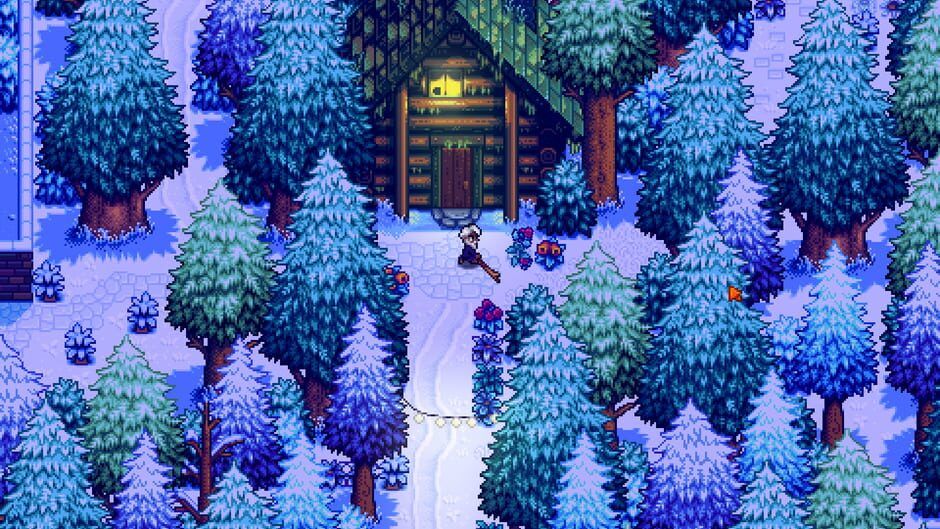
Barone finally says the quiet part out loud: he probably announced Haunted Chocolatier too early. Years on from that first reveal trailer, all we have are a handful of screenshots, a fishing tease, and a general pitch about running a haunted chocolate shop out of a spooky castle. By his own admission, the timeline between reveal and release has stretched much longer than he feels comfortable with.
He also hints he had reasons for going public when he did, then deliberately declines to explain them. The subtext is clear enough. At the time, Stardew Valley was still growing, expectations for what he would do next were ballooning, and pressure was building from all sides. Announcing Haunted Chocolatier early likely served several functions at once: planting a flag that he was moving on creatively, drawing a boundary between Stardew updates and the new project, and giving fans a concrete image that was not just “Stardew 2.”
The downside is that once a game exists publicly, it no longer lives only inside the developer’s head. A work in slow, private evolution suddenly becomes a shared object of speculation, timelines, and rumors. Every Stardew patch, every quiet month, every off‑hand convention quote gets recast as a data point about Haunted Chocolatier’s invisible progress.
Barone clearly feels that burden. His blog does not just confirm that development is ongoing. It methodically swats down myths about the game being abandoned, turned into Stardew DLC, or secretly delayed to 2030. Announcing early bought him breathing room on one level, but on another it guaranteed that the game’s entire long gestation would play out in front of millions of spectators.
Solo development pacing after a mega‑hit
The other theme of the blog is pace. Barone repeats that he is “still working like always,” which is a revealing choice of words. Stardew Valley was famous for being the product of one person grinding for years in relative obscurity. There were no daily discourse cycles about whether the game existed. No four‑myth Kotaku breakdowns to respond to. For most of its development, Stardew only had to answer to Barone’s own internal deadlines.
Haunted Chocolatier is being made under the glare of a global success story. Stardew now sells and updates across almost every modern platform. Barone is not just a solo developer any more. He is also the de facto head of a tiny but powerful brand, fielding ports, updates, and endless demand for more content in a game that already consumes thousands of hours of players’ time.
His new blog tries to separate these tracks. When he is working on Stardew, he says, he is focused on Stardew, not using it as a test bed for Haunted Chocolatier ideas. That is partly about avoiding spoilers, but it also reads like a line he has had to draw for his own sanity. If every Stardew change had to secretly justify itself as R&D for the next game, he would never be allowed to work on anything for its own sake.
At the same time, he is candid that Stardew’s popularity pulls on his schedule. He continues to update it because it remains enormous, and because he still has ideas he wants to see in the game. That creates a development loop few solo creators ever face. The success of your first project constantly generates new work that competes directly with the time and headspace needed to finish the second.
The blog’s calm, slightly weary tone suggests a rhythm that is still fundamentally solo. Rather than ramping up a big studio to brute‑force Haunted Chocolatier into existence, Barone talks about being part of a very small group and liking it that way. The trade‑off is speed. Haunted Chocolatier is clearly not being built to hit a date on a publisher slide; it is being built at the pace that one person with a world‑famous live game can sustain.
How Haunted Chocolatier’s hype cycle differs from Stardew’s
The contrast with Stardew Valley’s pre‑launch cycle is stark. Before release, Stardew was a curiosity on niche forums and small press sites. It did not have to fight rumors that it had been abandoned or folded into someone else’s game because barely anyone knew it existed. Early access and public roadmaps did not define it. Stardew arrived mostly as a finished surprise.
Haunted Chocolatier is the opposite. It was announced with polished pixel art, a fully formed premise, and the name of a celebrity indie developer attached. Within days it had dedicated subreddits, theory videos, and wishlists in the hundreds of thousands. Years later, the game is still nowhere near release, but its community has already gone through multiple emotional cycles, from early hype to impatience to outright anxiety.
That is what Barone is responding to now. His blog gently resets expectations by refusing to participate in the normal marketing drumbeat. There is still no release window, no content roadmap, and no promises beyond “I am working and I will not abandon this.” Instead of trailer beats, he is giving players a philosophy of development: games should come out when they are done, not when a date on a calendar says so.
In a way, this is Stardew’s success rewriting what is considered normal for a solo project. Haunted Chocolatier’s community discourse looks more like that of a big double‑A or triple‑A release, complete with rumor cycles about delays and abandonment. Barone’s blog is a quiet rejection of that framework. He keeps pulling the conversation back to the work itself. Are you making progress? Then the game is healthy, regardless of how many years have passed since announcement.
Lessons from this stage of development
Taken together, the latest Haunted Chocolatier update reads like a mid‑development postmortem in progress.
Announce too early and you buy yourself short‑term clarity at the cost of years of public speculation. Work solo after a mega‑hit and you trade the security of your success for a permanent split focus between maintaining the old phenomenon and delivering something genuinely new. Build a fanbase of millions and the quiet, private years of iteration that defined your first project are replaced by players trying to interpret every silence as a sign.
Barone’s answer, for now, is to shrink the scope of what he promises publicly and to trust his own pace. He will not explain why Haunted Chocolatier was revealed when it was, he will not use Stardew as a marketing vehicle for it, and he will not turn either game into a content pipe for the other. He has drawn a line between projects, and between his work and the community’s desire for certainty.
That might frustrate fans who want dates, systems breakdowns, or a clear launch window. But it also preserves something crucial about how Stardew was made in the first place. Haunted Chocolatier is not being built as a sequel product on a conveyor belt. It is being built like an intensely personal follow‑up, in the margins of ongoing success, by someone still trying to protect the headspace that allowed their first game to exist.
The latest blog does not give new footage or mechanics to dissect, but it does show a creator figuring out, in public, how to manage a second act. In the end, that might be the real story of Haunted Chocolatier’s long wait: a slow, sometimes awkward process of learning how to stay a solo dev when the whole world is watching.