
Giant Skull’s Dungeons & Dragons action game is dead before it was ever shown. Here is what the cancellation says about the risk of big-budget licensed games today, and whether the studio can realistically salvage its work as a new original IP.
A AAA Dungeons & Dragons Dream, Cut Off Early
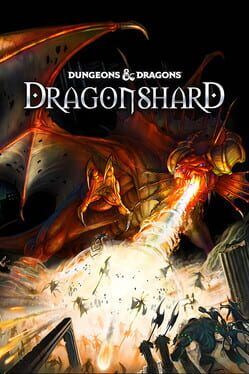
Less than a year after being announced as a “definitive moment” for Hasbro’s gaming ambitions, Stig Asmussen’s Dungeons & Dragons action game at Giant Skull has been cancelled.
The project, a single player Unreal Engine 5 action adventure set in the D&D universe, was being built by a new studio led by the director of Star Wars Jedi: Fallen Order and Survivor and former God of War III director. On paper, it looked like a perfect alignment of a prestige fantasy license, a proven creative lead and a platform holder eager to turn tabletop brands into a video game pillar.
Instead, Bloomberg reports that Wizards of the Coast quietly terminated the publishing agreement with Giant Skull earlier this year, long before the game reached full production. Hasbro has now confirmed that the Dungeons & Dragons project is no longer in development.
In a statement provided to multiple outlets, Wizards framed the move as part of its normal greenlighting process: “We assess concepts at every stage of development. While we decided not to pursue an early concept from Giant Skull, we have great respect for Stig Asmussen and his team and value our ongoing relationship.”
Asmussen, for his part, has said that “things are good at Giant Skull” and that the studio is already talking to other publishers about what comes next.
What We Actually Know About Giant Skull’s Canceled D&D Game
The Dungeons & Dragons game was in very early development. Externally, almost everything we know comes from the original announcement and what Hasbro has told investors about its wider slate.
Giant Skull pitched and began prototyping a third person action adventure that leaned on three pillars: immersive storytelling, heroic combat and exhilarating traversal. The shorthand description reads almost like a D&D flavored Star Wars Jedi, which is exactly why the partnership looked attractive.
Hasbro had positioned the title as one of the flagship efforts in its promised billion dollar push into video games alongside:
- Exodus, a Mass Effect style sci fi RPG at Archetype Entertainment.
- Warlock, a darker Dungeons & Dragons action game in development at Invoke Studios, currently targeting 2027.
Behind the scenes, Bloomberg’s reporting and follow up coverage suggest a different story. Wizards of the Coast apparently decided earlier this year that it was not going to pursue Giant Skull’s concept after all. One of the major reasons cited across multiple reports is potential overlap with Warlock: two D&D third person action adventures on similar timelines, both chasing the same slice of the market.
Rather than fund two parallel bets that might cannibalize one another, Hasbro seems to have chosen the project it already had deeper internal ties to and shut down the newer deal.
What The Cancellation Says About AAA Licensed Game Risk
On the surface, dropping a Dungeons & Dragons game led by the director of Star Wars Jedi looks bizarre. Taken in context with how AAA licensed games now function, the decision tracks much more clearly.
1. Licenses No Longer Guarantee Security
Once upon a time, attaching a major entertainment brand to a game was the safety net. Today, license holders are the ones scrutinizing return on investment most aggressively. Hasbro has huge ambitions, but it is also cutting back projects that do not fit a very specific portfolio plan.
The D&D brand did not save Giant Skull’s game because it was not about filling a generic “we need a D&D title” checkbox. Hasbro already has Baldur’s Gate 3 as a prestige success, Warlock as its in house action adventure bet and a slate of smaller tie ins. Another big budget game only makes sense if it hits a clearly differentiated audience or platform niche.
2. Portfolio Overlap Is Becoming A Deal Breaker
In the current cost climate, large publishers are actively avoiding products that feel like internal competition. If Warlock already covers the darker fantasy action lane in 2027, a slightly more cinematic, Jedi style D&D game might be redundant instead of complementary.
From a licensing perspective, that is a sharp change from the older “more is more” thinking. The new calculus is closer to: one major live service attempt, one prestige single player, one mobile play and fill the rest with partnerships and expansions.
Giant Skull’s pitch reportedly overlapped too much with an existing commitment, and that was enough to kill the deal while it was still cheap to walk away.
3. AAA Licensed Games Have To Prove They Are Franchise Builders
Hasbro has made it clear that it is not chasing throwaway tie ins. It wants games it can expand over a decade, nurture as evergreen platforms and cross promote with film, TV and tabletop. That expectation raises the bar for early concepts.
For a new studio like Giant Skull, that creates a high risk loop. You need to prove you can deliver a franchise quality experience to secure the license, but you do not get the budget or time to prove that unless you already have the license and funding.
In that light, Hasbro’s comment about “assessing concepts at every stage” sounds less like a neutral pipeline note and more like a reminder that a license today is contingent, contingent on constant evidence that the game will grow the brand long term.
4. External Studios Shoulder Most Of The Downside
Giant Skull now faces the classic AAA work for hire trap. The team has likely spent a year or more building pipelines, prototypes and tools that are tightly bound to the Dungeons & Dragons pitch, only to have the underlying business reason removed.
Hasbro, by contrast, walks away having sunk relatively limited cash into early development. Its core risk sits with its own internal games, while external partners absorb the turbulence when portfolios are reshuffled.
The result is a climate where big licensed deals are still attractive headlines, but can evaporate faster than ever if the macro plan changes.
Can Giant Skull Realistically Pivot To An Original IP?
The immediate question for Giant Skull is simple: does the canceled D&D project die with the license, or can it become the foundation of a new original game?
There are three main angles to consider here: tech and systems, narrative and worldbuilding, and business reality.
Reusing The Tech And Gameplay Systems
The good news is that the most expensive, slowest work that happens in the early life of a AAA action game is, in theory, license agnostic.
Giant Skull has been:
- Standing up Unreal Engine 5 pipelines, tools and workflows.
- Prototyping traversal systems, melee combat and enemy AI.
- Building animation, level greyboxes and camera systems tuned for cinematic third person action.
Very little of that is specific to Dungeons & Dragons. If the contract did not give Hasbro ownership of the implementation itself, most of the foundational work can move directly into a new project. Even if key assets are off limits, the knowledge and solved problems stay in house.
Asmussen’s track record on Jedi and God of War suggests a heavy focus on animation driven combat, readable enemy telegraphs, and traversal that doubles as environmental storytelling. Those pillars are flexible. They can live in a grimy sci fi setting, a new fantasy universe or something stranger with comparatively little rework.
From a pure production standpoint, pivoting the existing mechanics into a new IP is not just realistic, it is almost certainly what the studio is doing already.
Rebuilding The Fiction From Scratch
The harder part is everything that lived in the D&D universe: classes, spells, monsters, lore, gods, the visual language of armor and magic. All of that has to be stripped away.
Licensed projects tend to lean on their source material for frictionless communication. A “level 5 paladin with smites” immediately tells players something. A beholder, a mind flayer or a red dragon conveys tone, danger and rules at a glance.
Lose the license and you lose that shorthand. Giant Skull will need to invent its own archetypes, bestiary and lore, then teach players a new language from scratch. That is achievable, but it is slower and more expensive in pre production because every design choice must pull double duty as mechanics and worldbuilding.
The upside is creative freedom. Without D&D’s rules and lore to answer to, the studio can tailor the fiction directly around the gameplay they have proven out. If the traversal is at its best with vertical, ruined megastructures, you build a world that justifies that. If the combat sings when you mix melee and short sprint teleports, you invent a magic or tech framework that makes those abilities feel natural.
In other words, the project can shift from “how do we express D&D in an Asmussen style action adventure” to “what world makes our combat and traversal feel inevitable.” Jedi: Fallen Order did that for Star Wars, but the IP boundaries were always present. Here, Giant Skull can prioritize feel over canon.
Winning A New Publishing Deal
The largest uncertainty is not creative. It is financial.
Bloomberg and subsequent reports all point to Giant Skull actively talking to new publishers. The obvious pitch is that they have a battle tested director, a seasoned core team and a mostly agnostic action adventure framework that can be rewrapped in new fiction.
Convincing a publisher to fund that is difficult, but far from impossible.
There are strong arguments in the studio’s favor:
- Asmussen’s name carries weight with platform holders and investors after Jedi’s commercial success.
- Third person single player action adventures are one of the few non live service genres that still secure big budgets when backed by high end direction.
- With no license fees involved, every sale of a new IP game flows more directly back to the publishing partnership.
On the other hand, publishers are skittish. The failure rate of big budget original IPs is high, and the industry is still digesting expensive misfires from the last generation. Giant Skull will almost certainly have to:
- Scope the project carefully around a clear, contained first game rather than an immediate trilogy.
- Prove out marketability with strong vertical slices and a tight, readable hook that is not dependent on a known IP.
- Be flexible about platform strategies, timed exclusivity or subscription partnerships that de risk the investment.
The most realistic path is that the skeleton of the D&D project becomes an original universe action adventure that either lands with a mid sized AA publisher willing to stretch up, or becomes a prestige partner title for a platform holder or subscription service that wants another cinematic single player showcase.
The Bigger Picture For AAA Licensed Games
Giant Skull’s situation sits inside a broader trend that should worry anyone building careers around licensed blockbusters.
License holders like Hasbro, Disney and Warner Bros are tightening control over portfolios and demanding that licensed games function as long term brand infrastructure, not just short term cash grabs. That produces more Baldur’s Gate 3 style hits at the top and a lot more early casualties at the prototyping level.
For external studios, that means:
- Expect license deals to be provisional, highly conditional and vulnerable to internal competition at the licensor.
- Structure projects so that tools, systems and even broad fiction can survive without the brand attached.
- Treat the license as a marketing and creative bonus rather than the spine of the studio’s entire business.
Viewed from that angle, Giant Skull might actually be in a healthier position now than if the D&D game had limped deep into production before being cut. The studio is small, its tech is current, and the team still holds momentum.
The tragedy is that the industry almost had a Dungeons & Dragons action adventure from the director of Jedi: Fallen Order. The opportunity is that the same creative talent could now be applied to a world that belongs entirely to Giant Skull, not a licensing spreadsheet.
If that pivot works, this cancellation may end up remembered less as a missed chance for D&D and more as the messy first step in the birth of a new original action franchise.