
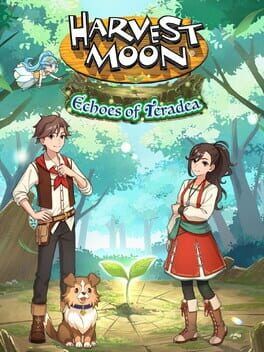
Early Harvest Moon: Echoes of Teradea previews point to a farming RPG built around crop rotation, animal companions, Happilia-driven quests, and a much broader world, but key questions remain before launch.
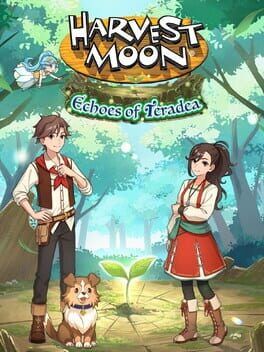
Image: IGDB
Store links: Harvest Moon: Echoes of Teradea on Steam
A bigger Teradea puts pressure on the daily farm routine
Harvest Moon: Echoes of Teradea is currently dated for October 15, 2026, and the latest preview coverage points to the clearest shift in Natsume’s new farming RPG: the farm is still central, but the world around it appears to be demanding much more of the player’s day. RPGamer reports that the game is planned for PC, PlayStation 5, Xbox Series X|S, Nintendo Switch, and Nintendo Switch 2, while IndieBunny’s listing points readers to Steam and lists the price as TBA.
That platform spread and release timing make this a practical near-term question rather than a distant announcement. The tension in this Echoes of Teradea preview cycle is whether Harvest Moon can support a wider adventure structure without thinning out the daily satisfaction of planting, watering, ranching, upgrading tools, and learning a village’s rhythms. Based on reports from Nintendo Everything, RPGamer, and Shacknews, Natsume is trying to answer that by connecting exploration to farming progression instead of treating it as a separate side activity.
This is still early preview material, not a review verdict. The available impressions come from demonstrations and preview access, not a full public accounting of pacing, performance, late-game economy, or how the Switch and Switch 2 versions compare. What can be said with confidence is that Harvest Moon: Echoes of Teradea is being presented as one of the series’ more traversal-heavy entries, with a broader map, multiple settlements, animal companions, and progression systems that ask players to leave Bloomfield Village regularly.
The premise turns chores into regional recovery work
The setup begins in Bloomfield Village, where RPGamer says players control a customized farmer raised in the village before the land is disrupted by mist, beasts that roam at night, earthquakes, and power outages threatening settlements across Teradea. Shacknews similarly describes the Forest of Echoes being covered in a strange mist as natural disasters begin to affect the surrounding land.
The important systems detail is Happilia. According to RPGamer, the preview showed the player meeting Lupo, the Guardian Spirit of the Bloomfield region, and needing to prove they are working with the Harvest Goddess by collecting enough Happilia to revive the local Spirit Tree. Happilia is generated by helping the local populace, which gives the quest structure a clear life-sim purpose: requests are not merely errands for cash or friendship points, they are tied to the restoration of the region.
For an RPG-minded player, that is the most promising connective tissue in the preview. Farming sims can struggle when the main story feels like a polite interruption to the crop calendar. Echoes of Teradea, as described in the previews, appears to route regional healing through the same behaviors that usually define the genre: favors, relationships, resource work, and local problem-solving. That does not guarantee the quest writing will have weight, but it does suggest a progression spine that is easier to read than a vague instruction to simply explore until something happens.
Farming adds soil management rather than abandoning comfort
The farming loop still sounds recognizable. Shacknews reports that days begin with the usual maintenance: tending fields, planting vegetable crops, clearing weeds, seeding barren plots, watering by hand when needed, and using technology such as sprinklers. RPGamer adds that the player can expand and fully decorate both the house and farm, while tools or skills can be upgraded.
The most consequential confirmed addition is soil quality. RPGamer says Echoes of Teradea includes a soil quality element that requires players to rotate fields to get the most out of them. If tuned well, that could give long-term farm planning more texture than simply expanding acreage and upgrading watering coverage. Crop rotation creates an incentive to think in seasons, plot layout, and recovery windows, which fits the patient structure that stronger farming RPGs use to make routine feel deliberate.
There is also a ranching layer with several animal types. RPGamer names different types of cows and chickens, while Shacknews adds sheep to the livestock routine and says animals need to be cared for and loved to produce well. Neither preview establishes the full breeding, product-quality, or festival structure, so it would be premature to judge the depth of ranch progression. Still, the early signal is that Teradea’s larger world has not replaced the farm board. It has created more demands around it.
Exploration is built around access, routes, and preparation
Nintendo Everything’s preview describes Echoes of Teradea as having an especially large world for Harvest Moon, with multiple villages and regions, caves, hidden areas, foraging, and places that appear inaccessible at first. RPGamer reports that players will visit four different villages and that Natsume has aimed to make the open world require more thought to traverse than Harvest Moon: The Winds of Anthos.
That comparison matters because scale alone is rarely enough in a farming RPG. A large map can become dead time if the reward structure is thin or if traversal eats the day without meaningful choices. Echoes of Teradea’s previews point toward a more gated, route-based approach. RPGamer gives one concrete example: a bridge to Tidewind needs repairing early on, but players can still reach the area by using Teradea’s cave system. That is a better sign than a simple lock and key, because alternate routes can make exploration feel like problem-solving rather than waiting for a checklist to clear.
Shacknews adds that players will need to prepare before heading out, since the day/night cycle can catch up with them. Campsites can be used to rest, recover stamina, and cook at a campfire. Tools such as ladders and animal companion abilities also factor into access, according to Shacknews. RPGamer notes that skills can be unlocked by finding statues scattered across the world, and that activities include requests, mini-games, and even a task to take a selfie with a special statue. Those details suggest the map is being used as a progression board, with movement, stamina, tools, mounts, and discoveries feeding back into what the player can reach next.
Animal companions look like build choices, not cosmetic pets
The animal systems are split between farm animals, mounts, and a new companion layer. Shacknews reports that camels can be used for desert travel and reindeer for colder climates, while RPGamer says animals can be ridden in different biomes and that mounts can be summoned with a whistle. RPGamer also notes that the large open map includes many fast travel points, which should help prevent the mount system from becoming the only solution to distance.
The more interesting change is the pet companion system. RPGamer says pets can accompany the player on outings and provide useful skills. Its example is a Bernese dog able to calm animals that are acting aggressively, including wolves and bears. Shacknews describes a Bernese puppy skill called Intimidation that can help mitigate hostile animals. The wording differs slightly across the previews, but the shared point is clear: pets appear to have functional field roles.
That has real progression implications. If pets can cover danger mitigation, stamina recovery, traversal support, or biome comfort, choosing a companion becomes closer to selecting a field loadout. The sources do not provide a full pet roster or explain how easily players can swap companions, level them, or stack their effects with mounts and tools. Until those details are shown, it is safest to frame the system as promising rather than proven. Still, it is one of the preview’s sharper life-sim changes because it turns affection and animal care into exploration utility.
Hostile wildlife changes the tone without making it a combat preview
One point needs careful framing: Echoes of Teradea does include danger, but the previews do not describe it as a combat-first farming RPG. Nintendo Everything specifically observes that Teradea does not appear to be filling the world with enemies to fight, instead emphasizing wandering, foraging, hidden spaces, and figuring out how to reach distant areas. At the same time, Shacknews reports that an early part of the developer playthrough had a section blocked by angry wolves, and RPGamer mentions aggressive animals such as wolves and bears.
That leaves Echoes of Teradea in an interesting middle space. The world is not being presented as a dungeon crawler, but it is also not frictionless countryside. Night beasts, mist, blocked routes, hostile animals, environmental preparation, and companion skills all point toward a soft adventure structure where danger shapes planning rather than replaces farming.
For players who come to Harvest Moon primarily for calm routine, that distinction matters. The previews suggest the pressure is logistical: bring the right companion, manage stamina, use campsites, repair or bypass blocked paths, and learn the terrain. For players who want a stronger RPG spine, the unanswered question is whether those obstacles grow into meaningful builds and route choices over dozens of hours, or whether they remain light flavor around a traditional crop-and-request loop.
Release details are clear, but the buying questions are still open
RPGamer reports an October 15, 2026 release for Harvest Moon: Echoes of Teradea on PC, PS5, Xbox Series X|S, Nintendo Switch, and Nintendo Switch 2. IndieBunny’s listing identifies Natsume Inc. as publisher, points to Steam, and lists the price as TBA. The available source material does not confirm performance targets, file size, physical edition details, upgrade paths between Switch and Switch 2, or platform-specific features.
That leaves practical reasons to wait if you are choosing a version. A broad open map with multiple villages, caves, fast travel points, mounts, campsites, and companion abilities can live or die on load times, frame pacing, interface speed, and how quickly the game moves between farm chores and field exploration. None of the supplied previews settle those questions. They also do not establish how demanding the soil rotation system becomes, how repetitive Happilia requests are, or how much personality the four villages have across seasons.
As early impressions, though, the Harvest Moon Echoes of Teradea preview cycle is coherent. Natsume’s 2026 entry is being shown as a Harvest Moon farming RPG where the core loop expands outward: grow crops, care for animals, help villagers, collect Happilia, revive Spirit Trees, unlock skills, and use pets and mounts to push deeper into Teradea. That is a strong pitch for players who like progression webs and regional restoration arcs. The verdict should wait for full reviews, especially on performance and pacing, but the latest preview footage and reports give this entry a clearer systems identity than a simple cozy sequel.