
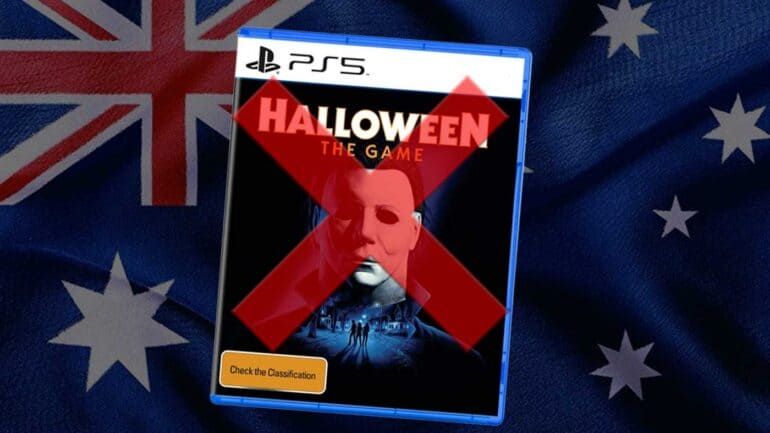
Halloween: The Game has been refused classification in Australia, blocking legal physical and digital sales there and in New Zealand. Here is what is confirmed, what remains unclear, and what horror fans should expect before launch.
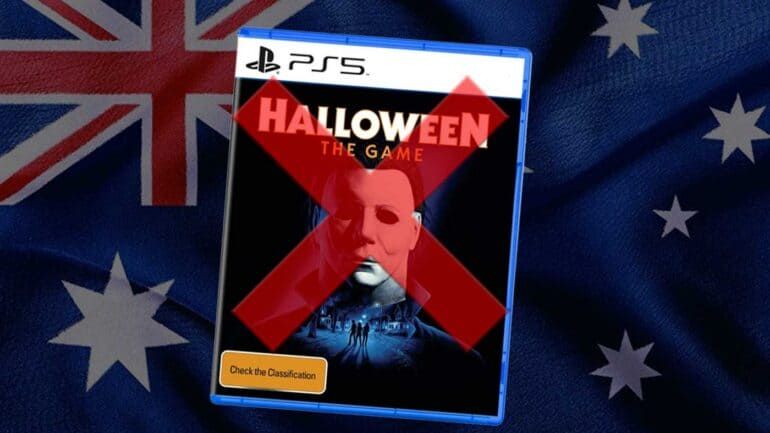
Image: press-start.com.au
Australia’s rating refusal shuts the door before launch
Halloween: The Game has been refused classification in Australia, and publisher IllFonic Publishing says that decision prevents the licensed horror game from being sold physically or digitally in both Australia and New Zealand. The confirmation came through the official Halloween: The Game social account, which said the Australian Classification Board denied the game a rating “despite every effort” from the team.
That is the hard fact at the center of the scare: without classification, the game cannot be legally sold through standard channels in Australia. GameSpot, Press Start, Checkpoint, DayOne, and DualShockers all report the same publisher statement, which frames the issue as a classification refusal rather than a platform delay or a regional marketing decision.
The timing makes the refusal sharper for horror fans. GameSpot lists Halloween: The Game for a September 8, 2026 launch on PC, PS5, and Xbox Series X|S, while Australian outlets reported the classification news on August 10, roughly a month before release. For players waiting to patrol or survive Haddonfield from Australia, the door has closed late enough to sting, but early enough that the central question becomes whether IllFonic can still change course.
The reason is a controlled substance, not Michael Myers
The most striking part of the decision is what IllFonic says did not trigger it. According to the official Halloween: The Game account, the refusal “was not based on the presence of the iconic slasher, Michael Myers, or the outstanding kills that can be performed in the game,” but instead on “the presence of a controlled substance.”
That distinction matters because Halloween: The Game is built around an explicitly violent horror fantasy. GameSpot describes it as inspired by John Carpenter’s 1978 film, with players either taking on the mask of Michael Myers or playing as Haddonfield citizens trying to survive the night. DayOne describes the game as an asymmetric stealth-horror title with both single-player and multiplayer modes, where players survive or slay across Haddonfield as civilians or Michael Myers.
The official statement does not identify the controlled substance, describe how it appears, or confirm whether it affects gameplay. Press Start adds an important but unconfirmed detail, reporting that “it’s said” the game lets players smoke weed to gain a buff that allows Michael to ping across the map. Because that detail is not included in IllFonic’s quoted statement, it should be treated as a report rather than a confirmed mechanic. What is confirmed is narrower: IllFonic attributes the refusal to a controlled substance, not the slasher violence.
Australia’s R18+ rating still has a hard line around drugs
The refusal sits inside a long-running Australian classification pattern that often surprises overseas players. GameSpot notes that classification is mandatory for games in Australia, and that works can be refused classification if they are deemed to violate the country’s guidelines. A refusal is functionally a ban on legal sale, which is why outlets are describing the Halloween game ban in Australia as effective rather than symbolic.
Press Start points to the specific pressure point Australian players know well: even with an R18+ rating available, the Classification Board can still rule harshly on games where substances positively affect the player. Checkpoint makes a similar connection, saying Australia has long taken a strict stance on depictions of drugs in games and citing Fallout 3 as an earlier example of a game altered for the Australian market after issues involving references to real drugs.
The uncomfortable tension for horror fans is clear. A game about stalking suburban streets, improvising survival, and performing slasher kills can still run into a harder wall over drug depiction than over murder. That does not mean violence is irrelevant to Australia’s ratings history. GameSpot cites past refused or banned titles such as Hotline Miami 2, Saints Row 4, South Park: The Stick of Truth, and the 2011 Mortal Kombat reboot. In this case, however, the publisher’s own explanation points away from blades and bodies and toward a substance rule.
New Zealand is caught in the same availability blackout
IllFonic’s statement says the decision means the company cannot sell Halloween: The Game in either Australia or New Zealand. The sources do not provide a separate New Zealand classification explanation, so the safest reading is that New Zealand players are affected through the publisher’s regional sale plans rather than through a separately detailed ruling in the available reporting.
For players, the practical result is still the same. The publisher says neither physical nor digital versions can be sold in those territories. That matters for console players in particular, since platform storefront availability usually follows local sale permissions, and physical copies rely on retail distribution that cannot simply ignore classification.
There is also no confirmed workaround in the source material. None of the supplied reports confirms whether existing wishlists, pre-orders, account-region changes, imported discs, or cross-region keys will work. Horror fans in Australia and New Zealand should treat the game as unavailable through normal local storefronts unless IllFonic announces a successful resubmission, a modified regional version, or a reversal.
Could IllFonic change the game and resubmit it?
A refusal does not always have to be the final scene. DualShockers notes that classification decisions are “usually not final” in the broader sense that studios can resubmit games after making changes, sometimes with region-specific edits. Checkpoint also says it is possible the Halloween: The Game decision could be overturned with or without developer modifications, while stressing that it is unclear whether any resolution could happen before launch.
The strongest confirmed position from IllFonic right now is disappointment, not a detailed remediation plan. The official statement says the team made “every effort,” but it does not announce a content patch, a renamed item, a separate Australian build, an appeal, or a revised submission. Press Start says it seems unlikely, based on IllFonic’s response, that the publisher will simply rename or change the substance, but that is an outlet reading of the situation, not a confirmed publisher roadmap.
If the reported issue involves a gameplay benefit tied to a controlled substance, the design question becomes thornier than a cosmetic edit. A survival-horror multiplayer game lives on readable pressure: what resources do, how survivors create distance, how the killer tracks, and how both sides understand risk. Removing or renaming a substance might sound simple, but if it is bound to tracking, buffs, map information, or balance, a regional version could need testing rather than a quick text swap. The sources do not confirm that this is the exact problem, but they do show why Australian classification disputes can turn into design and scheduling problems instead of paperwork.
What horror fans can expect outside the banned regions
Outside Australia and New Zealand, the supplied reporting says Halloween: The Game is still scheduled to launch September 8, 2026 for PC and console, with GameSpot specifying PC, PS5, and Xbox Series X|S. DayOne describes the project as coming from IllFonic and Gun Interactive, while GameSpot names IllFonic as developer and Press Start identifies IllFonic Publishing as publisher. The shared picture is a licensed multiplayer horror release with IllFonic central to development and publishing communication.
The game’s hook is familiar but potent: Haddonfield as a playable pressure chamber. According to GameSpot, players can become Michael Myers or play as everyday citizens trying to survive the night. DayOne says the game includes both single-player and multiplayer modes, and describes it as a tribute to Carpenter’s original film. DualShockers compares its multiplayer structure to Dead by Daylight, with several players as the Heroes of Haddonfield and another controlling Michael Myers.
For horror players outside the affected territories, this refusal does not currently change the reported launch date or platforms. For Australian and New Zealand fans, the practical advice is harsher: wait for an official IllFonic update before making plans around launch night. The current confirmed status is no legal local sale, no announced regional edit, and no confirmed timing for any appeal or resubmission.
A slasher game stopped by the wrong kind of danger
The Halloween The Game Australia situation is strange because it cuts across expectation. A licensed Michael Myers game arrives carrying all the obvious classification risks: stalking, screaming, improvised defenses, brutal kills, and the dread of hearing danger before seeing it. Yet the publisher says the Australian Classification Board’s problem was not the Shape in the hallway. It was a controlled substance.
That leaves fans with an awkward waiting game. The game itself is still approaching for other regions, but Australia and New Zealand are locked out unless something changes. The unanswered questions are now specific: what substance triggered the refusal, whether it has a positive gameplay effect, whether IllFonic is willing or able to alter it, and whether any revised submission could clear before September 8.
Until IllFonic or the Classification Board provides more detail, the story should be kept in two lanes. Confirmed: Halloween: The Game was refused classification in Australia, IllFonic says the reason was a controlled substance, and the publisher says it cannot sell the game physically or digitally in Australia or New Zealand. Unconfirmed: the exact mechanic, any regional patch, any appeal outcome, and whether the ban will remain in place after launch. For now, the porch light is on in Haddonfield, but for Australian horror fans, the front door is still bolted.