
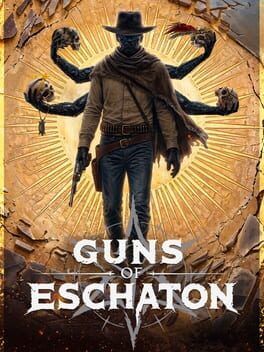
Guns of Eschaton is drawing attention after a newly released Viktor Antonov final interview and fresh gameplay details frame it as a deliberate FPS soulslike set in an apocalyptic Western America.
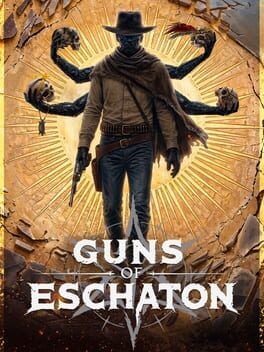
Image: IGDB
Store links: Guns of Eschaton on Steam
The final interview puts the spotlight back on Guns of Eschaton
Eschatology Entertainment and publisher 4Divinity have released a 2025 interview with Creative Director Fuad Kuliev and the late Visual Director Viktor Antonov, giving Guns of Eschaton a sharper identity than its reveal trailer alone could provide. MonsterVine and Saving Content both report that the interview centers on the studio’s debut game, a Western FPS soulslike built around an apocalyptic version of nineteenth-century America.
That timing is the hook. Guns of Eschaton was already getting attention because of Antonov’s name, with Game Informer and Wccftech tying the project to the artist and world designer known for Half-Life 2 and Dishonored. The newly surfaced Viktor Antonov final interview gives the conversation more weight because it frames the game as the last original universe shaped by Antonov before his death, rather than a shooter borrowing prestige from a famous credit.
The tension is obvious for FPS players. The pitch sounds strong: a new shooter game with revolvers, occult powers, co-op, parries, dashes, and enemy study systems. But the harder question is whether a first-person gun game can carry the weight of soulslike pacing without turning into sluggish stop-start combat. The sources describe ambition. They do not yet prove gunfeel, encounter flow, boss readability, or co-op stability.
A Western apocalypse built from research, then warped into nightmare
The most useful Guns of Eschaton details from the interview are about tone and construction. According to MonsterVine, Kuliev describes the core premise as alternate history and sums it up with the line, “Billy the Kid has a High Noon duel with Lucifer.” Saving Content, quoting the press release, uses the same line to show how the studio is positioning the world: recognizable Western iconography pushed into occult, apocalyptic territory.
Antonov’s explanation is more practical. Saving Content quotes him saying, “We draw inspiration from every detail: architecture, history, technology, weaponry, and then we add the weirdness.” That matters because Antonov’s best-known work was never about clean fantasy spectacle. Half-Life 2’s City 17 and Dishonored’s Dunwall are remembered because their spaces feel designed before they feel decorated. The sources do not show how much of Guns of Eschaton he personally touched in the shipped game, because the game is still in development, but they do support the claim that the world design was shaped around that grounded-then-strange process.
The announcement materials describe nineteenth-century America reimagined through mythic archetypes, iconic historical figures, ruined settlements, impossible machines, monstrous factions, and a country collapsing into damnation. Rock Paper Shotgun notes that the setting appears to be quite literally America, including the South, which raises an unanswered question the studio will eventually need to face: how the game handles the politics and brutality of the era it is twisting into dark fantasy. None of the provided sources answer that yet.
The FPS soulslike pitch is about pressure, not speed
4Divinity and Eschatology Entertainment are using unusually bold genre language. The Games Press announcement calls Guns of Eschaton a “first-of-its-kind Souls-like FPS,” while Saving Content’s press-release text describes it as “the world’s first soulslike FPS.” Those are publisher and developer claims, not settled genre history. The confirmed design pitch is clearer: first-person shooting where preparation, resource management, and survival matter as much as raw aim.
The shared mechanics line up with that goal. Games Press says players use specialized ammunition, timed parries, precise dashes, and a Codex that reveals enemy weaknesses through Sequence Points. Game Informer reports that combat is deliberately paced, challenging, and built around making every shot count. Wccftech similarly describes encounters where survival depends on preparation, timing, and smart resource use.
That is the part shooter players should watch closest. A soulslike FPS lives or dies on information clarity. If enemies have weaknesses, the player needs readable silhouettes, reliable hit reactions, and ammo feedback that tells you when you made the right call. If parries and dashes are central, the animation language has to be clean in first person. If every bullet matters, reload cadence, recoil behavior, spread, damage falloff, and enemy health tuning become the whole match. The sources confirm the systems. They do not yet tell us whether the guns actually feel nasty, precise, and fair under pressure.
The latest gameplay details suggest buildcrafting, bosses, and co-op pressure
GamingDebugged reports that 4Divinity and Eschatology released the first extended gameplay footage for Guns of Eschaton and says the showcase introduces the Gunslinger with No Name, a silent protagonist traveling from West to East across an apocalyptic United States alongside a co-op companion. That report also says the footage features Widow, one of seven faction leaders, described as an alchemist who runs V.I.T.R.I.O.L. Co., a dystopian operation tied to Hermetic alchemy where humans are fused with machines in pursuit of the Magnum Opus.
Across the source material, the buildcrafting language is consistent. Game Informer reports that players can customize the gunslinger with armor, talismans, consumables, active and passive abilities, firearms, and specialized ammunition. Wccftech adds occult powers to that list and says the game appears to leave room for different playstyles across repeated runs or co-op sessions. GamingDebugged says full progression is available in both solo and co-op.
For a competitive shooter brain, that build list is promising but risky. Guns of Eschaton is not being sold as a PvP-first arena shooter, so imbalance is not automatically a problem. Overpowered builds can be fun in PvE. The danger is pacing collapse. If talismans, prayers, ammo types, Codex knowledge, armor, and consumables all stack without clear encounter rules, the combat can become menu prep with occasional gunfire. If the systems click, the reward is a shooter where your loadout plan matters before the draw and your aim still decides whether you survive the duel.
Co-op is confirmed, PvP is less clear, and that distinction matters
Solo play and co-op are both part of the public pitch. Game Informer reports that Guns of Eschaton can be played solo and supports online co-op. Rock Paper Shotgun says the whole game can be played solo with co-op available throughout. Wccftech reports co-op progression is available online but notes that the press release it saw did not specify the maximum number of players. GamingDebugged describes a co-op companion in the extended gameplay footage.
PvP is murkier. Rock Paper Shotgun says the Steam page notes co-op and “apparently offers PvP as well.” None of the other provided sources emphasize PvP, and the press-release excerpts supplied here focus on PvE survival, Codex study, and faction encounters. Until 4Divinity or Eschatology provides clearer mode details, the safest read is that co-op is a central confirmed feature while PvP needs firmer clarification from official listings or future developer messaging.
That distinction is important because the technical burden changes fast. A measured PvE FPS soulslike can tolerate different priorities than a PvP shooter. Co-op still needs clean netcode, especially if parries and dashes demand tight timing, but PvP would raise harder questions about tick rate, hit registration, weapon tuning, latency compensation, and ability spam. Right now, shooter fans should treat Guns of Eschaton as a co-op-capable PvE project first, unless the studio explains otherwise.
Platforms, release timing, and the sensible wait-and-watch list
Guns of Eschaton has no announced release date in the provided reporting. Wccftech states that it can be wishlisted on PC via Steam, PlayStation 5, and Xbox Series X|S, while GamingDebugged says a release date and confirmed platforms have not yet been announced. The Steam page itself is directly linked in multiple sources, including MonsterVine and Rock Paper Shotgun, so PC visibility is the firmest point from the supplied material. Console availability should be treated as outlet-reported until readers check current platform storefronts or the publisher’s official channels.
Price, PC requirements, performance targets, console modes, crossplay, save transfer, and co-op player count are also unanswered in the provided sources. There is no basis here to claim a launch window, edition structure, early access plan, demo, or Game Pass-style subscription release.
The reason Guns of Eschaton is gaining attention is easy to read: Antonov’s final original universe gives it artistic gravity, and the FPS soulslike label gives shooter players something mechanically specific to argue about. The reason to stay measured is just as clear. This kind of game needs more than a killer world pitch. It needs weapons with character, enemies that telegraph cleanly, boss fights that respect first-person visibility, and co-op that does not sand off the danger. For now, wishlist it if the apocalyptic Western art direction and deliberate combat pitch hit your lane, then wait for deeper hands-on footage before treating it like the next essential shooter.