
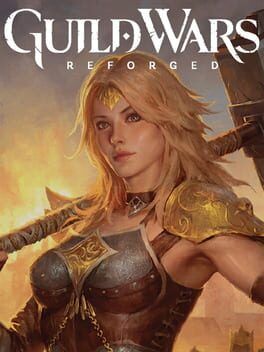
ArenaNet’s surprise Guild Wars Reforged mobile launch brings the classic MMO to iOS and Android with cross-progression, ad-supported access, and a player-first business model that could reshape legacy MMO revivals in 2026.
ArenaNet is taking a very 2026 swing at nostalgia. Guild Wars Reforged, the modernized edition of the classic MMO, is coming to iOS and Android this summer, and it is not a thin companion app or a streaming client. It is the full game, rebuilt for touch, with cross-progression and a business model that tries to respect both original PC veterans and new mobile players.
From a player perspective, this is one of the most ambitious “classic MMO” revivals yet. It is less about selling a boxed nostalgia hit and more about putting an old-school, session-friendly MMO in your pocket without cutting PC players out of the loop.
Cross-progression: One account, one roster, any screen
The centerpiece feature is cross-progression. If you already own Guild Wars Reforged on PC and have an ArenaNet account, you will be able to log in on mobile and access your existing characters, campaign unlocks, and purchases at no extra cost. Progress made on phone or tablet will sync back to PC, and vice versa.
For returning players, this changes how Guild Wars fits into daily life. The original game’s mission-based structure lent itself naturally to contained play sessions. Being able to clear a story mission on PC at home, then farm a favorite area or finish a quest chain on a bus ride without touching a different account removes a major friction point that has traditionally kept classic MMOs anchored to desktops.
New players who start on mobile with a platform login will not be walled into a separate ecosystem, either. ArenaNet is allowing Apple or Google account users to later attach an email, convert that profile to a full ArenaNet account, and then bring those same characters over to the PC client. That means there is no “mobile shard” and no long-term penalty for beginning on a phone.
Technically, that is a big deal for a game built long before cross-save became standard. From a player lens, it signals that Guild Wars Reforged is meant to be a unified service rather than a side experiment for the mobile market.
Rebuilding the interface for touch
Classic Guild Wars was already more restrained than modern hotbar MMOs. Limited skill bars, clearly defined party roles, and small-group instanced content made it feel structured and tactical. On mobile, the developers are leaning into that strength instead of trying to cram a full keyboard’s worth of keybinds onto a glass screen.
The mobile client features a reworked interface optimized for touch. While ArenaNet has not shown every screen, the broad strokes are clear. Skill activation and target selection are adapted to taps, swipes, and on-screen buttons. Party management, map navigation, and inventory are being compressed into layouts that work on phones without requiring pixel hunting.
For players, the main question is whether combat will retain its original precision. Guild Wars expects you to kite, interrupt, position, and manage resources intentionally. If touch controls introduce input delay or clumsy targeting, the game’s tactical layer could suffer. On the other hand, the relatively low skill count and discrete ability activations are well suited to mobile, especially compared to MMOs that ask you to juggle multiple full hotbars.
Session structure also naturally translates. Guild Wars uses instanced missions and explorable zones rather than a continuous open world, which already breaks play into digestible slices. That should help mobile players treat the game like a series of sessions rather than an endless treadmill. Hop into a mission, clear it in 20 to 40 minutes, log off, and pick up on PC later. The design from 2005 looks oddly tuned for a commute in 2026.
Ads, paywalls, and what “free” really means
The most controversial piece is likely the ad-supported free tier. New mobile players can download Guild Wars Reforged and access the Prophecies campaign for free with advertising. Paying for campaigns removes ads entirely and unlocks more social and account features.
ArenaNet is breaking out content and monetization along clear lines. Each of the core campaigns, including Prophecies, is sold individually at a relatively low price point. Eye of the North and the Bonus Mission Pack are additional purchases. Buying a campaign not only removes ads for that content but also enables full account login, which in turn unlocks cross-progression, chat, and trading.
From a player-first angle, there are two sides to this setup. On the positive side, there are no loot boxes, no gacha systems, and no stat-selling microtransactions in the initial pitch. You pay once for permanent access to a full campaign, just as PC players did, and that unlock removes advertising. Existing PC players are not asked to buy in again, which shows respect for long-time customers.
On the other hand, key social features are gated behind paid access. A free user running Prophecies with ads has a limited experience, especially if they cannot chat or engage in trading until they buy in. That structure nudges free players toward upgrading if they want to participate in the broader community rather than just solo content.
The fate of the ad-supported tier will come down to implementation. If ads are confined to lobby screens or post-mission breaks, they may feel closer to a demo version. If they interrupt missions or add friction to travel and inventory management, reception among mobile-first players will sour quickly. For PC veterans who simply log in with existing accounts, ads should never appear, which might create a sharp divide between returning and brand-new users.
Player experience on iOS and Android
On a practical level, Guild Wars Reforged on mobile asks players to treat their phone like a primary MMO device, not a backup. Cross-progression makes the phone a valid place to progress your main account, but the day-to-day viability will hinge on a few factors that matter to players more than any announcement bullet point.
Control comfort is the first. Long farming runs or dungeon attempts can quickly become fatiguing if touch controls are cramped on smaller screens. Tablet support and flexible UI scaling will be key for players who want to run high-end content away from their PC.
Battery life and performance come next. Classic Guild Wars is not nearly as demanding as cutting-edge mobile titles, which works in its favor. Still, running an MMO client with constant network connectivity and 3D rendering can be rough on older devices. Players will care less about benchmark graphs and more about whether they can complete a mission on lunch break without their phone overheating.
Finally, social friction matters. Guild Wars has a strong cooperative identity, with story missions and elite areas designed for coordinated teams. If mobile input methods make it harder to react quickly or communicate mid-fight, some players may prefer to reserve difficult content for PC and use mobile only for farming and lighter story play. The good news is that cross-progression lets each player define that line for themselves instead of locking them into one environment.
Respecting veterans while courting a new audience
For long-time fans, the most important aspect of this announcement is what ArenaNet is not doing. There is no hint of splitting the game into separate mobile and PC economies, no exclusive regions, and no requirement to re-buy campaigns you already own. The studio is treating existing accounts as first-class citizens on mobile, not as a nostalgic afterthought.
This approach avoids the resentment that often crops up when a legacy MMO jumps to a new platform. Many mobile conversions treat the new version as a separate product optimized to extract additional revenue from the same audience. By contrast, Guild Wars Reforged positions mobile as just another way to access the same persistent world and character roster.
At the same time, the free Prophecies offering with ads and low entry prices for individual campaigns is clearly aimed at markets where full-price PC games never gained traction. For players in regions that are primarily mobile-first, Guild Wars Reforged becomes an accessible, session-friendly cooperative RPG with a straightforward buy-in rather than a constant cash shop.
What this means for legacy MMO revival strategies in 2026
In the current wave of MMO nostalgia, studios have largely focused on classic servers and visual remasters tied to PC. Guild Wars Reforged on mobile points at a different strategy: use platform expansion and cross-progression to make a legacy MMO feel modern without rewriting its design.
There are a few clear lessons other studios are likely to watch closely. First, the technical and business commitment required to unify accounts across platforms is high, but the player goodwill payoff can be just as big. If Guild Wars veterans log into mobile and see their old characters ready to go, that emotional hook will carry the game much further than any anniversary trailer.
Second, mobile monetization does not have to default to aggressive gacha and stamina systems. ArenaNet is attempting a hybrid model where ads act as a soft demo and full campaigns are one-time purchases. If that structure proves sustainable, it will give other legacy MMOs a template for entering the mobile space without alienating their core audience.
Third, the nature of older MMOs can be a feature rather than a bug. Games built around instanced missions, smaller party sizes, and limited skill bars adapt more naturally to short sessions and touch controls. That suggests a subset of classic MMOs are particularly suited to this kind of revival, even if open-world, raid-heavy titles would struggle.
Finally, Guild Wars Reforged highlights a mindset shift. Instead of treating classic revivals as museum pieces, ArenaNet is treating its legacy as a live platform that can follow players onto whatever device they are using in 2026. If the launch sticks the landing, it will not just revive a classic. It will argue that the best way to honor an old MMO is to let it live where players actually play now.