
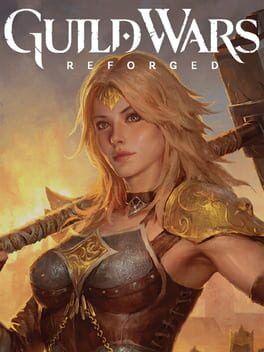

ArenaNet’s remaster of the original Guild Wars just blew past demand projections, strained legacy servers, and quietly proved that 2025 might belong to smartly updated classic MMOs.
ArenaNet expected a homecoming party. What it got with Guild Wars Reforged was closer to a server-stressing stampede.
The remaster-style overhaul of the original 2005 Guild Wars went live as a free update for existing accounts and a $20 all-in bundle on Steam and the official store. Within hours, the concurrent player count on Steam alone rocketed from the series’ usual 200–600 range to over 5,000, and that doesn’t include the long-time players still using the standalone client.
ArenaNet admitted on social media that “demand for Guild Wars Reforged blew past our projections,” and it showed. Non-Steam players were stuck in sluggish download queues as the studio scrambled to spin up additional servers and rework how it was delivering the new client.
This is not a brand-new MMO launch in 2025. It is a 20-year-old game with new life, and that context is exactly why this launch surge matters.
What Guild Wars Reforged Actually Changes
On paper, Guild Wars Reforged is not a radical remake. It is a modernization pass meant to make Guild Wars playable and attractive in 2025 while keeping the core design intact.
Reforged brings together the entire original saga – Prophecies, Factions, Nightfall and Eye of the North – under one cohesive “Reforged” client. Existing players log into familiar accounts, but the experience is wrapped in an updated launcher and new configuration options. New players get everything in a single, comparatively cheap package instead of juggling multiple campaigns.
Most of the work is under the hood or in the user experience. The client now has native controller support and is officially Steam Deck verified, which is significant for a game originally built around mouse-and-keyboard skill bars and click-to-move controls. UI scaling and modern resolution support help the aging art hold up on 1440p and 4K displays, while cleaned-up textures and effects make character models and spell spam a little less 2005 in motion.
Quality of life is where Reforged feels like more than a compatibility patch. Settings menus have been reworked to resemble a contemporary PC game rather than a relic; input rebinding, windowed and borderless options, and improved audio mixing all play into the sense that this is a modern client wrapped around a classic MMO ruleset. The tutorial and early-game onboarding have also been smoothed so that new players can understand buildcrafting, attribute points and secondary professions without needing a wiki open on a second monitor.
Importantly, the team resisted the urge to tamper with Guild Wars’ fundamental structure. Missions are still heavily instanced, the eight-skill bar remains the core of combat identity, and the game’s signature dual-class system is intact. Reforged updates the way you access Tyria, not what Tyria is.
How A 2005 MMO Crashed Modern Servers
So why did a lightly modernized 2005 MMO manage to stress ArenaNet’s infrastructure?
First, the base is bigger than the Steam charts make it look. For years, Guild Wars has quietly maintained a small but stubbornly loyal population through ArenaNet’s own client. When Reforged dropped, that existing audience all had every reason to log in again at once. The update was free, the patch notes promised long-requested quality-of-life improvements, and the Hall of Monuments link to Guild Wars 2 was front and center again, tempting lapsed heroes back with the promise of new GW2 account rewards.
On top of that came a wave of curiosity from PC players who never touched the original but live on Steam. A one-time $19.99 buy-in with no subscription fee is a compelling proposition in an era of battle passes and seasonal FOMO. Combined with prominent placement via Steam news posts and a feature push from ArenaNet on the Guild Wars 2 store page, Reforged suddenly had a sizable exposure boost that the game never enjoyed in its original NCsoft-CD-key era.
ArenaNet’s own post-mortem admits they underestimated the spike. The weakest link turned out not to be in-game instances but content delivery for the new client, particularly for players patching through the legacy launcher. Long download times and failed attempts became the visible symptom of a demand curve that looked a lot steeper than the studio’s models.
Even with the issues, servers largely stayed online. SteamDB’s charts show a sustained bump in population days after launch, not just a one-night peak, which suggests that once players were actually patched in they stuck around beyond the initial nostalgia hit.
What’s Different From Playing “Vanilla” Guild Wars
For returning veterans, Reforged feels less like a new game and more like the version they always wished ArenaNet would ship to keep the original playable.
The visual upgrades are modest, but there is a noticeable clarity boost in busy fights. Spell effects and environmental details are sharper, and modern anti-aliasing and post-processing options make old favorite zones like pre-Searing Ascalon or the Jade Sea easier on the eyes. The difference is less about new assets and more about better presentation on today’s hardware.
Moment-to-moment control is where the remaster earns its subtitle. Native controller support rearranges the HUD and ability activation in a way that surprisingly suits Guild Wars’ limited skill bars and targeted abilities. On Steam Deck or a living-room PC, the game finally feels like something you can casually play from a couch without wrestling with community-made input hacks.
Underneath those changes, the content is still the same tilted, idiosyncratic Guild Wars that never quite fit in with its contemporaries. The world is built around hub towns that lead to instanced story missions and explorable regions instead of a continuous open world. Aggro and skill timing matter more than raw gear scores. You still spend as much time in menus, experimenting with elite skill captures and attribute spreads, as you do in combat.
For MMO veterans coming from Guild Wars 2, Final Fantasy 14 or World of Warcraft, Reforged is almost retro in its pacing and mission structure. That is precisely the appeal: it is a preserved slice of a different era, made frictionless enough to tolerate in 2025.
Why Demand Blew Past Projections
One line from ArenaNet’s statement stands out: they expected interest, just not this much. Several forces converged to make Reforged more than a niche nostalgia bump.
There is the obvious nostalgia of a 20-year anniversary. Many players who grew up with the original Guild Wars are now in a place where they have disposable income, a Deck or modern PC, and a desire to revisit formative games with friends who moved on. A free upgrade for old accounts removed practically all friction. All it took was a social ping and a screenshot of an updated Ascalon to convince entire friend groups to reinstall.
But the demand is not just veterans reliving their youth. Modern MMO burnout plays a role. Live-service games in 2025 skew heavily toward seasonal progression systems, battle passes and rotating power spikes. Guild Wars Reforged offers a finite, self-contained experience. There is no subscription, no season pass and no obligation to log in weekly to keep up. For players exhausted by the never-ending treadmill, a “completed” MMO that sells itself as a contained RPG saga is suddenly attractive.
The Steam release amplified that pitch. Being on Valve’s platform instantly broadens reach and legitimizes the game in the eyes of players who never bought boxed PC games in the mid-2000s. The Reforged branding communicates that this is not just the ancient client dumped on Steam for archival purposes, but something ArenaNet has actively touched up.
Finally, there is Guild Wars 2 itself. With GW2 still running as a successful live MMO, there is a built-in audience of curious players hearing, for the first time, that there was a very different predecessor. By tying Reforged progress to Hall of Monuments rewards in GW2, ArenaNet created a virtuous loop where playing the classic directly benefits your modern account. That is a smart incentive that makes the old game feel immediately relevant.
Put together, those factors generated a launch-day swell of both returning and brand-new players that was simply larger than what ArenaNet’s legacy delivery infrastructure could comfortably handle.
What Guild Wars Reforged Says About MMO Nostalgia In 2025
The success and strain of the Reforged launch slot neatly into a broader trend. 2025 has been crowded with revivals and preservation-minded updates, from classic-server projects to surprise remasters of long-sleeping online titles. Guild Wars Reforged stands out because it is not a separate “classic realm” but a unification and modernization of the original game itself.
The lesson is that nostalgia alone is not enough. Players did not flock back just because the name Guild Wars resurfaced. They came because ArenaNet offered something that respects their time and memories: a free upgrade for loyal accounts, a reasonably priced full bundle for newcomers, technical support for modern platforms and a minimal amount of tampering with the combat sandbox they remember.
It also underlines a growing desire for “finished” online experiences. The MMO field is still healthy, but many long-running games are structurally endless, always deferring closure to the next expansion. By contrast, Guild Wars Reforged is explicitly sold as a complete saga. That has genuine appeal in an era when not everyone wants another forever game taking up permanent residence in their library.
For studios sitting on beloved yet dormant MMOs, the signal is clear. There is real commercial and community value in doing the work to modernize classic clients with good input support, updated rendering and simplified purchase paths, then tying them meaningfully into present-day franchises. What happened to Guild Wars’ servers this week is the kind of problem most of those studios would love to have.
If ArenaNet can turn this spike into sustained support and maybe a cadence of small balance or event updates, Guild Wars Reforged could become the model for how to keep a foundational MMO alive without turning it into a second live-service treadmill. As of launch week, it has already proven one thing: when you respect both the past and the player, nostalgia does not just bring people back, it fills servers to the breaking point.