
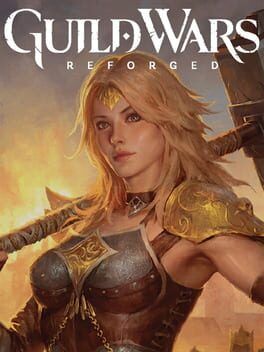

ArenaNet’s remaster of the original Guild Wars just shattered expectations, strained its servers, and proved that classic-style MMOs have serious drawing power in 2025.
Guild Wars was never supposed to have a big second act. For years it lived as a cult classic alongside its much louder sequel, a beloved but aging MMO running on a 20-year-old client. Guild Wars Reforged has completely rewritten that story.
ArenaNet’s modernized client for the original game launched as a free update for existing owners and a budget-friendly package for newcomers, bundling the full trilogy of Prophecies, Factions, and Nightfall under one roof. The studio expected a modest bump, the sort of comfortable nostalgia wave you can easily capacity-plan for.
Instead, players flooded back to Tyria hard enough to knock the hinges off the door.
A launch so big it bent the servers
Within hours of launch, population surges were hammering Guild Wars’ infrastructure. PC Gamer reported players piling into the remaster and running into login errors, instance creation failures, and sluggish transitions as the backend strained to keep up. ArenaNet acknowledged on social media that demand for Guild Wars Reforged “blew past our projections,” and support pages quickly filled with a Guild Wars Reforged Known Issues list that looked a lot less like edge-case bug tracking and a lot more like a live-fire stability triage.
For many players the most visible symptoms were:
Login queues and authentication hiccups during peak hours, especially around the first weekend when word of mouth and Steam visibility seemed to converge.
Instancing and zone transition issues in heavily trafficked areas like early Prophecies hubs and popular farming spots, where the game’s shard-based architecture was repeatedly spinning up and tearing down overworked map instances.
Party and guild services intermittently misbehaving, from delayed chat to friends lists temporarily timing out.
None of this is unusual for MMOs, but it is unusual for a 2005 game that has already had its prime. ArenaNet built Guild Wars around relatively modest concurrent populations and a buy-to-play model rather than the boom-and-bust concurrency of modern free to play titles. Reforged effectively exposed the game to a new Steam audience at the same time it reactivated a diaspora of veterans, then layered that traffic on infrastructure that was tuned for a long tail, not a front-page surge.
The studio’s response has focused on short term stability fixes and capacity adjustments, while its support site makes it clear that many of the most annoying launch issues are known and being worked on. The surprise here is not that there were problems, but that Guild Wars could still generate enough demand in 2025 to create them.
What Guild Wars Reforged actually changes
It is worth stressing that Reforged is not a remake. This is still the original Guild Wars: the same campaigns, missions, skills, and builds that anchored the game’s reputation as a tight, tactical MMO built around small-party play.
What ArenaNet has done is wrap that design in a client that finally feels at home on modern hardware and platforms.
On the content side, Reforged packages the core trilogy into a single product. Prophecies, Factions, and Nightfall are all included, giving new players a cradle-to-Nightfall arc that runs from the fall of Ascalon through the political and spiritual crises in Cantha and Elona. Longtime players already own this content, but the consolidation makes the entry proposition much clearer for newcomers compared with the old sprawl of separate boxes and keys.
Eye of the North, the Bonus Mission Pack, and other add-ons remain separate purchases. That is slightly at odds with the all-in nostalgia fantasy some fans hoped for, but it also keeps Reforged honest about what it is trying to be: a modernization of the classic client, not a sweeping relaunch with reworked progression.
The real story is under the hood.
Reforged’s renderer now supports high DPI displays and modern post-processing options, including ambient occlusion, HD bloom, and better antialiasing. The overall art direction is untouched, so character models and environments still look like early-2000s stylized fantasy, but they are presented with much cleaner edges and lighting. On contemporary monitors that alone makes Tyria feel less like a blown-up time capsule and more like a deliberately retro world.
The user interface gets overdue attention. Skill icons have been redone at higher resolutions, text can be scaled to be genuinely legible on 1440p and 4K screens, and a variety of quality of life touches smooth over menus that used to feel cramped and fiddly. A new quest tracking and direction system reduces the confusion for new players who might otherwise bounce off the game’s older mission structure.
One of the headline additions is full XInput controller support. You can now play Guild Wars with a modern gamepad, complete with an on screen control guide and bindings that make sense instead of feeling like an afterthought. Combined with tweaks to camera and input responsiveness, this is a genuine shift in how the game feels to control, especially on devices like the Steam Deck.
The audio revamp is less flashy but arguably just as important. Reforged rebuilds the sound pipeline so that environmental effects no longer depend on now-ancient hardware assumptions. What players actually notice is a cleaner, more consistent mix that does better justice to Jeremy Soule’s soundtrack and the ambient soundscapes in cities and dungeons.
All of this runs on the same system requirements that have made Guild Wars a famously lightweight MMO for two decades. If your machine could run the game before, it can run Reforged, which turns the update into a pure upside proposition for existing owners.
Free upgrade for veterans, cheap ticket for newcomers
A key part of the launch surge is structural rather than purely nostalgic. ArenaNet chose to deliver Reforged as a free upgrade for anyone who already owned Guild Wars on its own web store or on Steam. Those players simply logged in and found their accounts running on the new client, with the same characters, unlocks, and progression.
For new players the barrier to entry is low. Reforged is positioned as a single-purchase, no-subscription MMO that includes three full campaigns for less than the cost of a modern major expansion. On Steam it arrives with the visibility advantages that come from a big relaunch banner, a fresh review slate, and a natural fit for the Steam Deck audience thanks to that new controller support and lightweight hardware demands.
The often-overlooked Hall of Monuments link to Guild Wars 2 also quietly matters here. New Steam accounts can be tied to Steam-based Guild Wars 2 accounts, which allows new players to grind out cosmetic rewards in the original game that carry over into the sequel. For fans who discovered the franchise through Guild Wars 2, Reforged reframes the first game not just as a museum piece but as a side project that can still meaningfully feed into their main MMO.
The appeal of a preserved classic
None of that would have mattered if the core experience had not held up. What the launch surge really demonstrates is that there is a substantial appetite in 2025 for MMOs that play by older rules and respect players’ time in different ways than modern games do.
Guild Wars’ design always stood slightly apart from its contemporaries. It focuses on eight skill bars and buildcraft rather than hotbars layered to the horizon. It allows you to treat most of its content like a co-op RPG by filling out a party with henchmen and heroes. It has zero subscription requirement and a finite, story-driven campaign structure. In an era of seasonal passes, login rewards, and endless gear treadmills, that structure reads less like an outdated model and more like a welcome alternative.
Reforged leans into that by refusing to sand down the game’s edges. Missions still have failure states. Elite skill captures still require preparation and intent. Iconic areas like pre-Searing Ascalon remain time-locked bubbles rather than modernized onboarding zones. For returning players this is exactly what they wanted: the game they remember, made easier to install and less painful to look at.
The result is a kind of living preservation project. Reforged does not try to turn Guild Wars into a contemporary live service. It tries to make the original vision accessible, stable, and pleasant on modern devices. The huge player response suggests that there is real value in that approach not just for historians and diehard fans, but for a broader audience tired of watching older MMOs either vanish or get reinvented beyond recognition.
What this says about nostalgia MMOs in 2025
Guild Wars Reforged lands in a landscape where nostalgia is already a powerful force. Old School RuneScape, WoW Classic, and various progression servers for other titles have shown that players are willing to flock back to older rulesets if they are given official, supported ways to do so. What sets Reforged apart is that it wraps the same old game in a thoroughly modern access layer instead of splitting the community or redrawing its systems.
That choice tells us a few things about nostalgia MMOs in 2025.
First, there is obvious demand for stable, low-pressure online worlds that do not demand daily engagement. Guild Wars’ buy to play structure and finite campaign arcs offer a comfortable way for adults with jobs and families to dip back into a formative online space without signing an invisible contract for their free time. The surge of returning players speaks to that demographic as much as to rose-tinted nostalgia.
Second, platform and hardware support matter just as much as brand loyalty. Steam visibility, Steam Deck playability, controller support, and UI scaling are not glamorous bullet points for a veteran MMO, but they are the difference between a curiosity and a viable main game. Reforged’s launch demonstrates that when you remove those frictions, a latent audience can materialize very quickly.
Third, preservation and modernization can be complementary rather than oppositional. For years, the fear around MMO remasters has been that in the process of updating they will compromise the spirit of the original. ArenaNet’s decision to explicitly frame Reforged as a client overhaul, not a gameplay rework, reassured veterans that their builds and muscle memory would still matter. That trust translated into people actually showing up on day one.
Finally, the server strain itself is almost an accidental proof of concept. No one invests in extra capacity for a game they think will quietly fade. The fact that Guild Wars still has the power to surprise its own creators implies a market that has not been fully tapped, one that other studios with legacy MMOs might now be re-evaluating.
Where Reforged goes from here
The immediate future for Guild Wars Reforged is mundane but crucial: fix the known issues, stabilize the backend, and continue to refine the new client. ArenaNet has framed this release as part of a longer term commitment to keeping the original Guild Wars online and comfortable to play, not as a temporary anniversary stunt.
If the launch surge is any indication, that commitment is going to be tested by an audience that is larger and more enthusiastic than anyone anticipated. For veterans, this is the best excuse in years to dust off old mains and revisit missions that defined a generation of online co-op. For newcomers, it is a chance to experience a classic MMO that has been thoughtfully preserved rather than aggressively reimagined.
For the industry, Guild Wars Reforged is a reminder that “nostalgia MMO” is not just shorthand for legacy servers and marketing beats. Done right, it can be a sustainable way of honoring and leveraging a studio’s back catalog. In 2025, as more live service games approach their own 15 or 20 year milestones, ArenaNet’s unexpectedly chaotic, oddly heartening relaunch might become the blueprint for how to keep a classic alive without erasing what made it special.