
ArenaNet officially unveils Guild Wars 3, a prequel set 1,000 years before the original, bringing the MMO franchise to PS5 for the first time and targeting a Fall 2027 beta. Here is what is changing from Guild Wars 2 and the biggest questions fans still have.
ArenaNet has finally lifted the curtain on Guild Wars 3 at Summer Game Fest, positioning it as both a bold reboot of the franchise and a love letter to two decades of Tyria. The studio is promising a sweeping prequel set a millennium before the original game, a radical rethink of movement and combat, and a long road of public testing that begins with a planned beta in Fall 2027.
A prequel set 1,000 years before Guild Wars
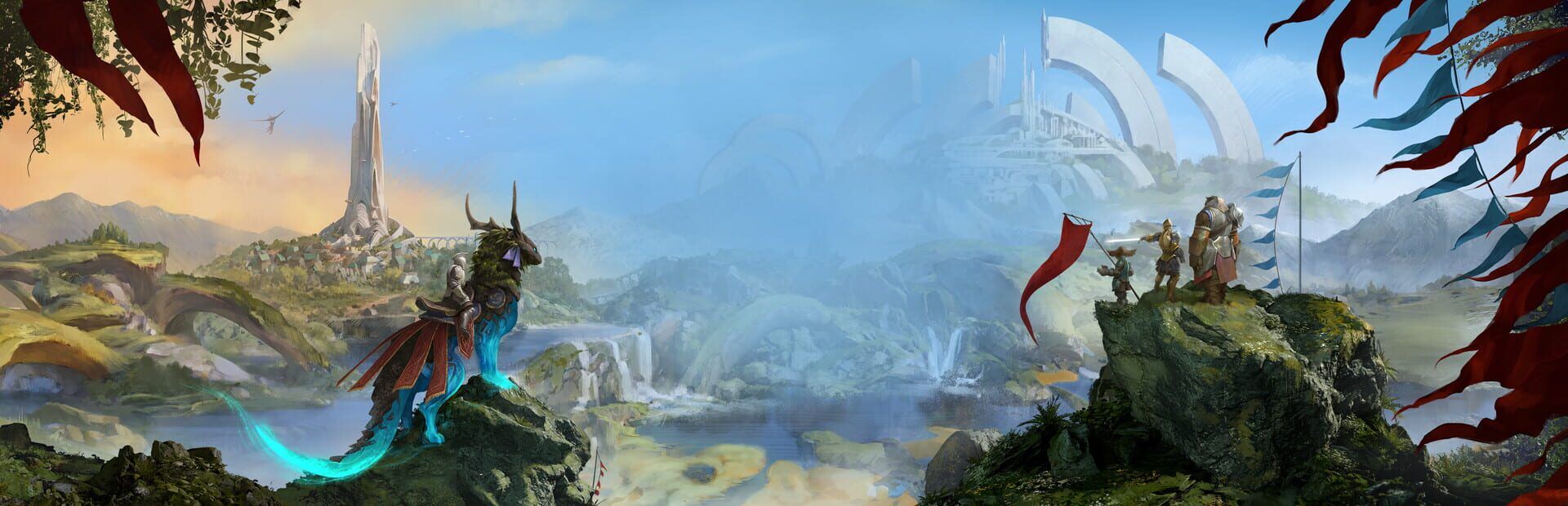
Rather than continuing the story threads of Guild Wars 2, ArenaNet is rewinding the clock. Guild Wars 3 is set roughly 1,000 years before the events of the original Guild Wars, in the Tyrian region of Orr long before it became the drowned ruin players know from Guild Wars 2. This is Orr as a wild magical frontier, not a haunted seabed, and ArenaNet describes it as a lush landscape where the world’s magic is concentrated into nature spirits called Vael.
That time jump effectively wipes the slate clean. Factions, cities and even some races from Guild Wars 2 simply do not exist yet, while long‑forgotten legends and empires can sit at the center of the narrative. It gives ArenaNet space to build new lore without constantly threading around the complicated history that has piled up across Guild Wars expansions.
For returning players, it also reframes Tyria itself. Locations that were ruins in Guild Wars 1 or battlegrounds in Guild Wars 2 can now appear as thriving settlements or contested frontiers. ArenaNet is leaning into that sense of discovery, inviting fans to look at the map with fresh eyes even if the names are familiar.
What ArenaNet is changing from Guild Wars 2
The reveal pitches Guild Wars 3 as an evolution of the MMO rather than a simple iteration. Guild Wars 2’s DNA is still visible in its action‑oriented combat and shared open world, but ArenaNet is clearly using this sequel to change some of the fundamentals.
The most obvious shift is movement. The reveal trailer highlights a character sprinting up near‑vertical cliffs and chaining leaps with an almost parkour‑like flow. ArenaNet describes Guild Wars 3 as built around a momentum‑driven movement system, treating traversal as a core pillar of gameplay instead of a convenience layer. Where Guild Wars 2 eventually relied on mounts and gliders to inject mobility, Guild Wars 3 appears to bake that sense of fluid motion directly into how your character moves from the very first steps.
Combat is getting a similar rethink. Guild Wars 2’s ground‑targeted skills, dodges and breakbars were a response to the tab‑target hotbar MMOs of its era. With Guild Wars 3, ArenaNet is talking about ushering in a new kind of MMO combat that further blurs the line between action and RPG. Specific class and build details are still under wraps, but the messaging suggests tighter synergy between positioning, movement and skill use, with fewer purely static rotations.
Structurally, Guild Wars 3 is also taking a more explicit action‑adventure approach. While it remains a fully fledged MMORPG, ArenaNet is framing the experience around handcrafted journeys through Orr, deeper personal relationships with NPCs and more authored exploration arcs. That is a notable contrast to Guild Wars 2’s sprawling, zone‑based living world updates and meta‑events that often emphasized breadth over depth.
The sequel also offers a chance to refresh systems that have grown dense over time. Account‑wide unlocks, horizontal progression, cosmetics and long‑running currencies in Guild Wars 2 have created a complex web of incentives. While ArenaNet has not given a blow‑by‑blow breakdown yet, the move to a new era and platform hints at a cleaner progression model that can be tuned for new players without fifteen years of baggage.
Console debut on PlayStation 5
For the first time in the series’ history, a mainline Guild Wars title is launching on console. Guild Wars 3 is in development for PC and PlayStation 5, with a Steam page already live on the PC side. Bringing a traditionally PC‑first MMO to console is a major step that affects everything from UX to combat pacing.
ArenaNet has been careful not to frame the PS5 version as an afterthought. Designing a momentum‑heavy movement system and action‑focused combat from the outset makes it easier to map abilities and traversal cleanly to a controller. Compared with Guild Wars 2, which was born as a mouse‑and‑keyboard experience and only ever unofficially adapted by players to gamepads, Guild Wars 3 can target parity across platforms on day one.
The console debut also signals a broader audience ambition. PlayStation 5 brings a massive pool of players who may never have touched the franchise but are hungry for large‑scale co‑op RPGs. That could influence everything from social tools to how early game storytelling is presented, as ArenaNet tries to welcome console newcomers alongside long‑time PC veterans.
One unanswered question is whether cross‑play and cross‑progression will be available between PC and PS5. ArenaNet has not locked in technical details yet, but if the studio wants Guild Wars 3 to feel like a single, unified world, some form of cross‑platform continuity seems likely to be high on the wish list for fans.
Key questions ahead of the Fall 2027 beta
The announcement trailer sets a strong tone, but the road to that first beta in Fall 2027 is filled with unknowns. For now, several big questions define the conversation around Guild Wars 3.
A major concern for existing fans is what happens to Guild Wars 2. ArenaNet has described Guild Wars 3 as a new chapter rather than an immediate replacement, and Guild Wars 2 remains active with ongoing support. The studio still needs to clarify how long it plans to run Guild Wars 2 in parallel with its sequel, what that means for future expansions and whether any form of legacy recognition will carry over beyond cosmetic nods.
The time‑jump setting raises its own lore questions. Placing the story 1,000 years before the original game puts it even further away from Guild Wars 2’s present day, which creates space for new factions and conflicts but complicates the presence of some beloved races and characters. Players are already wondering which familiar elements can plausibly appear and how ArenaNet will tie the prequel era back into the Guild Wars timeline without relying only on prophecy and foreshadowing.
On the systems side, the economic and business model details are still missing. Guild Wars 2 carved out a space with a buy‑to‑play model, optional expansions and a cosmetic gem store, avoiding a mandatory monthly subscription. ArenaNet has not yet confirmed whether Guild Wars 3 will follow the same blueprint, lean harder into a live‑service battle pass structure or try something entirely different. The answer will shape how players perceive progression, grind and long‑term commitment.
There is also the question of scope. ArenaNet promises an entirely new type of MMO experience, but that can mean many things. How large will the launch world actually be, how many core professions or classes will be available from the start and what is the studio’s plan for endgame content? Fans will be looking for concrete details around group content, from small‑scale instanced challenges and dungeons to large world events and possible successors to Guild Wars 2’s raids and strike missions.
Finally, the technical side looms over any long‑running online game. The beta will be the first real test of server stability, matchmaking and the cross‑platform infrastructure needed to support large crowds of players moving at high speed through shared spaces. ArenaNet’s previous experience running Guild Wars 2 gives it a strong foundation, but the new movement and combat systems introduce fresh challenges in latency and synchronization that players will scrutinize closely.
Looking ahead
With Guild Wars 3, ArenaNet is not just adding another chapter to a long‑running MMO. By leaping 1,000 years into Tyria’s past, investing heavily in movement and action, and committing to a simultaneous presence on PC and PS5, the studio is trying to position this sequel as both a reinvention and a new starting point.
The Fall 2027 beta will be the moment when promises of momentum‑driven traversal, evolved combat and a living Orr are put in players’ hands. Until then, Guild Wars fans are left to pick apart trailers, dev comments and lore hints while they wait to see if this bold prequel can capture the spark that made the series stand out in the first place.