
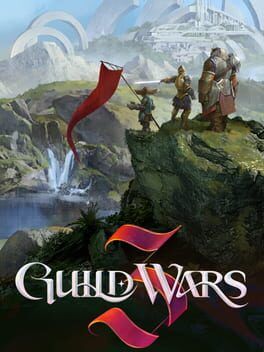

ArenaNet lays out a clear anti-subscription, anti–pay-to-win philosophy for Guild Wars 3, positioning the sequel as a more player-respectful evolution of the MMO genre.
ArenaNet is not just making another sequel with Guild Wars 3. In its newly published mission statement and follow-up interviews, the studio is using the game as a manifesto on what a modern MMO should be. That starts with money. No subscriptions, no battle passes, and a hard line against pay-to-win, all wrapped in a structure that tries to respect player time instead of consuming it.
No Subscriptions, No Battle Passes, No Second Job
ArenaNet is doubling down on the core principle that helped the franchise stand out in the first place. Like Guild Wars and Guild Wars 2, Guild Wars 3 will not have a monthly subscription. You buy the box, you get the game. That simple transaction is the foundation for everything else the studio wants to build.
The team is also walking away from one of the industry’s most profitable trends: battle passes. In many live service titles, a seasonal pass is the central spine that dictates how and when you play. Log in every day, clear your checklist, fill the meter, or lose out. For Guild Wars 3, ArenaNet’s leadership is explicitly rejecting that structure because of the pressure it puts on players to treat the game like an obligation instead of entertainment.
This ties directly into their broader philosophy of avoiding designs that turn an MMO into a second job. Instead of log-in-or-fall-behind systems, Guild Wars 3 is being framed as something you can leave and return to without anxiety, with a progression curve that will not punish people who cannot commit to rigid schedules. In an era where many online games rely on fear of missing out to keep engagement high, ArenaNet is intentionally stepping around that trap.
A Clear Line Against Pay-to-Win
The studio’s stance on pay-to-win is equally direct. ArenaNet is committing to a model where spending money does not confer raw gameplay power. That means no stat-boosting gear, no advantage-granting consumables, and no purchasable shortcuts that let paying players dominate core competitive or cooperative content.
Instead, the cash shop will be limited to three familiar categories. Cosmetic items will allow players to customize the look of their characters, mounts, and gear while keeping all functional stats earned through play. Account services will cover things like extra character slots or name changes that do not impact balance in combat. Convenience options will smooth rough edges for those who want them, such as storage upgrades or reduced friction in travel and crafting, but they are not designed to trivialize progression.
There is an important nuance here. ArenaNet is not pretending that time-saving items have zero impact, but it is drawing a distinction between easing friction and selling power. The studio’s messaging is that a player who pays should not be able to simply buy victory over someone who only invests time. That is a critical promise in an MMO, where the economy, social hierarchy, and endgame are all tightly interconnected.
Respecting Player Time In A Live Service World
In almost every statement about Guild Wars 3, ArenaNet keeps returning to a single phrase: respecting the player’s time. That concept carries a lot of weight in 2026, when nearly every major online game is fighting for daily engagement and “session length” metrics. Many MMOs lean on time-gated rewards, weekly lockouts, and elaborate reward tracks that all quietly nudge you to log in on a schedule.
Guild Wars 3 is being positioned as a counterpoint. The studio talks about making sure that whether you can only log in a few hours per week or you can play every day, your sessions will feel worthwhile. This influences everything from how progression is paced to how content is structured. Rather than endless treadmills and mandatory grinds, ArenaNet wants each play session to have a clear sense of payoff, whether that is story progress, a new build-defining skill, or a meaningful upgrade.
For veterans of Guild Wars 2, this philosophy will sound familiar but not identical. That game already avoided many of the harsher MMO timesinks, but it still developed its own web of dailies, currencies, and long-term goals that could feel daunting to lapsed players. With Guild Wars 3, the team is talking about going further, designing from day one around flexibility rather than retrofitting it after years of expansions.
Bridging Guild Wars And Guild Wars 2: A “Modern Evolution” Of The MMO
ArenaNet is not just rethinking monetization, it is also reframing what kind of MMO Guild Wars 3 will be. Studio head Colin Johanson describes the sequel as a modern evolution of the genre, specifically by striking a balance between the first two titles.
The original Guild Wars was closer to an online RPG with strong instancing and smaller, party-focused content. Guild Wars 2 shifted dramatically toward large-scale open-world systems, public events, and sprawling meta encounters. Guild Wars 3 is intended to sit between those approaches. ArenaNet wants to preserve the sense of intimate, tactical play that came from tight party composition and buildcraft in Guild Wars while also capturing the dynamic, living-world spectacle that defined Guild Wars 2.
This midpoint approach pairs neatly with the studio’s monetization plans. A game built around both small-group strategy and large social spaces benefits from a community that feels fair and stable. If players believe the economy and progression systems are honest, they are more likely to invest in long-term goals like theorycrafting, fashion, or guild-focused objectives. By contrast, pay-to-win systems tend to hollow out these social layers, rewarding wallets instead of skill or dedication.
Coexistence Instead Of Replacement
Another important part of ArenaNet’s mission is that Guild Wars 3 is not supposed to erase its predecessors. The studio has been clear that Guild Wars, Guild Wars 2, and Guild Wars 3 are intended to coexist as distinct experiences within Tyria. Each game will offer its own flavor of MMO, its own pacing, and its own relationship to player time and money.
This is a strategic move. Rather than forcing the entire community to migrate and accept a new economic model, ArenaNet is letting players choose where they feel most comfortable. Those who love the current state of Guild Wars 2 do not have to abandon years of progress. Those who want a cleaner, more modernized structure, guided by this updated monetization philosophy, can jump into Guild Wars 3 when it arrives.
That coexistence reinforces the sincerity of ArenaNet’s stance. If Guild Wars 3 were designed as a hard reset that had to recoup costs through aggressive monetization, the pressure to add subscriptions, passes, or power boosts would be much stronger. By allowing all three games to stand side by side, ArenaNet can commit to a player-friendly model without betting the entire franchise on it.
Guild Wars 3 As A Test Case For The Next MMO Era
Guild Wars 3 is still years away, with beta testing not expected until 2027. That long runway gives ArenaNet time to iterate on its ideas, but it also sets up the game as a kind of test case for the next era of MMOs. Can a large-scale online RPG, launching in a market saturated with subscriptions, battle passes, and heavy monetization, thrive on a box price and optional cosmetics alone?
ArenaNet believes the answer is yes, as long as the game is built around that principle from the ground up. By rejecting subscriptions and pay-to-win, and by openly designing systems that respect player time instead of maximizing hours played at any cost, Guild Wars 3 is being framed as both a sequel and a statement.
If it works, it will not just redefine the Guild Wars series, it could push the broader MMO space to reexamine assumptions that have hardened over the past decade. If it stumbles, it will serve as a high-profile example of how difficult it is to resist those pressures. Either way, ArenaNet’s monetization mission for Guild Wars 3 ensures it will be one of the most closely watched online RPGs of the next generation.