
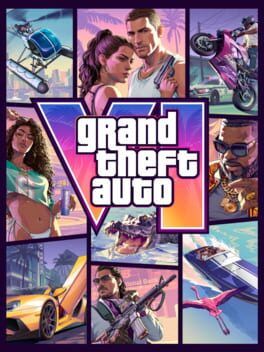

Rockstar and Take-Two say Grand Theft Auto 6 generated $3.79 billion in day-one retail sales. The headline is historic, but the business story is in the caveats.
Image: IGDB
GTA 6’s first-day number is a business earthquake, not a normal launch stat
Rockstar Games and Take-Two Interactive say Grand Theft Auto 6 generated $3.79 billion in day-one retail sales, a figure the companies are positioning as a new entertainment record across any medium and the biggest entertainment launch in history. That is the strongest concrete development here, and it immediately turns GTA 6 sales from a gaming story into a broader media-market event.
The number comes with important framing. VGC reports that Rockstar and Take-Two claimed the $3.79 billion day-one total after the game’s launch, while Variety likewise attributes the figure to Rockstar Games and parent company Take-Two Interactive. CNN also reports that Take-Two and Rockstar announced the sales total after the first day of release. In other words, the figure is a company-reported retail-sales claim, not an independently audited financial filing in the source material provided.
Even with that caveat, the scale is hard to flatten into ordinary launch language. GamingBolt says the reported total “trounces” Grand Theft Auto 5’s $800 million launch record and Red Dead Redemption 2’s $725 million first weekend. Variety compares the $3.79 billion figure with theatrical benchmarks, noting that it exceeds Avengers: Endgame’s $2.9 billion lifetime global box office and is above the 2026 global totals cited for Spider-Man: Brand New Day and Christopher Nolan’s The Odyssey.
That is the immediate tension for Take-Two, Rockstar, and the wider market. The GTA 6 entertainment record headline is enormous, but the business questions underneath it are sharper: how much of that retail number turns into net revenue, how many copies were actually sold, how sustainable the spending curve is after launch day, and whether any other game company can rationally chase a model built around a 13-year gap, a reported decade-plus development cycle, and a franchise with Grand Theft Auto’s cultural gravity.
The copy-count picture is less clean than the revenue headline
The $3.79 billion figure is the cleanest part of the story. The unit figure is where the reporting starts to diverge.
VGC says Grand Theft Auto 6 had been pre-ordered over 32 million times, according to Rockstar. GamingBolt reports that the game sold 32.5 million units and brought in $3.79 billion in day-one retail sales, adding that the numbers were based on data through the end of November 19 worldwide. CNN says Take-Two said it sold 32.5 million pre-order copies. Console Creatures also refers to 32.5 million units before launch. Variety, however, reports that a Take-Two Interactive spokesperson declined to comment on the number of GTA 6 copies sold.
That conflict matters because “GTA 6 day one revenue” and “copies sold” do not answer the same investor question. A retail sales total measures top-line consumer spend. It does not, by itself, reveal Take-Two’s net receipts after platform, retail, tax, regional pricing, refunds, or other accounting details. The sources do not provide a profit figure.
There is also a math question that Take-Two has not clarified in the cited reports. Variety says GTA 6 retails at $80 for the standard edition and $100 for the ultimate version. If the $3.79 billion retail number is set beside the 32.5 million figure reported by GamingBolt and CNN, the implied average is roughly $117 per unit, higher than those two listed prices. That does not prove the revenue figure is wrong, but it does show why exact definitions matter. The reported revenue may include preorder and first-day sales in ways that do not map neatly onto a simple unit count, or there may be editions, regional accounting, bundled retail values, or other components not broken out in the public reporting. The careful read is this: Rockstar and Take-Two’s retail-sales claim is clear; the public unit economics remain incomplete.
For Take-Two, the launch reframes risk into leverage
Grand Theft Auto 6 arrived carrying the kind of expectations that can distort a publisher’s entire financial profile. Variety says the game cost a reported $1.5 billion to produce over more than a decade of development. Console Creatures also cites a reported $1.5 billion development cost over a decade. Those are reported production-cost figures, not a line item confirmed in the quoted Take-Two statement, but they help explain why the launch is being watched as a corporate event rather than a normal release.
A $3.79 billion first-day retail-sales claim changes the conversation around that risk. It does not mean Take-Two immediately pocketed $3.79 billion, and it does not tell us marketing spend or platform economics. It does mean the company can point to overwhelming consumer demand at launch, after years in which GTA 6 served as both a growth promise and a pressure point.
The launch also lands at a high price tier. Variety reports that the standard edition retails at $80 and the ultimate edition at $100, with preorders opening June 25. For a publisher, that is a test of pricing power at blockbuster scale. For the rest of the industry, it is evidence that a small number of premium franchises can still push price upward when anticipation, review scores, and cultural momentum align.
From a strategy perspective, this is Take-Two converting scarcity into leverage. The previous mainline Grand Theft Auto entry launched 13 years earlier, according to VGC. That long gap raised the stakes, but it also concentrated demand. Most publishers cannot afford to wait that long between tentpole releases. Take-Two could, because Grand Theft Auto Online and the continuing strength of GTA 5 kept the brand alive between mainline entries. GTA 6’s reported launch result will likely reinforce that patience, at least for the rare franchises that can survive long silence without losing market power.
Rockstar’s sales record is tied to trust, reviews, and controlled scarcity
Rockstar’s side of the story is less about surprise demand and more about whether the studio maintained enough trust to turn anticipation into immediate spending. VGC reports that GTA 6 reached a 99 out of 100 on Metacritic, tying a record and making it one of the highest-rated games of all time. Variety also reports the 99 Metacritic score and says the game received a Game of the Year nomination at The Game Awards.
Those review and awards signals do not cause a $3.79 billion day by themselves, but they reduce friction at the exact point where high prices and massive preorder demand can create buyer anxiety. The quoted statement from Rockstar president and founder Sam Houser, carried by multiple outlets, is celebratory rather than detailed. Houser said Rockstar was entering “a new chapter” with Grand Theft Auto VI and was “incredibly humbled” by the global response from players.
The business read is that Rockstar’s brand has become one of the few in games that can operate like a platform event. CNN cites market intelligence firm Sensor Tower as saying the game generated $2.36 billion in revenue before its November 19 release date. If that preorder figure is accurate, much of the launch-day record was effectively locked in before players had a full public consensus on the finished game.
That is rare leverage, but it also raises the long-term bar for Rockstar. A record-setting launch changes the definition of success for whatever comes next, whether that is post-launch content, online services, expansions, PC plans, or next-gen technical updates. None of those future moves are detailed in the provided source material, so they remain open questions. The confirmed point is narrower and stronger: Rockstar has delivered a launch that, by its own and Take-Two’s reported retail-sales measure, sits above every entertainment release benchmark cited in the current coverage.
The wider blockbuster market now has a new ceiling, but not a new template
It would be easy for publishers to read the Grand Theft Auto 6 launch sales number as proof that bigger budgets and longer cycles are the route to bigger outcomes. That is the dangerous lesson. GTA 6 may set a ceiling, but it does not provide a repeatable template for most of the market.
The conditions around this release are extreme. VGC notes that it arrived 13 years after the previous franchise entry. Variety and Console Creatures cite a reported $1.5 billion production cost. CNN frames the franchise as already among the top-selling in gaming and says the wait, budget, and anticipation heightened expectations. Those are not normal inputs. They are the result of a franchise that had already crossed from hit series into mass-market cultural fixture.
The comparisons to film and music are useful, but only to a point. Variety says GTA 6’s first-day total outgrossed Avengers: Endgame’s lifetime box office and was roughly comparable to the combined gross of James Cameron’s two most recent Avatar movies cited in its report. CNN compares the launch against Avengers: Endgame and Taylor Swift’s Eras Tour, reporting that the tour generated roughly $2 billion in sales. These comparisons show the purchasing force games can generate, but games and films count revenue differently. A full-price game sale is not the same transaction as a movie ticket, and retail sales are not identical to publisher profit.
For the blockbuster games market, the real pressure will be portfolio strategy. If one release can produce billions in reported retail sales within a day, investors may become less patient with mid-tier bets that take longer to show returns. At the same time, the GTA 6 example is so franchise-specific that chasing it directly could be ruinous. A market that overlearns from Rockstar may end up with more giant projects, longer development cycles, higher break-even points, and fewer chances for smaller hits to reshape publisher calendars.
Availability, platform questions, and the code-in-a-box wrinkle
For players, the practical picture is mostly clear but not perfectly consistent across reports. VGC says GTA 6 is currently available on PlayStation 5 and Xbox Series consoles. GamingBolt tags PS5, Xbox Series S, and Xbox Series X. Variety reports that the game launched Thursday for PlayStation 5, Xbox Series X and S, and was also available on Xbox One through Xbox Cloud Gaming.
That Xbox One cloud detail is a platform distinction worth treating carefully. The sources agree on current-generation console availability. Only Variety, among the provided excerpts, specifies Xbox One access via cloud rather than a native Xbox One version. Readers looking at platform support should separate those two things: native current-gen console release is reported across the coverage, while last-gen Xbox access is described by Variety as cloud-based.
There is also a retail-format wrinkle. VGC reports that GTA 6 did not ship on a physical disc and instead used a code-in-a-box delivery method when purchased from physical retail stores. That matters commercially because it makes “physical” retail less distinct from digital ownership for this release. It also limits the traditional resale and lending behavior associated with boxed console games, though the provided source material does not include Rockstar or Take-Two’s reasoning for that choice.
On price, Variety reports $80 for the standard edition and $100 for the ultimate edition. That gives players a straightforward launch decision: the cheapest confirmed buy-in is still above the old $60 premium-game baseline, and the higher edition contributes to the average-selling-price story analysts are watching. GamingBolt notes that Newzoo had estimated first-week sales of $3.3 billion to $5.2 billion based on preorder pace and an average selling price of $88, but that was an estimate before the official day-one number cited in the article. The confirmed launch claim has already landed inside that first-week revenue range on day one.
The next test is durability after the record
The record headline gives Take-Two and Rockstar a spectacular opening position, but launch day is only the first turn in the campaign. The next business questions are about durability: how many additional full-price buyers arrive after the preorder surge, how GTA 6 performs beyond PS5 and Xbox Series consoles if other platforms are announced, how post-launch content is monetized, and whether the player base holds after the initial cultural rush.
Some useful signals are already on the board. VGC reports a 99 Metacritic score. Variety reports Game of the Year recognition in the form of a nomination. CNN cites $2.36 billion in revenue before release, according to Sensor Tower. GamingBolt says official launch sales came in far above earlier expectations and references Newzoo’s first-week estimate range of $3.3 billion to $5.2 billion. Those data points suggest the launch was not a one-channel spike but a coordinated wave of preorders, reviews, and mainstream attention.
Still, the most important numbers are the ones we do not yet have in the cited material. Take-Two has not provided, at least in Variety’s report, a confirmed copy count through its spokesperson. The company has not broken down standard versus ultimate edition sales in the excerpts provided. The sources do not give net revenue, profit, platform split from Rockstar or Take-Two, digital versus code-in-box mix, or long-term engagement metrics.
So the accurate industry read is balanced: GTA 6 sales have reportedly delivered the largest day-one entertainment retail-sales figure ever claimed for a media launch, giving Take-Two a massive validation moment and Rockstar another sales record. But the strategic story will be written by the follow-up disclosures. A $3.79 billion first day proves extraordinary demand. It does not yet tell us how profitable, durable, or replicable the new blockbuster ceiling will be.