

GTA 6's Metacritic user score backlash has spread into retaliatory Ocarina of Time review bombing, exposing how unverified user scores distort launch discourse.
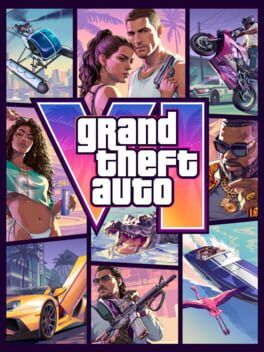
Image: IGDB
GTA 6’s user score fight has jumped franchises
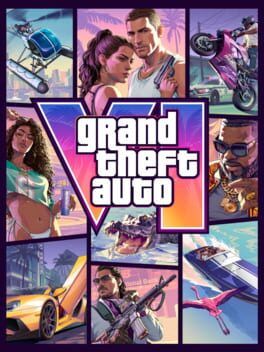
Grand Theft Auto VI is sitting on a 99 Metascore on Metacritic, but its user score has become the center of a wider review-bombing fight that has now spread to The Legend of Zelda: Ocarina of Time. Video Games Chronicle reported that GTA 6 had more than 10,000 user reviews at the time of its article and a 5.6 out of 10 user score, despite the game leading Metacritic’s Best Games of All Time list by critic score.
That gap is the spark. According to VGC, Eurogamer, Polygon, Vice, and Notebookcheck, negative user reviews against GTA 6 have been followed by retaliatory low-score campaigns aimed at Ocarina of Time listings on Metacritic. Some of those reviews explicitly frame themselves as revenge for perceived attacks from Zelda fans. Others are barely reviews at all, using the score box as a scoreboard for franchise loyalty.
The result is a launch conversation that now has little to do with whether GTA 6’s missions land, whether Lucia and Jason’s story works, whether Rockstar’s open world sustains momentum, or whether the set-pieces justify the critical rapture. Metacritic’s user section has become another arena for console-war theater, where a zero can be thrown like a bottle from the crowd and still count toward the public-facing number.
Metacritic had already removed fake GTA 6 reviews before launch
The current GTA 6 Metacritic user score backlash did not begin after a clean opening whistle. VGC reported that Metacritic had already removed fake GTA 6 user reviews before the game was released, then applied its standard waiting period, which prevents user reviews from being posted until at least 36 hours after launch.
Once that window closed, according to VGC, the review bombing continued. Many of the lowest GTA 6 user reviews quoted in VGC’s report objected to the game’s writing, politics, or the prominence of Lucia, with some users dismissing the game as a “relationship simulator” or attacking it with culture-war language. Notebookcheck similarly reported that many 0-score posts did not focus on gameplay, instead insulting developers or players who enjoyed the Lucia and Jason narrative.
Those examples matter because they separate two different things that Metacritic’s single user number compresses into one score. A player can dislike a story direction, mission structure, pacing, tone, or character dynamic. That is criticism. A coordinated flood of 0/10 scores, especially when posts are built around factional slogans or unrelated grievances, is something else. It turns a user-score field into a blunt instrument.
Ocarina of Time became the retaliation target
The backlash did not stay on GTA 6’s page. VGC reported that GTA fans began review bombing The Legend of Zelda: Ocarina of Time remake after concluding, rightly or wrongly, that Zelda fans were behind some of the negative GTA 6 scores. VGC said the remake’s user score was 8.3 at the time of writing, cushioned by tens of thousands of positive reviews from after release, while also being hit by a recent wave of 0 scores.
Vice also reported that the Zelda Ocarina of Time remake’s Metacritic user score had fallen to 8.3, citing more than 7,200 negative user reviews flooding in. Notebookcheck gave a different snapshot, reporting that the remake’s score had dropped from 9.6 to 8.7 in less than 24 hours after community evaluations had opened on November 6. The difference between those figures appears to reflect timing and score movement across a live page, rather than a disagreement over the larger pattern: Ocarina of Time’s user rating was being dragged down by a sudden wave of retaliatory votes.
The target is symbolic. Polygon reported that GTA 6’s 99 Metascore pushed The Legend of Zelda: Ocarina of Time down from its long-held place at the top of Metacritic’s all-time rankings. VGC’s report focuses on the Ocarina of Time remake, which it says had the highest Metacritic user score of all time until recently and holds a 95 professional Metacritic score. Eurogamer, meanwhile, observed attacks on the original Ocarina of Time user page as well as other all-time list fixtures. In other words, the war is not always hitting the same page, but it is orbiting the same idea: a fan base defending a crown by attacking the scoreboard.
The fight has already spread beyond Zelda
Eurogamer’s reporting shows this is not a neat GTA-versus-Zelda feud. It found recent negative user reviews on Ocarina of Time, the original Soul Calibur, and Super Mario Galaxy 2 that referenced GTA 6 or Rockstar’s new position on Metacritic. One quoted Soul Calibur review celebrated GTA 6 for dethroning other classics, while a Super Mario Galaxy 2 review used the moment to throw insults at Nintendo fans.
That spread is important because it exposes the weakness in the system. These reviews are not functioning as impressions of a 1999 Dreamcast fighting game, a Wii platformer, or a Zelda adventure. They are proxy strikes. A Metacritic user page becomes a destructible prop in a larger set-piece, except the debris lands on players trying to understand whether a game is worth their time.
Eurogamer also reported that GTA 6 itself is being hit by a counter-offensive, quoting a user who described their negative GTA 6 score as “retaliation for Zelda review bombing.” Polygon similarly described both camps trading 0 scores. None of the cited outlets could definitively establish who “started” the exchange. Eurogamer specifically said it is unclear whether GTA 6 fans fired first or whether anti-GTA 6 brigaders are to blame. The confirmed fact is the visible back-and-forth. The origin story remains contested.
User scores are becoming less useful at the exact moment players need them
Launch week is when user reviews should be at their most valuable. Critics can tell readers how a game performs under review conditions, how its campaign flows, how its design compares with studio history, and whether its ambition holds together. Players then add scale: bugs across retail copies, online congestion, platform-specific issues, accessibility friction, mission fatigue, and whether the open world still feels alive after the credits.
A GTA game especially needs that second wave of grounded public feedback. Rockstar’s worlds are built around rhythm: the quiet drive before a job, the escalation inside a mission, the messy getaway, the downtime when the map becomes a stage for player-authored chaos. A user score can help reveal whether that rhythm survives outside review code and curated play windows. It can also surface dissent when critics and audiences genuinely split.
The current GTA 6 Metacritic user score does not clearly do that. The reported 5.6 score from VGC, Polygon, and Notebookcheck sits beside a 99 critic average, while Vice reported that the user score had dipped as low as 4.3 before rebounding to 5.3. Those numbers are live snapshots, not fixed verdicts. More importantly, the quoted reviews show that some portion of the scoring is driven by culture-war anger or retaliation rather than play experience.
Forbes added a useful comparison point, reporting that platforms requiring purchases to rate showed GTA 6 at 4.83 out of 5 on PS5 and 4.9 out of 5 on Xbox by its count. That does not prove every verified-purchase player loves the game, and it does not invalidate legitimate criticism on Metacritic. It does suggest that unverified public scores and purchase-linked platform ratings are currently telling very different stories.
Metacritic culture rewards the loudest possible reaction
Metacritic’s user-review problem is structural. As Eurogamer noted, the site’s user review section lacks verification that a person has actually played the game they are rating. VGC reported that Metacritic uses a post-launch waiting period and had removed fake pre-release GTA 6 reviews, so there is some moderation. But once a high-profile game opens to public scoring, the user score can still be pushed around by organized or semi-organized waves of 0s and 10s.
That dynamic is especially volatile around games with record-setting critical reception. A 99 Metascore turns a release into a referendum before many players have processed the opening hours. For some, it becomes a challenge to knock the giant down. For others, it becomes a duty to defend the giant by attacking whichever classic sits nearby on an all-time list. The number becomes the story, then the fight over the number becomes the bigger story.
Steam has faced its own review-bombing history, and Eurogamer pointed to Valve adding features over the years to help curb the problem. Metacritic’s challenge is different because it aggregates across platforms and separates critic and user scores in a way that is highly visible in search results, social posts, and fan arguments. A single decimal number travels faster than the text around it.
That is how a discussion about GTA 6’s narrative direction, including the Lucia and Jason dynamic, turns into Ocarina of Time review bombing. The original subject gets swallowed by scorekeeping. The conversation loses texture, and the public record gets noisier.
How to read GTA 6 and Ocarina of Time scores right now
Readers looking for practical guidance should treat the current Metacritic user scores as contaminated data, not as useless data. The distinction matters. A 0/10 with no evidence of play, a post bragging about revenge, or a review attacking another fan base tells you something about the state of the discourse. It tells you little about the game.
For GTA 6, the confirmed picture from the cited reports is split. Critics have rated it extraordinarily highly, with multiple outlets citing a 99 Metascore. Metacritic’s user score has hovered in the mixed range in the cited snapshots, with VGC, Polygon, and Notebookcheck reporting 5.6 and Vice reporting a dip to 4.3 before a move back to 5.3. Purchase-linked platform ratings cited by Forbes are far higher. Those signals should be read together, with attention to where each number comes from.
For Ocarina of Time, the reported review bombing is mostly useful as a warning about the fragility of user-score culture. VGC, Vice, and Notebookcheck all reported sharp negative pressure on the remake’s user score, while Eurogamer and Polygon also identified attacks on Ocarina-related pages tied to GTA 6 arguments. If you are trying to judge the game itself, read recent user reviews for specifics about design, performance, controls, pacing, and remake changes. Ignore posts that exist only to avenge another franchise.
The healthiest way through this mess is slower than the scoreboard allows. Separate critic consensus from user sentiment. Separate verified purchase ratings from open submissions. Read the substance of complaints before accepting the number attached to them. GTA 6 may ultimately provoke serious disagreement over story, tone, mission design, and Rockstar’s evolving idea of a crime epic. Ocarina of Time can be debated as a remake, a sacred text, or an aging adventure reframed for new hardware. Neither conversation gets sharper when the loudest move is a retaliatory zero.