
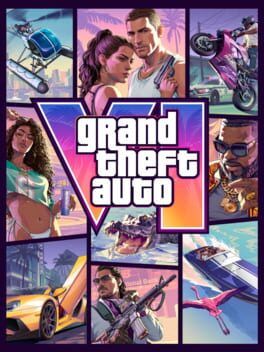

Rockstar’s reported Florida research with police, locals, and gang members points to a denser Grand Theft Auto 6 world, but it does not confirm new crime or law-enforcement systems.
Image: IGDB
Rockstar’s Florida research went straight into the extremes
The sharpest new detail around Grand Theft Auto 6 is not a weapon, vehicle, or mission system. It is how Rockstar says it studied Florida. In an interview with LOVE Magazine, reported by IGN, GamingBolt, Dexerto, and other outlets, Rockstar head of development Aaron Garbut said the studio’s team traveled through Miami, surrounding towns, the Florida Keys, and Key West while researching the fictional state of Leonida. He also said Rockstar went beyond scouting locations, spending time with locals, police, and gang members.
Garbut’s quote is the center of the story: “We travel around with cops and with gang members.” He described the people showing the team around as often “among the nicest” Rockstar had met, while also saying some stories, places, and details were “terrifying.” That mix is important. The reported GTA 6 research suggests Rockstar is trying to capture Florida as a place of beauty, money, poverty, hustle, danger, performance, and contradiction, rather than flattening it into a postcard version of Vice City.
There is also a limit to what this confirms. The reporting supports the idea that Rockstar gathered real-world texture from police, gang members, residents, and locations. It does not confirm a new wanted system, gang reputation mechanic, undercover missions, or police simulation overhaul. A Grand Theft Auto 6 police ride along, in the search-friendly shorthand fans are using, should be read as field research unless Rockstar announces a gameplay feature tied to it.
Leonida is being built from motion, not a static map board
According to the LOVE Magazine interview excerpts cited by IGN and GamingBolt, Garbut said Rockstar begins its games with research trips because the studio uses them to explore both place and ideas as a group. He described an early trip as a small team driving from Miami through nearby towns and the Florida Keys down to Key West, talking through the game while immersed in the locations.
That image matters because GTA has always depended on rhythm. The games are not remembered only for landmarks, but for the way the city changes around the player between a beach road, a back alley, a police chase, a strip of neon, and a quiet highway at night. Garbut’s description points to a process built around moving through the state and absorbing transitions: city into swamp, wealth into poverty, tourist polish into local grit.
IGN also reported that Garbut carried a camera and phone to record what happened. In one anecdote from the interview, Rockstar developers flew low over mangrove inlets in the Everglades before ending the day above a stadium where Beyoncé was performing. Garbut joked that they may have made local news. That story is colorful, but the useful takeaway is practical: Rockstar GTA 6 Florida research appears to have covered both ground-level social detail and aerial geography, from street culture to wetlands and spectacle.
Police and gang access points to crime storytelling, not confirmed systems
The presence of police officers and gang members in the research process naturally sends GTA fans straight to gameplay speculation. That is understandable. Grand Theft Auto’s core loop lives in friction: pursuit, escape, escalation, and the consequences of being noticed. If Rockstar is listening to law enforcement and people connected to gangs, players will wonder whether GTA 6 realism extends into patrol behavior, criminal networks, neighborhood control, or more reactive encounters.
The confirmed information does not go that far. Garbut’s comments, as published through LOVE Magazine and reported by IGN, describe research for a believable, varied world with depth. He did not announce a mechanical system. He did not say police AI has been rebuilt around ride-along observations, and he did not say GTA 6 gang members will function as factional questlines or dynamic crews. Those may be reasonable fan questions, but they remain unannounced.
What the research does support is a stronger expectation around tone and staging. A studio that spends time with police and gang sources can gather the kinds of details that affect mission framing, overheard dialogue, environmental storytelling, clothing, vehicle choices, local slang, radio segments, and the way a dangerous place feels before a shot is fired. In action-adventure terms, that is where pacing begins. The chase works better when the block feels specific. The standoff lands harder when the people around it feel drawn from an observed world rather than a generic crime backdrop.
The satire appears aimed at culture, not yesterday’s memes
IGN’s report adds an important guardrail for anyone expecting GTA 6 to be a catalog of recent viral Florida stories. According to IGN’s summary of Rockstar’s approach from the LOVE Magazine interview, Rockstar is deliberately avoiding direct recreations of real-world viral moments because long development timelines can make those references feel dated. Instead, IGN reported that GTA 6’s satire focuses on modern culture, conspiracy theories, and “the strange ways people react to events.”
That is a crucial distinction for Grand Theft Auto 6’s Florida satire. Florida is already overloaded in popular culture with headlines, mugshots, theme parks, livestream chaos, wealth displays, and political theater. Rockstar could chase a wall of recognizable internet references, but the reported approach suggests a broader target: the behavior patterns behind the spectacle. The flexing, the paranoia, the hustle, the performance of outrage, and the way people turn chaos into content.
Garbut’s own description of Miami, quoted by multiple outlets, lines up with that. He described “extremes” including lovely people, wealth, poverty, excess, craziness, hustle, and showing it all off. If those observations filter into GTA 6, the satire may be less about copying a headline and more about building a world where the next absurd event feels inevitable. That is a better fit for a game players may spend hundreds of hours in, because a living satirical system ages better than a joke tied to one week of social media.
Small details may carry the heaviest research footprint
The loudest phrase in the coverage is cops and gang members, but the quieter details may be where GTA 6 realism shows most consistently. IGN reported that Rockstar treats pedestrian dialogue, radio shows, and advertisements as important parts of worldbuilding rather than secondary filler. GamingBolt also noted that this attention to realism can show up in details such as how NPCs dress in different locations.
That is the difference between a map that looks expensive and a world that keeps producing texture at speed. In a GTA game, players spend huge stretches doing unplanned things: driving without a waypoint, listening to radio, watching pedestrians collide with systems, cutting through neighborhoods on the way to a mission marker. The research only pays off if those in-between moments feel authored without becoming rigid.
From a set-piece perspective, those details also prepare the player for bigger swings. A robbery, chase, or confrontation can begin in one social register and end in another if the city has enough contrast. A luxury strip, a poor neighborhood, a wetland road, and a tourist corridor should not feel like reskinned lanes on the same track. Garbut’s comments about extremes suggest Rockstar is interested in those tonal cuts, and GTA 6’s trailers and official materials have already positioned Leonida and Vice City as spaces built around public spectacle and private pressure.
What is confirmed before launch, and what is still open
The release information in the provided reporting is clear. GamingBolt states that Grand Theft Auto 6 launches on November 19 for PlayStation 5 and Xbox Series X/S. The same report notes that Rockstar has revealed soundtrack contributors, with a physical album release planned, and refers to a “dynamic score” and the next “evolution” of in-game radio. Those music details matter because radio and ambient audio are part of the same worldbuilding conversation as the Florida research.
Several things remain unconfirmed in the source material. There is no supported PC date in the provided sources. There is no confirmed price, performance target, install size, or upgrade path. The police and gang research does not confirm new law-enforcement mechanics, gang systems, or mission structures. GamingBolt also framed Disney Park or Universal Studios-style attractions as something players probably should not expect, but that is not presented in the supplied text as a fresh Rockstar confirmation from Garbut’s interview.
For players trying to read the signal correctly, the safest conclusion is this: Rockstar’s reported fieldwork points toward a denser and more regionally specific Leonida, with crime storytelling informed by both law-enforcement and underworld perspectives. It raises expectations for atmosphere, dialogue, radio, fashion, neighborhood contrast, and mission texture. It should not be treated as proof that Grand Theft Auto 6 will simulate policing or gang life in a newly systemic way until Rockstar says so directly.