
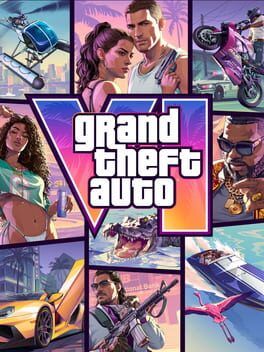
Former Rockstar producer John Ricchio says GTA 6 skipping PC at launch fits a console-first production logic built around constraints, resources, and the hard work of porting.
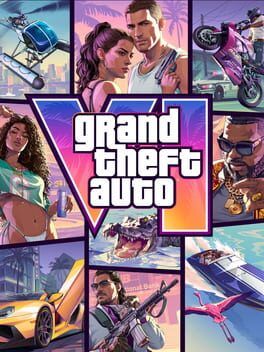
Image: IGDB
GTA 6 is still a console-first event, and PC players are being asked to wait
Grand Theft Auto 6 is currently being discussed across the industry as a console-first launch, with the GTA 6 launch platforms cited in the provided reporting as PlayStation 5 and Xbox Series X|S, and no GTA 6 PC release announced for day one. That absence has become one of the sharpest pressure points around Rockstar’s next open-world crime epic, especially for a PC audience that has already lived through delayed Rockstar ports before.
Former Rockstar producer John Ricchio, speaking on the Kiwi Talkz podcast and quoted by outlets including Video Games Chronicle, Rock Paper Shotgun, and PC Gamer, offered a developer-side explanation for the strategy. His central argument is that building first around console limits can reduce late-development pain, because developers know the performance ceiling they must hit before they start adding higher-end features elsewhere.
Ricchio’s phrasing has become the headline point: developers are “much better off starting with the constraints,” because “shrinking is a lot harder than extending.” In practical terms, that means a studio can build the game to survive the fixed memory, CPU, GPU, storage, and platform rules of consoles, then later consider what can be enhanced on PC. The reverse approach, making the most technically lavish version first and then cutting it down, can create a brutal final stretch when performance targets collide with ambition.
This is not an official Rockstar explanation for GTA 6. Ricchio left Rockstar in 2014, according to Rock Paper Shotgun, after roughly a decade at the company. VGC notes that he worked as a producer on Red Dead Redemption, Max Payne 3, and Grand Theft Auto 5. His comments are best read as informed historical context from someone who helped ship Rockstar games, rather than a current production briefing from Rockstar Games or Take-Two.
Ricchio frames the missing PC version as production math, not platform hostility
The key distinction in Ricchio’s comments is motive. VGC reports that he rejected the idea that skipping PC at launch reflects Rockstar disliking the platform. Discussing Red Dead Redemption and Grand Theft Auto 5 production choices, he said, “It’s not even that we don’t care about PC.” Instead, he described the decision as a recurring resource question: is the time better spent getting a PC port running, or is it better spent on the next priority, such as Grand Theft Auto 5 at the time?
That is the production logic PC players often do not see from the outside. A Rockstar-scale game is built like a city under deadline: streaming systems, animation, AI, physics, UI, mission scripting, cinematic sequences, online hooks, certification work, localization, QA, and platform-specific rules all moving at once. Adding a PC version does not simply mean unlocking a menu and shipping the same code. It means supporting a huge range of CPUs, GPUs, drivers, storage speeds, monitor formats, input devices, graphical settings, and edge cases.
Ricchio told Kiwi Talkz, as quoted by RPS and VGC, that there must be either “enough of a business reason” for a port or the technical lift must be light. He added that the lift is “rarely super light.” That line matters for the GTA 6 PC port discussion because it strips away the clean fan theory that PC is being ignored out of indifference. His view is colder and more mechanical: every platform consumes people, time, testing capacity, and decision-making oxygen.
That will not soothe every PC player. Rockstar GTA 6 PC demand is clearly real, and PC is central to modern game culture, modding, streaming, high-refresh play, ultrawide displays, and long-tail sales. But Ricchio’s comments suggest a studio can still value PC while delaying it, if leadership decides that simultaneous launch would risk quality, schedule, or focus elsewhere.
Starting with constraints changes how an open world gets built
Ricchio’s “constraints” argument is especially relevant to Grand Theft Auto because Rockstar’s games depend on density and simulation. A GTA set-piece has to hold together while the player drives too fast, changes direction mid-mission, starts a firefight in traffic, crashes into a busy intersection, or forces the engine to stream a new district at full speed. The spectacle only works if the underlying rhythm is stable.
Console-first development gives a team a fixed target. Every PS5 has the same broad hardware profile. Every Xbox Series X has the same broad hardware profile, and Xbox Series S has its own constraints. That does not make optimization easy, but it makes the battlefield legible. Designers and engineers can ask whether a chase, crowd scene, storm system, interior transition, or cinematic shootout survives known hardware instead of trying to balance against thousands of PC configurations at the same time.
Ricchio contrasted that with a PC-first approach that some developers once preferred: build on PC, then get everything onto console before ship. According to VGC’s transcript of his comments, he said that approach can cause “so much problems down at the end.” PC Gamer similarly highlighted his view that making a game performant is harder than using extra headroom later to make something “more shiny.”
For a game like GTA 6, that production order affects creative decisions. If a mission needs dozens of cars, scripted chaos, multiple AI layers, destructible clutter, and a cinematic camera handoff, the team has to know the scene will run when the player breaks the clean path. Console limits become a guardrail. They can force hard choices early, before a spectacular sequence becomes too expensive to simplify.
Rockstar’s history makes the wait feel familiar, but not guaranteed
The frustration around the GTA 6 PC release is amplified by Rockstar’s past platform cadence. VGC and Collider both point out that previous Rockstar games have reached PC after their console launches rather than alongside them. Grand Theft Auto 5 first released on Xbox 360 and PlayStation 3 before later versions, including PC, arrived. Red Dead Redemption 2 also followed a console-first path. The original Red Dead Redemption became the starkest example, with its proper PC release arriving in 2024, around 14 years after its original console release, according to VGC and Rock Paper Shotgun.
Ricchio added a revealing detail about that first Red Dead Redemption. He said Rockstar had a PC build running early, according to VGC and RPS, but the question became whether resources should go toward pushing that PC port or toward Grand Theft Auto 5. That history supports his broader point: a working build is not the same as a shippable product. The hard part is not merely booting the game. It is optimization, support, certification-like internal standards, input handling, graphics options, stability, patching, and the commercial case for doing all of that at a particular moment.
Still, history is not a release date. None of the supplied source material includes an official Rockstar announcement for a GTA 6 PC release date, PC system requirements, storefront listing, or PC feature set. Ricchio’s comments help explain why a delayed PC version would fit Rockstar’s established behavior, but they do not confirm when the GTA 6 PC port will arrive.
That distinction is important for buyers. A likely pattern is not a promise. PC players can reasonably expect continued demand to put pressure on a later port, but the supported fact today is narrower: the launch conversation is console-first, and the PC version remains unannounced in the provided materials.
Resource limits are also business limits
Ricchio’s comments land because they connect technical production to business prioritization. He did not describe porting as a pure engineering puzzle. He described it as a question of where a studio’s finite capacity should go. In his Red Dead Redemption example, the tradeoff was PC port work versus Grand Theft Auto 5 work. In the GTA 6 context, the same logic suggests a studio weighing a simultaneous PC launch against polishing console versions, hitting a date, and keeping the biggest release in gaming from collapsing under its own scale.
Rock Paper Shotgun notes that Ricchio’s insight is not current inside information, since he left Rockstar in 2014 and later worked on Amazon’s Lumberyard engine, an unreleased version of Hytale, and Riot’s 2XKO. That caveat matters. GTA 6 is being built in a different hardware generation, under different market conditions, and by a Rockstar that has changed since Ricchio’s departure.
Even so, the production principle has aged well. The gap between consoles and PCs has narrowed compared with older generations, which Ricchio acknowledged in comments summarized by RPS. Modern consoles are closer to PC architecture than the Xbox 360 and PS3 era machines were. But closer does not mean identical, and a high-end PC feature list can still complicate a launch. Ray tracing options, unlocked frame rates, shader compilation, upscalers, ultrawide support, anti-cheat decisions, driver compatibility, mouse and keyboard tuning, and user-adjustable settings all add surface area.
For Rockstar, the business incentive may be to control the first wave. Console-first launch narrows the variables during the moment when public attention, reviews, streaming, social clips, and technical scrutiny will be at their loudest. That does not make the wait pleasant for PC players, but it makes the rollout easier to understand.
For PC players, the practical answer is patience or a console seat at launch
If your only platform is PC, the practical situation is simple: the supplied reporting does not provide a confirmed GTA 6 PC release date, PC requirements, Steam or Epic availability, or a feature list for the eventual PC version. Any claim about exact timing would go beyond the source material. Ricchio’s comments support the idea that a PC port can be delayed by resource allocation and optimization demands, but they do not turn that delay into a schedule.
If you are deciding whether to buy a console for GTA 6, the confirmed advantage is access at launch on the platforms named in the reporting: PS5 and Xbox Series X|S. The tradeoff is that a later PC version, if and when Rockstar announces one, could offer the kinds of upgrades PC players usually wait for: higher frame rates, broader display support, deeper graphics options, and room for more powerful hardware. Those possibilities are expectations based on platform norms, not confirmed GTA 6 features.
For players who care about the cleanest first experience, Ricchio’s argument also cuts both ways. Console-first development may mean Rockstar is concentrating its opening act around fixed hardware, which can help performance targets. A later PC port, meanwhile, may benefit from extra optimization time, post-launch fixes, and the ability to extend beyond console constraints. The cost is being outside the cultural opening weekend, when spoilers, clips, and discoveries will flood every feed.
That is the tension Rockstar has created, intentionally or not. GTA 6 is arriving first as a console event, while PC players are left reading the production logic in the tire marks. Ricchio’s explanation does not make the missing PC launch easier to swallow, but it does make the shape of the decision clearer: start with the hardest fixed target, ship the city, then decide how far it can stretch.