
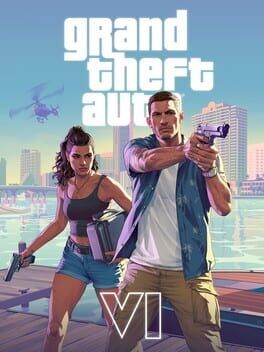

With Take-Two and Rockstar reaffirming Grand Theft Auto VI’s November 19 launch, publishers are reorganizing Q4, marketing plans, and live‑service roadmaps around the biggest release of the generation.
Rockstar and Take-Two have done what the market most wanted: they have taken Grand Theft Auto VI out of the realm of “when” and planted it squarely in “how big.” Coming out of Take-Two’s latest earnings call, the message was simple and pointed. GTA 6 is locked to November 19, 2026, the marketing machine will spool up this summer, and the company is building an entire fiscal inflection point around that date.
For the wider industry, that single decision is already redrawing Q4 roadmaps, pre-order cadences, and live-service update plans.
The significance of a reaffirmed November window
GTA 6 has already been delayed more than once, and investor anxiety typically spikes ahead of each earnings call. This time, instead of hedging, Take-Two used the opportunity to reiterate the November 19 launch and tie that date directly to its fiscal 2027 outlook of roughly $8–8.2 billion in net bookings.
When a publisher of Take-Two’s size explicitly links a single title to a multi-billion-dollar step-change in revenue, that is more than guidance. It is a public commitment that heavily constrains the company’s ability to delay again without serious consequences for investor trust. In practice, that makes the November window about as “locked” as a modern AAA date gets.
That clarity matters for everyone else. First-party platform holders, retail partners, third-party publishers and even mobile competitors can now plan around a known monolith instead of a moving black hole.
Summer 2026: what Rockstar’s marketing rollout probably looks like
Take-Two leadership has been explicit that a broad-based GTA 6 marketing campaign starts this summer. For a game that already shattered view records with its debut trailer, the push now is less about awareness and more about framing, conversion, and long-term retention.
Do not expect a repeat of the GTA 5 playbook from 2013. Back then, the campaign leaned on traditional beats: magazine covers, discrete gameplay trailers, and long-form previews. The modern strategy has to do more in less time, and it has to speak to both a console audience and the much larger ecosystem of creators and platforms.
The likely structure looks something like this, even if the exact beats remain under wraps. First comes a systems and world-focused gameplay reveal that shows how Leonida and Vice City actually play on PS5 and Xbox Series X|S. That is vital not only for fans but also for platform partners that want a clear performance and feature story heading into hardware bundles and marketing tie-ins.
From there, Rockstar can layer in mode-specific spotlights that split the narrative campaign from whatever the next evolution of GTA Online looks like. With recurrent consumer spending already making up a large majority of Take-Two’s net bookings, the online component is where long-term value lives, and investors will want visible proof that the GTA Online model is not just being copied but meaningfully expanded.
Finally, expect a late-summer or early-fall pivot into conversion tactics. That means retailer-specific activations, console bundle announcements, and a more aggressive presence across social and creator channels. The traditional ad buys will be there, but the real reach will come from controlled early access captures, influencer-led roleplay events, and short-form content built around the game’s systems and city life.
Pre-orders in a world where GTA barely needs them
GTA 6 is one of the few releases that could ship with no editions, no incentives, and minimal pre-launch detail and still post historic day-one numbers. Yet Take-Two’s fiscal modeling and the industry’s current monetization norms make it nearly certain that pre-orders will be a central part of the strategy.
Instead of using pre-orders to mitigate risk, as most AAA games do, Rockstar can use them to shape player behavior and infrastructure planning. Tiered editions are the obvious tool. A standard edition will sit at the current premium price point, while Deluxe and Ultimate-style tiers can be tuned less around early campaign access and more around the online economy. That might mean cosmetic packs, in-game currency bundles, or access to curated experiences tied to GTA Online’s launch season.
There is also the infrastructure angle. GTA Online’s original launch was famously rough. Locking in pre-order numbers months in advance will help Rockstar and its backend partners model capacity, session concurrency, and geographic load distribution more accurately. For a live-service backbone that now underpins the bulk of Take-Two’s recurrent revenue, smoother launch-week performance is not just a player-experience priority, it is a financial one.
Retail and platform holders will also use GTA 6 pre-orders as a tug-of-war over ecosystem lock-in. Expect aggressive console bundle offers, storefront-exclusive cosmetic bonuses, and subscription tie-ins designed to keep players within a given platform’s services map well beyond launch week.
How GTA 6 is reshaping everyone else’s release schedule
Whenever a title of this scale plants a flag, everyone else moves. That effect is magnified in this case because GTA 6 sits late in the holiday window, and there is essentially no slack left in Take-Two’s own schedule to accommodate another delay.
Other third-party publishers are already facing a simple calculus. Releasing a new IP or a mid-tier franchise within the same two- to three-week window as GTA 6 almost guarantees diminished visibility, weaker retail support, and a far more expensive user-acquisition battle. As a result, more games will either move earlier into October or slip into the quieter Q1 corridor of the following year.
Live-service titles are doing a different kind of planning. Ongoing shooters, MMOs, and battle royales depend on seasonal cadence to drive engagement and monetization. Dropping a major season, expansion, or ranked reset directly on top of GTA 6 would be tantamount to inviting churn. Expect many service games to front-load their big 2026 seasonal beats or hold them until the post-holiday period once the initial GTA 6 launch surge stabilizes.
First-party platform holders on PlayStation and Xbox also have to thread the needle. On one hand, they want their own exclusives to have clean air. On the other, GTA 6 is an anchor title for their platforms and a driver for hardware and service subscriptions. The likely compromise is to position their marquee first-party releases in the adjacent quarters and then use the holiday window to aggressively bundle GTA 6 with hardware, controllers, and subscription offers.
Even mobile is not entirely spared. GTA 6 will dominate cultural attention across social platforms, which directly competes with the primary discovery channels for mobile games. Smart mobile publishers will either lean into GTA-themed cross-promotion where licensing permits, or pull larger campaign spends into windows where attention is cheaper.
The fiscal 2027 inflection point and long-tail planning
Underneath all of this is Take-Two’s projection of $8–8.2 billion in net bookings for fiscal 2027, up from already record-breaking results. That jump is not just about launch sales. It bakes in a view of GTA 6 as a long-tail platform similar to, and likely larger than, GTA Online.
That expectation shapes how Take-Two is building its pipeline. The company has been clear that GTA 6 gives it the scale to invest even more aggressively in technology, acquisitions, and new projects. Internally, though, that also means careful spacing of other big releases. You do not want a major new IP cannibalized by your own flagship’s online economy.
For competitors, the implication is sobering. Any publisher planning a large online ecosystem will be launching into a world where GTA 6 is the default gravity well for open-world and crime-sandbox fantasies. Differentiation, cross-media hooks, and smart scheduling become survival tools rather than optional polish.
What success looks like from here
From this point forward, the risk profile on GTA 6 shifts. The question is no longer whether it will make money. It is about execution, stability, and cultural positioning.
For Rockstar and Take-Two, a successful next six months looks like this. They maintain the November 19 date, execute a clear and confident summer marketing campaign, convert towering awareness into structured pre-orders without overpromising on content, and ship an online component that feels robust on day one rather than in year three.
For the rest of the industry, success is more defensive. It means acknowledging GTA 6 as the fixed point of the 2026 holiday, pulling vulnerable projects out of its blast radius, and using the quieter spaces it creates in the calendar to let other games breathe. The November window is set. Now the race is on to see who can adapt fastest to a market that suddenly has a new center of gravity.