
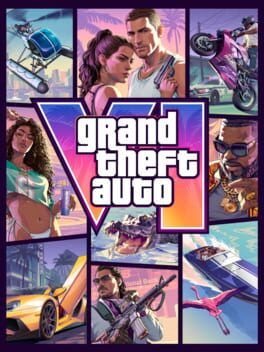
GTA 6 fan speculation over leaked nudist resort footage has spilled onto Cypress Cove's Google listing, where the Florida resort is pushing back against fake reviews and alleged payment demands.
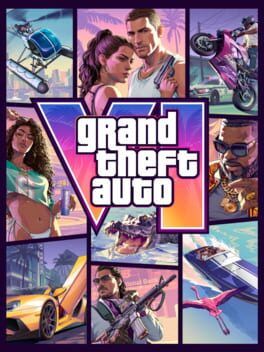
Image: IGDB
Cypress Cove is fighting GTA 6 fake reviews on its real business listing
Cypress Cove Nudist Resort in Kissimmee, Florida, is publicly warning potential guests that a wave of Google reviews referencing Grand Theft Auto 6 does not describe real stays at the resort. According to IGN, Polygon, Kotaku, and eGamers, the resort owner or Google representative has replied to multiple posts by explaining that references to Jason Duval, Lucia, binoculars, pools, firearms, and other recurring details are GTA 6 references rather than accounts of actual guest experiences.
The sharpest part of the response is not the joke itself. It is the resort’s allegation that some of the fabricated posts were followed by a request for payment to have reviews changed or removed. Polygon published the resort’s response, which says the business will not pay, will not negotiate, has documented the reviews and the payment request, and is reporting the activity through appropriate channels. IGN also reported that the owner said it had taken what action it could against the reviews.
That is the concrete development at the center of this odd pre-launch GTA 6 story: fan speculation about a leaked in-game location has crossed into a public consumer-review system used by a real hospitality business. The resort is no longer dealing with forum chatter or meme posts. It is correcting a record that prospective visitors may use when deciding whether to book.
The leak-to-listing pipeline started with an unannounced in-game location
The Cypress Cove GTA 6 connection is not confirmed by Rockstar Games. Polygon notes that Rockstar has not officially revealed Grand Theft Auto 6’s nudist camp. The association comes from late August 2026 leaks, which multiple outlets say showed gameplay in a nudist resort area with nude NPCs.
Kotaku reported that the leaked footage showed player character Jason Duval moving through the area, using binoculars, and attacking people there. Polygon and eGamers similarly describe fans latching onto details from the leaked footage, including binoculars and an implied in-game “incident,” then transferring those references into Google reviews for Cypress Cove. IGN frames the location match more cautiously, saying fans believe Cypress Cove inspired the GTA 6 location.
That distinction matters. What is confirmed by the reporting is that fans drew a comparison between leaked Grand Theft Auto 6 footage and Cypress Cove, then posted reviews referencing the game. What is not confirmed in the provided source material is that Rockstar based the in-game site on Cypress Cove, that the resort has any relationship with Rockstar, or that the leaked area will appear in the final game exactly as shown. In open-world games, especially ones built around fictionalized regions, resemblance is often enough to fuel a community investigation, but resemblance is not sourcing.
The reviews turn a game reference into a reputational problem
The fake reviews described by the outlets range from obvious wink-at-the-camera jokes to comments that could read badly out of context. eGamers cites one post saying the reviewer planned to book a reservation on “Nov. 19th” and play GTA 6 for three days while nude in an RV. Polygon cites another that says, “Had a great time until a man pulled out his binoculars,” tying it to the leaked footage. IGN and eGamers both cite a review alluding to “the incident that occurred in August,” which appears to be a nod to the leaked gameplay rather than a real event at the resort.
For a nudist resort, that ambiguity is the problem. A joke about binoculars, firearms, or an “incident” might make sense to someone following Grand Theft Auto 6 leaks. To a prospective guest browsing Google, it could look like an allegation about safety, privacy, or misconduct at an actual vacation property. Cypress Cove’s response directly addresses that risk, telling real guests and researchers that the posts do not describe genuine guest experiences.
Polygon reports that Cypress Cove bills itself as a family-friendly nudist retreat and has operated since 1964. The outlet also reports that the resort has more than a thousand reviews, with 4.6 stars on Google and 4.7 stars on TripAdvisor at the time of its report. In other words, the fake-review wave is happening against a long-standing business with an established public reputation, not a disposable brand account built for internet engagement.
Cypress Cove’s response is careful, but unmistakably defensive
The resort’s reply, as published by Polygon and quoted by IGN and eGamers, walks a narrow line. It labels at least one post as a spam or extortion review and says the reviews “appear to be” part of a coordinated series of fabricated posts using GTA 6 references. That phrasing leaves room for uncertainty about who organized the activity, while still making clear that the business views the pattern as intentional and harmful.
The response also uses humor without accepting the premise. “We appreciate the commitment to the GTA storyline, but Cypress Cove is located in Florida, not Leonida,” the resort wrote, referring to GTA 6’s fictional state. Polygon’s quoted version adds that the resort’s marketing budget does not include a line item for “internet ransom.” The jokes help the reply travel online, but the operational message is serious: the resort is documenting the posts, refusing payment, and reporting them.
From a strategy angle, that is the only practical play available to a real business caught in a fandom feedback loop. Ignoring the posts risks letting false context sit unchallenged. Overreacting can feed the attention cycle. Cypress Cove’s replies try to split the difference by informing real customers, signaling to review platforms that the posts are fake, and denying the pranksters the payment or panic they allegedly sought.
GTA 6 hype is already behaving like a live-service event
The strange part is that Grand Theft Auto 6 has not reached launch in the source material, yet its community is already producing the kind of external pressure usually associated with a released live-service game. IGN points to other examples of intense fan behavior around GTA 6, including fans measuring oxygen levels in hopes of predicting reveals and showing up around Netflix announcements. eGamers says August’s leaks gave fans an unsanctioned preview of combat and Vice City ahead of Rockstar’s own Extended Look on Netflix.
The Cypress Cove episode shows how pre-release hype can create its own metagame. Fans are not only waiting for trailers or store pages. They are mapping leaked footage against real-world Florida, identifying possible inspirations, and then acting on those guesses in public systems that have nothing to do with Rockstar’s marketing plan. That behavior can feel like community detective work inside a subreddit. On a business review page, it becomes someone else’s moderation burden.
There is also an incentive problem. GTA 6 is large enough that almost any tangential connection can become content. A fake review can be a joke, a screenshot, a social post, and a news item. The loop rewards escalation, while the cost lands on a resort owner who has to explain that references to fictional characters are not real complaints about the property.
The confirmed facts stop short of a Rockstar connection
Readers following Grand Theft Auto 6 leaks should keep the evidence tiers separate. Confirmed by the cited reporting: leaked footage in late August showed a nudist resort-like area in GTA 6, fans compared that area to Cypress Cove, fake Google reviews referencing GTA 6 appeared on the resort’s listing, and Cypress Cove has responded by calling out the posts as fabricated and alleging a payment request tied to changing or removing reviews.
Unconfirmed in the provided material: that Cypress Cove is the direct model for Rockstar’s in-game location, that Rockstar approved or encouraged any of the fan activity, and that the leaked content represents the final form of the game. Polygon explicitly says Rockstar has not officially revealed the nudist camp. IGN says fans believe Cypress Cove was the inspiration. Those are different claims, and the gap between them is where a lot of GTA 6 speculation currently lives.
The practical guidance is simple. If you are looking up Cypress Cove as a guest, treat sudden GTA 6 references as disputed or false according to the resort’s own replies, and weigh them differently from ordinary guest reviews. If you are tracking GTA 6, treat the Cypress Cove comparison as fan speculation built from leaked footage, not as a confirmed location reveal. Until Rockstar shows the area officially, the safest read is that the internet has identified a possible real-world analogue, then pushed that theory into a place it does not belong.