
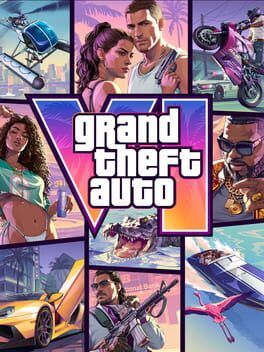

Take-Two CEO Strauss Zelnick says discs no longer make sense for many consumers. GTA 6 is now the biggest test case for players who still want boxed games.
Image: IGDB
Take-Two’s clearest signal yet is coming through GTA 6
Take-Two CEO Strauss Zelnick has defended the company’s move away from physical discs, telling analysts during an investor Q&A that Take-Two’s business is “well over 90% digitally distributed” and that, for some large releases, discs “don’t really make sense for the consumer.” The immediate pressure point is Grand Theft Auto VI, because Rockstar’s next game is the rare release large enough to test whether physical game buyers still have leverage when a publisher decides the market has already moved on.
VGC, IGN, Kotaku, GamingBolt, Forbes, and PC Guide all reported Zelnick’s comments from Take-Two’s Q1 2027 earnings discussion. The common throughline is that Take-Two is treating digital distribution as the operating reality, not as a future experiment. Zelnick did not frame discs as a core retail pillar under threat. He framed them as a format that may occasionally survive, comparing future physical editions to vinyl in recorded music.
That matters because GTA 6 is not an obscure test balloon. VGC reported that the announcement that GTA 6 would be digital-only at launch was met with fan uproar, while Kotaku and PC Guide reported that boxed copies available in stores would contain a download code rather than a disc. If those retail boxes are the practical replacement for a traditional disc release, the “physical” version becomes packaging, shelf presence, and a redemption key, rather than a disc-based copy players can install from.
Zelnick’s consumer argument is convenience, not ownership
Zelnick’s case is direct. As quoted by IGN and VGC, he said that in most instances players have to register online to play anyway, adding, “if you’re already connected, who cares if you download digitally? It’s all the same and it’s much more convenient.” GamingBolt likewise reported his position as a preference for digital media because of convenience, supported by Take-Two’s claim that around 90 percent of its game sales are digital.
That is a business argument expressed as a consumer argument. From Take-Two’s perspective, digital distribution matches where most purchases already happen, reduces dependence on physical manufacturing, and fits online-connected games that require account registration. From the buyer side, the convenience case is strongest for players who already purchase from console storefronts, preload games, and treat a license tied to an account as normal.
The unresolved tension is that the people most upset by the GTA 6 digital launch are not arguing that digital downloads are hard to use. IGN reported backlash around preservation and ownership, and said petitions, social media campaigns, and even boycott calls have formed around Sony’s broader decision to end PlayStation disc production. The UK’s Digital Entertainment and Retail Association, according to IGN, called Sony’s decision “a triumph of corporate convenience over consumer choice.” Zelnick’s comments answer the convenience question. They do not fully answer the ownership question that physical media supporters are raising.
Sony’s 2028 disc plan changes the frame around Take-Two physical discs
The timing makes Take-Two’s position more significant. VGC reported that Sony announced PS5 game discs would no longer be produced for games launching after January 2028, and later said it would “cautiously move this forward” after backlash. IGN reported that Sony executives have acknowledged “strong views” from the community but do not see a negative business impact now or in the future.
Zelnick declined to comment directly on Sony’s own decision, according to Kotaku and IGN, but he aligned with the direction of travel. “I think Sony understands that. We certainly understand that,” he said, according to the outlets. In strategy terms, that is the relevant signal. Platform holder and major third-party publisher are both describing the market as already digital enough to justify a reduction in disc support.
There is a difference between Sony ending production of PlayStation discs in 2028 and Take-Two launching GTA 6 without a disc at launch. One is a platform policy timeline. The other is a publisher release strategy for a specific game. But together they narrow the practical options for players who want major console games on disc. If the largest publishers and the console ecosystem both conclude that physical games are a legacy edge case, the future of physical games becomes less about demand existing somewhere and more about whether that demand is profitable enough to serve.
GTA 6 is the stress test because it can absorb backlash
Grand Theft Auto VI gives Take-Two unusual room to push this transition. PC Guide reported that Zelnick celebrated “an exceptional start to pre-orders” for GTA 6 during the same earnings cycle. VGC also reported that Take-Two reiterated a forecast of $8 billion in net bookings for fiscal year 2027 thanks to GTA 6. Those are not small expectations, and they suggest Take-Two believes the game’s demand curve is strong enough that a disc backlash will not materially derail launch momentum.
That does not mean every publisher can copy the approach without risk. GTA 6 sits in a different category from a mid-tier release that depends on retail discovery, collector goodwill, or price-sensitive buyers. Zelnick’s own phrasing leaves that door open. He said discs may not make sense “especially if it’s a big game,” while also saying Take-Two may still have physical editions “now and then.” The distinction is important. Big games with massive awareness can ask players to follow them into a digital-only structure. Smaller games may still use physical editions as marketing, collector value, or retailer support.
For GTA 6 buyers, the strategic question is simpler. If you were waiting for a disc because you prefer a boxed copy that contains the game on physical media, the reporting so far points in the wrong direction. VGC says GTA 6 will not have a disc version at launch, while Kotaku and PC Guide say store boxes will contain download codes. That is a physical retail product, but not a traditional physical game disc.
The buyer impact is about leverage at launch
The consumer tradeoff around a GTA 6 digital launch is not evenly distributed. For players who already buy digitally, Take-Two’s view likely matches existing habits. A code, a storefront purchase, or a preload all lead to the same practical outcome: the game is tied to an account and downloaded through the platform’s infrastructure. Zelnick’s convenience argument is aimed directly at that majority.
For disc-first players, the cost is choice. IGN’s reporting on the wider PlayStation backlash says critics are focused on preservation and ownership. Those concerns become sharper when the most visible boxed product is a code in a box. A code can satisfy a gift purchase or a retailer shelf slot, but it does not provide the same physical artifact that disc buyers are defending.
There is also a pricing perception problem. Forbes reported that GTA 6’s basic copy is priced at $80 and that its Ultimate Edition is $100, with the outlet saying most players are reportedly buying the Ultimate Edition. If a major release moves away from discs while keeping premium pricing, some consumers will read that as publishers capturing distribution benefits without giving buyers a cheaper entry point. Take-Two has not, in the sourced comments, presented digital-only distribution as a way to lower the purchase price. It has presented it as convenience and market alignment.
What is confirmed, and what remains unsettled
The confirmed position from Take-Two is that Zelnick sees the company as already overwhelmingly digital, with discs making little sense for certain big games. The confirmed platform-side context, according to VGC and IGN, is that Sony is moving toward ending PlayStation disc production for new releases after January 2028 and is continuing despite backlash. The confirmed GTA 6 angle in the provided reporting is that the game will not have a physical disc version at launch, with multiple outlets reporting that retail boxes are expected to function as download-code products.
What remains unannounced or unclear is whether GTA 6 will ever receive a true disc release after launch. Kotaku reported that it might not get released on a disc in the future, but that is presented as a report rather than a firm publisher confirmation in the supplied material. It is also unclear how often Take-Two will use the “physical editions now and then” exception Zelnick mentioned, or whether those editions would include discs, collector packaging, codes, or some mixture of formats.
For buyers who simply want to play GTA 6 at launch, the practical guidance is to plan around a digital download even if purchasing from a physical retailer. For players who specifically want a disc, the safest reading of the current reporting is to wait for an explicit Rockstar or Take-Two announcement before assuming one is coming. The business direction is no longer subtle. Take-Two physical discs are being treated as optional legacy products, and GTA 6 is the largest proof point yet that publishers believe the remaining resistance can be managed.