
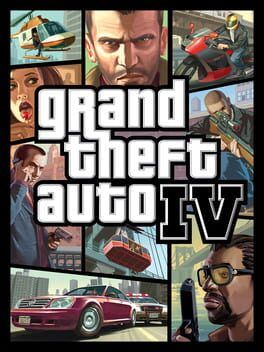
Grand Theft Auto 4 online play was messy, direct, and often ridiculous. Here is why GTA 4 multiplayer still matters in GTA Online history, plus what returning players need to know.
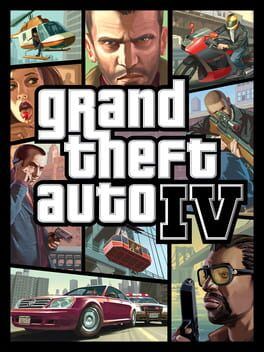
Image: IGDB
Store links: Grand Theft Auto IV on Steam
The old Liberty City lobby is harder to reach now
The sharpest fact about GTA 4 multiplayer in 2026 is also the one returning players need first: the Windows version’s official multiplayer has been discontinued. All The Tropes’ Grand Theft Auto IV page notes that multiplayer on the Windows version was discontinued in 2020, while also pointing to unofficial multiplayer clients such as IV:MP. That single line captures the strange afterlife of Grand Theft Auto 4 online play. The mode is remembered as a wild bridge between single-player crime sandboxes and the live-service shape of Grand Theft Auto Online, but on PC it no longer exists in its original official form.
That makes GTA 4 multiplayer feel different from the modern GTA Online ecosystem. Grand Theft Auto Online has its own GTA Wiki page with sections for jobs, game modes, vehicles, features, Social Club, downloadable content and patches, events, and a subscription service. Even from those public page headings alone, the contrast is clear: GTA Online became a platform with ongoing layers attached to it. GTA 4’s multiplayer, by comparison, was a set of modes folded into Liberty City, running on the thrill that this dense, moody city could suddenly be shared with other people.
PC Gamer recently framed that older mode as pre-GTA Online “glorious chaos,” and that phrase fits because Grand Theft Auto IV’s online play was built around friction rather than polish. It was not a career ladder, a business simulator, or an evolving social hub. It was Liberty City under pressure, with players turning a grounded open world into a public stunt stage, combat arena, escape route, and demolition derby.
GTA 4 arrived when online play changed the series’ rhythm
All The Tropes describes Grand Theft Auto IV as the fourth full installment of the series and the first to appear on a “Next Gen” console. Its page also identifies one of the biggest changes from prior installments as the game’s use of internet connectivity on those consoles: “Grand Theft Auto now has multiplayer.” That framing matters because GTA IV was not simply adding a menu option. It was testing how the series’ core rhythm behaved when other players entered the city.
Before multiplayer, a GTA mission had a director’s hand on the cut, even when the player caused mayhem between objectives. The drive to a marker, the ambush, the getaway, the police chase, and the cooldown all had a designed pace. GTA 4 multiplayer bent that pacing out of shape. Deathmatch and team deathmatch turned Liberty City’s streets into combat lanes. Co-op missions added team pressure. The open sandbox mode, as All The Tropes describes it, let players run around Liberty City doing whatever they wanted with friends or strangers.
That last piece is the one that stuck. Open-world multiplayer made GTA’s most ordinary systems unstable in a new way. A car was no longer only transport or cover. It was a weapon, a failed getaway, a social signal, a joke with four wheels. A rooftop was no longer only geometry. It was a firing position, a stunt ramp, or the place where a session’s private feud reached its messy finale. GTA 4 multiplayer mattered because it put unpredictable human timing inside Rockstar’s city design.
The GTA 4 multiplayer modes were blunt, but that was their strength
The confirmed mode list in the provided source material is modest by today’s standards. All The Tropes cites classic deathmatch, team deathmatch, team-based co-op missions, and a simple open sandbox mode. The assignment’s practical question, “What were the GTA 4 multiplayer modes?”, begins there: combat, team combat, cooperative work, and freeform city play.
That blunt structure made the mode legible. You did not need to understand years of economies, content drops, role hierarchies, or property systems to grasp the stakes. In a deathmatch, the rhythm was immediate: spawn, move, find a weapon, steal a vehicle, survive the angle you did not check. In team deathmatch, Liberty City’s streets became a loose front line, shaped by traffic, sightlines, alleys, and the sudden violence of a player barreling through an intersection. In co-op missions, the city became a shared obstacle course, where the fun came from the gap between the plan and the disaster that actually happened.
The sandbox mode is the purest expression of Grand Theft Auto 4 online nostalgia. It did not need the scale of a later live-service update to produce stories. Its appeal came from a simpler question: what happens when this serious, rain-slick, immigrant crime drama’s city is handed over to a lobby full of people who may or may not cooperate? PC Gamer’s “glorious chaos” description lands because the mode’s identity was less about progression and more about volatility.
Liberty City gave the chaos a heavier texture
Grand Theft Auto IV’s single-player identity affects how its multiplayer is remembered. All The Tropes quotes Niko Bellic’s line, “Life is complicated. I killed people, smuggled people, sold people. Perhaps here, things will be different.” That line belongs to GTA IV’s story world, but it also underlines the tonal tension that made the multiplayer strange. Liberty City was built for a darker, more grounded crime story, then opened up to players who treated it like a shared stunt reel.
That contrast gave GTA 4 multiplayer a texture GTA Online would later transform. GTA Online’s public listings on GTA Wiki point to a broader structure of lifestyle, jobs, crews, vehicles, features, add-ons, DLC and patches. It became a place where the fiction could expand outward indefinitely. GTA 4 multiplayer was narrower and rougher. The city itself carried much of the weight.
For an action-adventure player, that difference shows up in the set-piece rhythm. GTA IV’s online encounters often had the shape of unscripted chases. A firefight could spill from a street corner into a stolen car, then into a bridge crossing, then into a crash that turned the survivors into pedestrians with guns. The game’s online design did not need to announce a cinematic sequence because the city’s layout and player panic could produce one. That is the bridge to GTA Online history: GTA 4 proved that the series’ open world could host multiplayer stories without the authored mission structure doing all the work.
GTA Online systematized what GTA 4 left raw
The comparison with Grand Theft Auto Online should be handled carefully. The provided source material does not give launch dates, revenue figures, update names, or a complete feature breakdown, so those should not be treated here as confirmed specifics. What the public GTA Wiki page structure does support is the broader shape of GTA Online as a larger, organized service. Its contents include jobs, game modes, crews, money and lifestyle, vehicles, Social Club, downloadable content and patches, events, and a subscription service.
Seen against that structure, GTA 4 multiplayer looks like the experiment before the operating model. It had modes, lobbies, and the shock of a shared city, but it did not carry the same documented live-service scaffolding. There is a reason returning players often talk about it in terms of moments rather than systems. The appeal was the feeling of being dropped into Liberty City with too many people and too little etiquette.
That rawness is also the reason it can feel hard to explain to players who came in through GTA Online. GTA Online made multiplayer Grand Theft Auto feel permanent, expandable, and administratively legible. GTA 4 multiplayer felt temporary even when it was working: one session, one chase, one lobby full of bad decisions. The historical value is not that it predicted every later feature. It showed that Grand Theft Auto’s city could survive contact with other players and become funnier, meaner, and less predictable because of them.
Returning players should check expectations before reinstalling
For anyone searching for GTA 4 multiplayer or Grand Theft Auto 4 online today, the practical answer depends on platform and tolerance for workarounds. The source material specifically states that the Windows version’s multiplayer was discontinued in 2020 and that unofficial multiplayer clients such as IV:MP exist. That is not the same as an official restoration, and players should treat unofficial routes as community-maintained options rather than Rockstar-supported service access.
The provided sources do not confirm current official multiplayer availability across every console storefront or platform configuration, so the safest guidance is to verify the version you own before planning a nostalgia night. If you are on PC and expecting the original official online experience, the cited 2020 discontinuation is the key constraint. If you are exploring unofficial clients, check current community documentation, compatibility requirements, and security practices before installing anything.
It is also worth setting the right emotional expectation. GTA 4 multiplayer is remembered because it was messier and less padded than the later default. If you go back looking for the full GTA Online structure, with its documented jobs, lifestyle systems, DLC cadence, and broader feature set, you are looking for the wrong artifact. The better reason to revisit is to understand an earlier design question: what happens when Rockstar opens the doors of Liberty City and lets the players ruin the scene together?
Its legacy is disorder with a purpose
GTA 4 multiplayer still matters because it sits at a hinge point in the series. All The Tropes frames Grand Theft Auto IV as the game that brought internet-connected multiplayer into the mainline formula, with deathmatch, team deathmatch, co-op missions, and open sandbox play. PC Gamer’s recent retrospective language emphasizes the chaos of that pre-GTA Online moment. GTA Wiki’s separate Grand Theft Auto Online page, with its many service-style categories, shows how far the concept later expanded.
The bridge between those eras is not clean. GTA 4 multiplayer could be crude, abrupt, and dependent on players making their own fun. Its PC legacy is complicated by the 2020 discontinuation of official Windows multiplayer and the existence of unofficial alternatives. Yet that mess is precisely why it remains useful to remember. Before GTA Online became the default mental image of online Grand Theft Auto, GTA IV tested the simplest and most dangerous version of the idea: put people in the city, give them weapons and vehicles, and let Liberty City absorb the consequences.
For returning players, the nostalgia is real, but it should come with practical caution. For GTA Online players curious about the roots of the format, GTA 4 multiplayer is less a lost replacement than a rough prototype with its own rhythm. It was a noisy, unstable, strangely cinematic version of online crime, and its best stories came from the moment everything went wrong.