
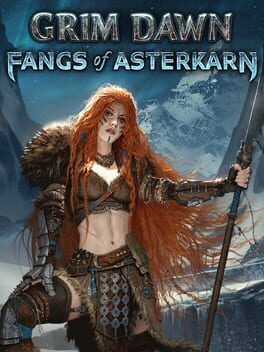
A decade after launch, Grim Dawn’s last expansion and free 1.3.0 overhaul show exactly why it belongs in the same breath as Diablo and Path of Exile.
Grim Dawn was never supposed to last this long. When Crate Entertainment pushed it out of Early Access in 2016, it looked like a scrappy underdog in a genre already dominated by Diablo and, a little later, Path of Exile. Yet ten years on, Grim Dawn is not just still here, it is preparing a final hurrah that feels less like a quiet sunset and more like a studio emptying the clip for the fans who stuck around.
Fangs of Asterkarn, the third and final expansion, arrives alongside a sweeping free 1.3.0 update that rewires systems most games would have frozen years ago. Taken together, they form a victory lap for a cult ARPG that slowly, methodically earned its place in the canon.
From scrappy underdog to genre pillar
To understand why Fangs of Asterkarn matters, you have to look back at Grim Dawn’s trajectory. Built on a heavily modified Titan Quest engine and funded through Kickstarter, it launched at a time when isometric loot‑hunters were firmly associated with Blizzard’s Diablo 3 resurgence.
Where Diablo leaned into glossy spectacle and Path of Exile chased dizzying build complexity, Grim Dawn carved out its niche through tactile combat, weighty feedback and a world that felt grimy and hand‑placed rather than algorithmic. The dual‑mastery system, devotion constellations and an almost pathological commitment to itemization depth turned it into a theorycrafter’s delight.
Two expansions, Ashes of Malmouth and Forgotten Gods, cemented that reputation, piling on new masteries, story arcs and endgame systems. After 2019, Crate itself expected the curve to flatten. Instead, 2023 saw player counts swell again as the game found fresh life on Steam sales, handheld PCs and word‑of‑mouth recommendations from fans tired of season treadmills elsewhere.
That resurgence is the context for Fangs of Asterkarn. It is not a reluctant content pack pushed out to keep the lights on. It is a deliberate decision to come back to a decade‑old game and treat it like a current project.
Asterkarn: a 5.5 km² epilogue that feels like a sequel zone
The headline for Fangs of Asterkarn is scale. Crate pegs the new landmass at 5.5 square kilometres. In practical terms, that is:
76% of the original campaign’s size, 170% of Ashes of Malmouth and 223% of Forgotten Gods.
In other words, this is not an act‑and‑a‑half bolted to the end of the map. It is effectively a second base game worth of ground, built with the hindsight of ten years of iteration. The western wilderness of Asterkarn, home to the nomadic Kurn, is pitched as a harsh, wind‑scoured frontier, trading the ruins and marshes of early Cairn for crags, high passes and embattled caravans.
Crate has talked up more than 60 bosses and minibosses across this region, along with over 370 new unique items and 116 Monster Infrequents, each with bespoke models rather than simple palette swaps. That ratio of custom assets to retextures is quietly important. It speaks to a studio that understands why its game still resonates. Grim Dawn’s appeal has never rested on flashy technology; it lives in hand‑tuned encounters, thoughtful loot and implied stories wrapped around every M.I.
After ten years, giving players a region this large, this late, reads like a statement of intent. Diablo 3 stopped at Reaper of Souls and a content trickle. Path of Exile rolls forward via seasonal leagues and systems layered atop an aging campaign. Grim Dawn’s answer is different: one last enormous slab of handmade ARPG, polished with a decade of lessons.
Shapeshifting and the 10th mastery: finally breaking the engine
Mechanically, the centerpiece of Fangs of Asterkarn is the long‑teased tenth mastery. The Berserker arrives with something Crate once openly said the engine was never built to handle: real shapeshifting.
On paper, Grim Dawn already had an absurd number of build combinations. Nine masteries gave 45 class pairings, with devotions and item procs on top. The tenth mastery does more than raise that to 55. It injects a new axis of identity into the game: form.
The Berserker can transform into vicious beastlike shapes, most notably a melee focused werewolf form and a spell‑slinging wereraven built around ice and ranged abilities. These are not just cosmetic toggles. They come with their own skill interactions, animation sets and rhythm, changing how you approach positioning, cooldown windows and survivability.
For a veteran community that has squeezed every drop out of existing masteries for years, the promise here is fresh puzzle space. Old legendaries take on new roles, devotion paths gain new synergies and those meticulously tuned endgame shards suddenly have to contend with a player who can change silhouette and threat profile mid‑fight.
This is also where the comparison to Diablo and Path of Exile becomes most obvious. Diablo 4’s shapeshifting druid and Path of Exile’s transformation skills lean heavily on animation flair and server‑wide meta effects. Grim Dawn’s approach is smaller in scope but more intimate. It is a late stage experiment inside a mature sandbox, designed for players who already know exactly how far they can currently push a Blademaster or Cabalist and want something that breaks those expectations.
A modern, scalable UI for a 2016 classic
If Fangs of Asterkarn is the narrative and mechanical finale, the free 1.3.0 update is the infrastructural one. UI redesigns are the sort of work most developers dread on an old project. Grim Dawn’s interface was born in an era when 4:3 monitors and early 1080p were the norm. Ultrawide displays and handheld PCs were not a consideration, which left the game feeling increasingly cramped or awkward on modern hardware.
Rather than ship a tiny facelift, Crate is rolling out a fully modern, scalable UI with 1.3.0 that touches everything from basic HUD elements to font sizing and panel layouts. The goal is simple: make Grim Dawn comfortable on whatever you are playing it on, whether that is a wide desktop monitor or a Steam Deck.
For veterans grinding Crucible waves or campaign resets, this matters more than it sounds. ARPGs live and die on clarity. Being able to read cooldowns, buffs and ground effects at a glance is the difference between a satisfying power fantasy and a frustrating blur of particle effects. By retrofitting a genuinely adaptive interface into an engine never meant for it, Crate closes one of the few lingering gaps between Grim Dawn and its more modern competitors.
It also says something about the studio’s relationship with its own work. UI rewrites are expensive, unglamorous and very easy to skip when you are planning a final expansion. Doing it anyway, and giving it away to every owner of the base game, signals that this send‑off is meant to be archival. Ten years from now, a new player should still be able to boot Grim Dawn and feel like it fits their screen and hands.
Stash 2.0: fixing a decade of loot hoarding
The other pillar of the free update is the stash overhaul, and for an ARPG this loot‑focused, it might be the most meaningful long term change.
Across its expansions, Grim Dawn quietly grew into one of the densest item ecosystems in the genre. Between legendaries, set pieces, double‑rare Monster Infrequents and a mountain of components and crafting mats, the original stash design has been buckling for years. Players leaned on external tools and mule characters not because they wanted to, but because there was no other way to curate a decade’s worth of potential build pieces.
Patch 1.3.0 attacks that bottleneck head‑on. The shared transfer stash expands dramatically, with four additional tabs bringing the total to ten for players with the full suite of content. Dedicated crafting and component tabs pull two of the most cluttered item categories out of the general pool entirely. You can rename stash tabs and assign custom markers to them, turning what used to be a wall of identical chests into a labeled library of gear.
Crucially, all of this is free and universal. You do not need Fangs of Asterkarn to benefit from the stash rework. That decision splits the difference between celebrating the expansion and respecting the wider audience that may never buy another DLC but still dips back into Cairn every few months.
In a genre where inventory friction has often been used as a nudge toward monetized solutions, Grim Dawn’s approach feels almost old‑fashioned. The studio looked at a pain point their most dedicated players have lived with for a decade and simply fixed it, no strings attached.
Why this really is a “final hurrah”
It is tempting to treat any “final expansion” claim with skepticism in a live‑service age. Yet everything about Fangs of Asterkarn and its accompanying update reads like closure rather than marketing.
The sheer size of the new region, the system level work required for shapeshifting, the notoriously tricky UI rebuild and the free stash overhaul all point in the same direction. Crate is emptying its notebook of long‑standing wish‑list items. Features like a tenth mastery, a true endgame difficulty in Ascendant mode and deeper customization tools for consumables and crafting have been community talking points for years. Now they are being bundled into a single, comprehensive goodbye.
That is also why the expansion’s scope feels so important for Grim Dawn’s legacy. This is not a retreat. It is the game going out on what the developers themselves call a tremendous roar.
Standing alongside Diablo and Path of Exile
So where does Grim Dawn sit now, a decade on, next to the giants of its genre?
Diablo’s legacy is foundational. Path of Exile’s is evolutionary, constantly mutating systems in search of new metas. Grim Dawn’s contribution has been quieter but just as critical. It proved that there was still room for a premium, self‑contained ARPG that could grow meaningfully over time without surrendering to seasonal churn or cash shop sprawl.
The design philosophy behind Fangs of Asterkarn and the 1.3.0 update crystallizes that identity. Instead of reinventing the wheel again, Crate sharpened the spokes that already worked. It gave min‑maxers new toys in the form of shapeshifting and a tenth mastery. It made sure the foundations, from UI to stash, would hold up under another decade of casual revisits. And it wrapped its final chapter not in live‑service jargon but in a traditional, handcrafted expansion built on the same principles that earned Grim Dawn its cult status.
Ten years from now, people will still talk about Diablo’s auction house fiasco and its redemption, about Path of Exile’s wildest league mechanics and impending sequel. They will also talk about Grim Dawn as the game that quietly refused to die, that answered a surprise second wind with its biggest, most generous update yet, and then stepped offstage on its own terms.
Fangs of Asterkarn is not just more content. It is the capstone on an argument Grim Dawn has been making for a decade: that there is room in the ARPG canon for a game that marries old‑school sensibilities to relentless, player‑first iteration. As finales go, that is hard to top.