
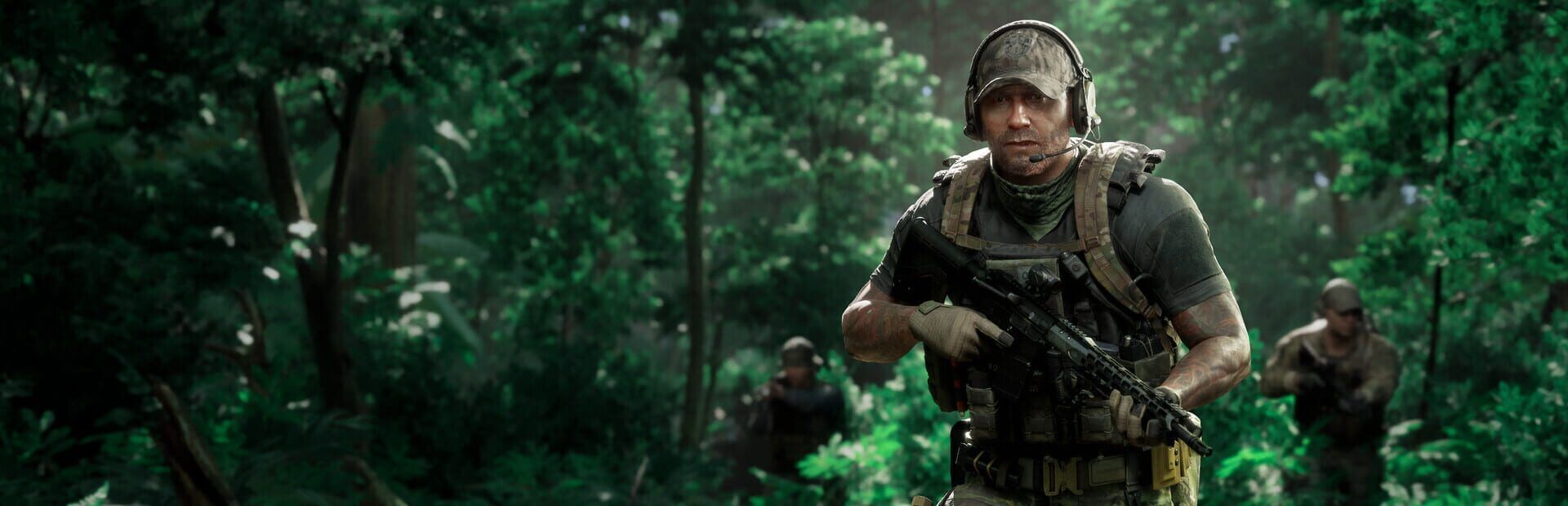
How the massive 0.4 Spearhead patch reshaped Gray Zone Warfare’s systems, reignited its playerbase, and whether it can finally stick as a long-term extraction shooter.
Gray Zone Warfare was in a rough place heading into the back half of 2024. The hardcore, PvE‑focused extraction shooter had found a small but dedicated audience at launch, yet its Steam charts quickly settled into a quiet 2,000 to 4,000 concurrent players. Complaints piled up about a thin quest structure, grindy progression, punishing travel times and AI that felt more annoying than tactical. It had atmosphere, but not enough reasons to stay.
Update 0.4, Spearhead, is Madfinger’s answer to that slump, and the numbers suggest it landed. According to Steam tracking cited by PCGamesN and PC Gamer, concurrent players spiked by over 1000 percent after the patch, from the low thousands to more than 40,000. Total daily players pushed past 160,000. For a niche extraction shooter that had already faded from the front page, that is not a short‑term curiosity. It is a bona fide second launch.
Spearhead is framed by the studio and the community as a new beginning rather than a routine content drop. Under the hood it rewires almost every major system, from early‑game onboarding to long‑term progression and the texture of firefights. The goal is simple: make Gray Zone Warfare feel like a place you want to inhabit for dozens of hours instead of a punishing curiosity you bounce off after a weekend.
A new starting point instead of a brick wall
One of the loudest complaints at launch was how Gray Zone Warfare greeted new players. You were effectively tossed onto Lamang with a rough idea of factions and a radio full of vague objectives, then expected to parse dense systems and lethal AI by trial and error. The extraction genre leans on brutality, but the onboarding gap meant many players never made it to the good part.
Spearhead’s most important change for that audience is structural: a proper onboarding and tutorial zone that functions as a gentler ramp into the island. Rather than immediately dropping you into the most punishing areas, the new starting experience isolates early objectives, teaches navigation and basic combat, and makes core survival concepts clearer. Health states, how damage is applied to specific limbs, how to manage stims, food and hydration and what to expect from helicopter insertions are all surfaced in a more readable way.
That clarity carries into the UI and presentation. The health system now communicates injury and status far more cleanly, with updated readouts and HUD tweaks that reduce the need to dig through menus under fire. The tactical map has been revised to be more usable in the field, helping squads plan routes and understand the expanded terrain that Spearhead introduces.
For a game that was often described as Tarkov without enough explanation, simply easing players through the first few hours is a huge factor in convincing lapsed owners to reinstall and new buyers to stick around.
A denser, more coherent island
At launch, Lamang was atmospheric but sparse. Long stretches of travel separated small clusters of objectives, and many returning players complained that the island felt like a series of disconnected hot zones rather than a living war‑torn region.
Spearhead attacks that problem by substantially densifying the map. Madfinger added more than 25 new locations across the island, together with new mini‑biomes like swamps and burned forests. Those additions do more than add square footage. They tighten the rhythm between insertion, engagement and extraction, and help each deployment feel less like a long commute punctuated by brief firefights.
Terrain and vegetation have also been reworked with both immersion and readability in mind. Sightlines are more intentional, with foliage and ground cover used to create better stealth routes and clearer kill zones. For a game that depends on careful audio cues and visual scanning, being able to read the battlefield at a glance is critical.
Players returning for Spearhead have consistently highlighted this as one of the biggest upgrades. The island simply feels more alive and tactical. There are more ambush angles, more reasons to check corners, and more opportunities to choose stealth over direct engagement. That change feeds directly into the game’s long‑term replayability, giving squads fresh flanking paths and extraction routes even in familiar sectors.
Smarter enemies, distinct factions
Another early sticking point was the AI. Enemies were lethal, but often felt unfair or inconsistent. Combined with a relatively homogenous enemy pool, firefights blurred together. Spearhead’s solution is to turn the AI roster into seven distinct factions, each with its own look, behavior patterns, strengths and weaknesses.
Instead of fighting generic armed locals, you are now reading factions on sight and adjusting tactics. One group might bring heavier armor and disciplined fire at range, encouraging the use of armor‑piercing rounds and careful positioning. Another might favor aggressive pushes through cover, forcing squads to coordinate lanes of fire and fallback points. Each faction also brings unique bosses who act as higher‑stakes objectives within their territories.
This factionalization does two things for retention. It breaks up the monotony of engagements, and it encourages players to learn the island through the lens of who controls which region. That feeds into a stronger sense of place and progression, as you move from dealing with lower‑tier foes to testing yourself against late‑game factions and bosses.
Progression rebuilt for the long haul
If there is a single system Spearhead overhauls most aggressively, it is progression. Early Gray Zone Warfare gave you tasks and contracts, but the structure was thin. Objectives repeated often, there was limited narrative glue, and once you had seen the core loops there was not much to pull you back night after night.
Spearhead reworks that foundation with a multi‑track progression design. There are main story quests that push you deeper into the mystery of Lamang and the Event that destabilized it, supported by side tasks and contracts that branch out into neighboring areas. In raw numbers, the update adds more than 100 new tasks, bringing the total to over 250.
Just as important is the push toward replayability. Many tasks are now built to be repeatable rather than one‑and‑done errands. That change lets Gray Zone Warfare function more like a true MMO‑flavored extraction shooter. Squads can pick reliable income routes or favored mission chains instead of being forced into a strict checklist. Combined with the expanded geography, this mission overhaul gives players a much wider decision space every time they load into a helicopter.
The result is an experience that finally feels like it respects long‑term investment. You are progressing across narrative beats, expanding your operational footprint and grinding gear in a way that feels varied instead of purely repetitive.
Loadouts, loot and the chase for gear
An extraction shooter lives or dies on its gear chase. At launch, Gray Zone Warfare had the bones of a deep system, but there were not enough weapons, parts or armor pieces to create strong build identities. Spearhead markedly changes that calculus.
The update introduces eight new weapons, over 380 weapon parts and more than 150 new gear pieces. There are fresh camouflage patterns, boss‑exclusive weapons and useful utility items like binoculars. Vendors have been improved to make acquisition paths clearer and shopping less of a chore.
On top of that, the loot pool as a whole has more than doubled in distinct items, and the world now holds 351 new intel pieces that add lore and give scavenging a narrative hook. Food and drink systems have been rebalanced so that consumables can provide buffs rather than acting as simple survival upkeep, while stims have seen their downsides reduced. The intention is to make consumables feel like tactical tools you plan around, not just an extra punishment track.
For players, this means that every run carries a higher ceiling for interesting finds. Unique boss weapons give raid‑like targets to work toward, extensive modding parts encourage experimentation and the expanded economy supports more defined roles inside a squad. That is the kind of systemic depth that keeps people logging back in even when they have cleared most of the map.
Movement, animation and audio finally catch up
The other pillar of complaints at launch was feel. Movement looked stiff, animations were serviceable but dated, and audio was atmospheric without always conveying useful information. For a game whose tension depends on inches and sound cues, that was a serious drag.
Spearhead ships with a significant animation overhaul designed to make operator actions more fluid, responsive and legible. The update splits sprinting into two types. Tactical sprint covers longer distances at a sustainable pace, while burst sprint lets you explode out of cover for short, intense dashes. Those options support both methodical advancement and sudden aggression, letting squads coordinate pushes and retreats in a more granular way.
Audio has been tuned just as heavily. Gunfire has more punch and positional clarity, ricochets and impact sounds do a better job of selling distance and direction, and enemy voice lines offer extra cues about when and how AI groups are engaging. Wildlife audio has also been layered in to deepen the sense of being in a living environment rather than an empty shooting range.
These changes do not show up in patch notes numbers, but they matter. Community impressions after Spearhead frequently stress that Gray Zone Warfare simply feels better to play now. The game sounds more dangerous, reads more clearly, and gives you more control over how you move through space. That is critical for an extraction shooter trying to hook players who are used to the slick handling of Call of Duty or the brutal precision of Tarkov.
Why the player count exploded
The raw concurrency jump after Spearhead is partly about marketing and timing. The patch arrived with a substantial Steam sale, knocking the price down by roughly a third. That discount, combined with positive community chatter and a flood of fresh coverage on social media and YouTube, made reinstalling or trying Gray Zone Warfare a low‑risk proposition.
But sales only get people through the door. The reason the 0.4 update is being talked about as a comeback instead of a one‑week spike is that returning players are finding a meaningfully different game.
Players who bounced off at launch now encounter a smoother tutorial, better explained systems and a map that rewards exploration. Veterans who stuck it out finally have a broader arsenal, better AI variety and a mission structure that sustains nightly play. Streamers and content creators benefit from all of that, because more variety in missions and enemies translates directly into more compelling footage.
That positive loop is already visible. Reviews on Steam since the update skew noticeably more positive, subreddit threads and Discords are filling with new‑player questions and returning‑player impressions, and community sentiment has shifted from cautious frustration to the sense that Madfinger listened and responded.
Does Spearhead fix Gray Zone Warfare’s launch‑era problems?
Looking back at the major complaints from the early months, Spearhead hits most of the big ones directly.
Onboarding and clarity were addressed through the new tutorial zone, clearer health communication and UI upgrades. Early‑game frustration is lower, and more people are making it far enough in to appreciate what Gray Zone Warfare does differently from its peers.
The lack of content variety was attacked from multiple angles. More than 25 new locations, seven AI factions, over 100 additional tasks and a heavily expanded loot pool give structure and spice to repeat deployments. Tasks being replayable means there is less dead air once you clear out early objectives.
Moment‑to‑moment feel has improved through better animations, multiple sprint options and more informative audio design. Gray Zone Warfare still targets a slower, more methodical style than most shooters, but it no longer feels clumsy.
Some lingering concerns remain. Travel time around Lamang can still feel punishing to players used to faster, more compact extraction games. The learning curve is smoother but still steep, and the hardcore ballistics and health modeling will always filter who sticks around. Performance on lower‑end hardware remains a talking point in community feedback.
Even so, Spearhead shifts Gray Zone Warfare from a promising but awkward early access curiosity into something much closer to a fully realized extraction MMO. The fundamental fantasy of flying in with your squad, threading through jungle and ruined settlements, then clawing your way back out with rare gear now has the systemic backbone to sustain it.
Retention prospects: a second chance that matters
The real test for Spearhead will not be the headline‑grabbing 1000 percent spike. It will be what the Steam charts look like six months from now. Extraction shooters live or die on consistency. You need a healthy population across regions and time zones to ensure raids feel populated, the economy stays vibrant and squads can find fights when they want them.
Spearhead gives Madfinger a solid foundation for that long game. The revamped progression, denser island, deeper gear pool and smarter AI all generate reasons to log back in that did not exist at launch. The tone of community discussion has pivoted from asking if the game is dying to speculating about future factions, questlines and regions.
If the studio can keep up a cadence of similarly systemic updates rather than drifting into purely cosmetic packs, Gray Zone Warfare now has a credible path to becoming one of the staple names in the extraction space alongside Tarkov and Hunt: Showdown. The 0.4 patch does not solve every problem, but it does something more valuable. It proves that the game is flexible enough, and that the developers are responsive enough, to turn criticism into meaningful change.
For a niche tactical shooter that many had already written off, that is exactly the kind of comeback story Spearhead needed to tell.