
Grand Theft Auto 2 is getting renewed attention through 2026 legacy reviews ahead of GTA 6. Here is what Anywhere City still gets right, and why GTA 2 remains the strange bridge in Grand Theft Auto history.
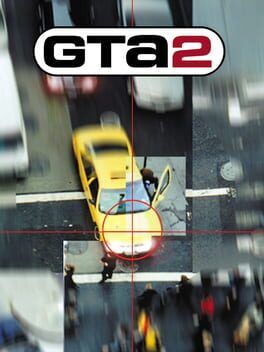
Image: IGDB
Store links: Grand Theft Auto 2 on Steam
The confirmed spark behind GTA 2’s renewed attention
Grand Theft Auto 2 is back in the conversation because legacy coverage around the series has moved from the original game to DMA Design’s 1999 sequel. IGN published Grand Theft Auto 2: The Legacy Review on Aug. 14, 2026, with Luke Reilly reviewing the game on PC and PlayStation as part of a wider project revisiting the core Grand Theft Auto games in the lead-up to Grand Theft Auto 6. eGamers’ own retrospective frames the same kind of project as a playthrough across the main Grand Theft Auto titles before GTA 6, also avoiding a modern score in favor of looking at what each game did at launch and what remains playable now.
That is the concrete development. The renewed interest is not, based on the provided sources, tied to a newly announced remaster, a storefront relisting, a rating-board leak, or a publisher campaign. The sources point instead to criticism and historical reassessment: as Grand Theft Auto 6 pulls attention toward the future of the series, older entries are being re-examined for the systems and design instincts they passed forward.
GTA 2 is a particularly volatile entry to revisit because it does not sit cleanly in Grand Theft Auto history. IGN describes it as a top-down sequel that made meaningful technical improvements over the first Grand Theft Auto, especially in driving and shooting, while also struggling to sell its retro-futuristic identity. A90Skid’s write-up of IGN’s review reaches a similar conclusion, presenting GTA 2 as a sharper sequel whose setting pulled the series in a direction that never fully cohered. That tension is the reason the game is worth discussing now: GTA 2 improved the rhythm of classic GTA games, but it did so inside a world that still feels like a detour.
Anywhere City was a bold answer to a problem GTA had not solved yet
The first Grand Theft Auto, as IGN’s earlier legacy review notes, was rooted in an arcade-style structure built around score, limited lives, and an unforgiving loop that feels far removed from the post-3D reinvention of the series. GTA 2 did not abandon that foundation. According to IGN and eGamers, it kept the top-down chaos of the original, but shifted away from the recognisable contemporary setting toward Anywhere City, USA, an unspecified near-future urban sprawl ruled by a megacorporation, crawling with gangs, and crowded with Elvis impersonators.
On paper, GTA 2 Anywhere City gives the sequel something the first game could not have in the same way: a place that turns criminal errands into factional street theater. The city’s gang-heavy structure gives every district a sharper sense of pressure. The retro-futuristic styling lets DMA Design push the world beyond imitation of real urban spaces, which helps explain why GTA 2 still stands out visually among classic GTA games. Even the absurd Elvis population, cited by IGN and eGamers, points to a series still comfortable with cartoon exaggeration before later entries fused satire with broader narrative ambition.
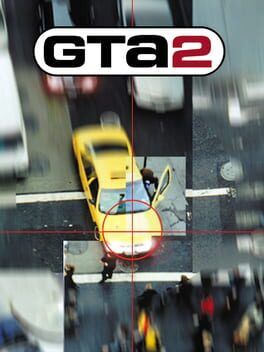
The problem is that the game’s own materials appear to pull against that idea. IGN’s review says GTA 2 clashes with its box art and intro movie, which feature contemporary 1990s cars and an obvious New York setting, while the playable game presents a stylised near-future Anywhere City. eGamers makes the same point, arguing that the sequel seems to argue with its own box art. That disconnect is central to the current GTA 2 legacy review conversation because it separates the setting’s design potential from its execution. Anywhere City has a strong pitch, but the surrounding package apparently sends players into the game with a different promise.
The city still works when the streets become the set piece
GTA 2’s strongest surviving idea is that the city itself can control pacing. In a modern open-world action game, a mission might build toward a scripted chase or an authored combat arena. In GTA 2, the top-down city layout, traffic, gang hostility, police response, and fragile vehicle handling create smaller collisions of intent every few seconds. The sources do not describe a story-driven campaign in the modern sense, and IGN’s earlier review of the original GTA stresses how little meaningful narrative that first game had. GTA 2’s drama instead comes from pressure: a route that goes bad, a turn that clips traffic, a gang relationship that turns the street into hostile territory.
That is where Anywhere City still gets something right. Its abstraction makes it legible at speed. A90Skid, summarizing the mechanical changes highlighted in IGN’s review, notes that cars self-straighten while moving, the camera tracks vehicles more smoothly, and fewer objects snag cars. Skinny objects such as light poles do not register as vehicle collisions, an unrealistic choice that keeps the top-down view from becoming a constant punishment machine. For a game where the camera hangs over the action like a surveillance helicopter, readability is everything.
This is also where Dante Rossi the action-adventure critic has to give the sequel its due. Set-piece design is often discussed as spectacle, but GTA 2’s best set pieces are procedural traffic crimes: oil slicks, mines, mounted guns, sudden police heat, and the thin margin between escape and disaster. The city is not cinematic because it frames the shot beautifully. It is cinematic because motion keeps writing new problems into the scene. IGN’s 2026 video review says the driving is better than the original, and that improvement matters because driving is the cut between every beat of action. If the car feels better, the whole crime loop breathes better.
The practical fixes are the real legacy of Grand Theft Auto 2
The most important quality-of-life change in Grand Theft Auto 2 is saving. IGN and eGamers both highlight the church save system: players can pull up to a church, spend in-game money, and preserve progress. eGamers contrasts that with the first game, which forced players to begin again from zero every time. A90Skid notes that GTA 2 still uses score-based progression, limited lives, and a demanding difficulty curve, but saving removes some of the frustration of a full restart.
That system is funny in the blunt, sacrilegious way early GTA liked to be funny, but it is also a serious structural correction. Saving changes how risk feels. In the original GTA, failure could wipe out too much work, turning experimentation into a gamble against player patience. In GTA 2, the church gives the player a tactical checkpoint that still has a cost. It does not make the game gentle, but it acknowledges that chaos needs a release valve.
The health system pushes in the same direction. A90Skid reports that GTA 2 uses a 10-point health scale represented by five hearts that can be halved, whereas the original could leave the player vulnerable to being wasted after a single hit. The sequel’s extra health does not solve every problem because the on-foot controls remain tank-like, a weakness IGN specifically calls out in its review. It does, however, give combat a little more room to breathe. Mistakes still hurt, but they do not always end the scene instantly.
The arsenal is another part of that refinement. A90Skid lists vehicle-mounted machine guns, mines, oil slicks, grenades, Molotovs, a suppressed submachine gun, a shotgun, dual pistols, and an electro gun among GTA 2’s expanded tools. eGamers’ table of contents calls attention to Molotovs, dual pistols, and a gun that makes skeletons. These are not cosmetic additions in a top-down action game. They change tempo. Mines and oil slicks turn pursuit into trap-setting. A suppressed SMG, which A90Skid says can avoid alerting nearby NPCs, suggests a small stealth-minded wrinkle inside a game better known for noise.
The identity crisis is why GTA 2 remains the awkward bridge
For all of those improvements, the current reassessment keeps circling the same unresolved problem: GTA 2 feels mechanically smarter than the first game but less sure of itself as a world. IGN’s review says Reilly came away in 2026 with stronger appreciation for its technical improvements than he had as a teenager in 1999, specifically calling the driving and shooting better. The same IGN verdict says he could not muster true enthusiasm for the retro-futuristic setting. eGamers echoes the issue, saying the game played like a separate product from what preceded it, down to the FMV intro that had just established a different tone.
That makes GTA 2 an odd bridge between classic GTA and the 3D era. It belongs to the classic side in structure: top-down view, arcade progression, limited lives, score pressure, and a rough on-foot control scheme that IGN says did not take advantage of dual-analogue controllers that had changed expectations in the late 1990s. At the same time, its refinements point toward the series’ later priorities. Saving progress, smoothing vehicle handling, making combat less instantly punishing, and building a city around factional pressure all feel like steps toward the more inhabitable open worlds that would define Grand Theft Auto after its dawn-of-the-century reinvention.
The contradiction is that GTA 2 advances the feel of play while muddying the fantasy. The first Grand Theft Auto, per IGN’s legacy review, was unforgiving and cumbersome, yet charming through its silliness, varied vehicles, sound effects, and original soundtrack. GTA 2 fixes parts of that friction, but its near-future setting, mismatched packaging, and tonal disconnect make it harder to place emotionally. It is a sequel that understands the engine of chaos better than before, then puts that engine in a body style the series never fully adopted.
How to approach GTA 2 now
Readers looking at Grand Theft Auto 2 because of the renewed legacy-review cycle should set expectations carefully. The provided sources confirm IGN reviewed the game on PC and PlayStation for its 2026 legacy review, but they do not provide current pricing, availability, a modern storefront recommendation, performance requirements, or any official remaster details. If you are searching for a new version, the cited coverage does not confirm one.
As a piece of Grand Theft Auto history, though, GTA 2 is worth revisiting through the right lens. It is not the place to look for the cinematic mission design, character-driven story arcs, or third-person combat grammar that later defined the franchise. It is the place to watch DMA Design tune the series’ basic rhythm: steal, drive, crash, shoot, flee, survive, save, and repeat. IGN’s and eGamers’ reassessments both make clear that the sequel is easier to live with than the original because of saving and smoother play. A90Skid’s breakdown adds useful detail on health, driving cleanup, collision forgiveness, and the expanded weapons that make its action less brittle.
That is the case for GTA 2 in 2026. It is not suddenly the lost centerpiece of the series, and the sources do not frame it that way. It is a strange, valuable hinge: too tied to the arcade brutality of classic GTA games to feel modern, too mechanically improved to dismiss as a simple relic, and too uncertain in its retro-futuristic identity to stand as the clean evolutionary step fans often want from Grand Theft Auto history. Anywhere City still has charge because it captures a franchise experimenting before it found the 3D language that would make it dominant. Its streets remain messy, sharp, and peculiar, which is exactly why they are being walked again.