
We break down Granblue Fantasy: Relink’s Endless Ragnarok expansion, from its flashy new summon system and playable characters to Conflux endgame grinds, and explain whether it is worth returning to the Skydoms for lapsed players.
Endless Ragnarok raises the ceiling, not the floor
Granblue Fantasy: Relink was already a generous game for character action fans, but its progression flattened out once you cleared the highest difficulty quests and perfected a few favorite skyfarers. Endless Ragnarok is Cygames’ answer: a full-fat expansion that does not reboot Relink so much as stretch it upward with a new story arc, higher-end challenges, and a major twist to combat flow in the form of controllable summons.
If you bounced off Relink early, Endless Ragnarok will not magically turn it into a different kind of RPG. This is still a mission based brawler built around snappy combos, party synergies, and loot-tuned builds. What the expansion does is deepen that formula in several directions at once, which is exactly what long term players were asking for.
New story arc and how you access it
Endless Ragnarok slots in as true postgame content. You need to clear the quest “The Tale of Bahamut’s Rage” and unlock Chaos difficulty in the base game before the expansion’s story becomes available. Once you do, a fresh chain of quests kicks off a new arc that leans into Relink’s more cosmic threats, tying in the primal beasts and Sephira themes that veteran Granblue fans will recognize.
Structurally, the expansion sticks to Relink’s strengths. Story beats are delivered around compact, combat heavy missions rather than long visual novel sequences. The early quests in the arc are tuned as a step up from Chaos, pushing you to know your character kits and defensive options, while later fights fold in the expansion’s headlining mechanic, Summons, as both a tool and a threat.
Fraux and Fediel round out the roster
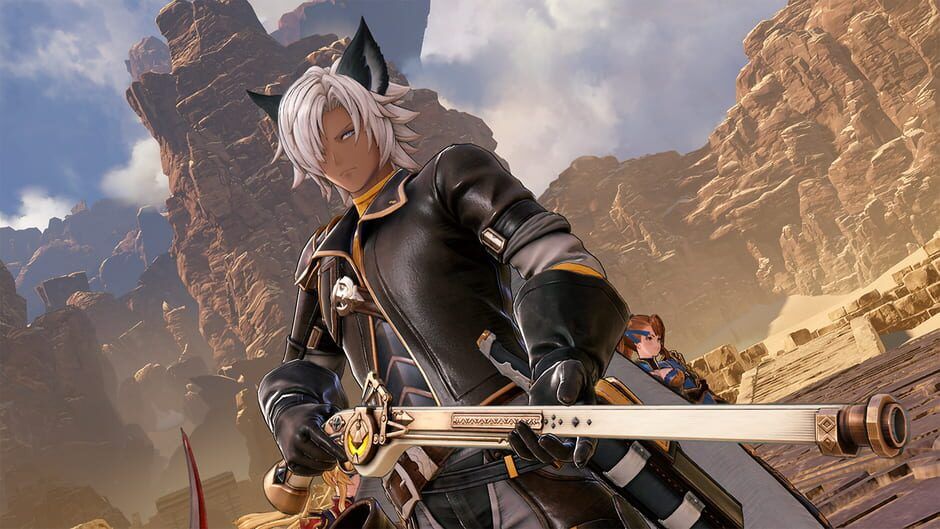
On the playable character side, Endless Ragnarok adds Fraux and Fediel, two long-requested favorites from the mobile game that come in feeling more like late game specialists than onboarding picks.
Fraux is a dark element caster who weaponizes debuffs and delayed detonation. Her normal strings weave into spell tags that mark enemies, and her skills either amplify those marks for heavy burst windows or convert them into party wide utility, such as slowing boss patterns or extending break states. She rewards players who already understand Relink’s timing and stagger windows, since her biggest numbers come from lining up mark explosions with team wide link attacks and summons.
Fediel leans in the opposite direction, offering an aggressive, aerial forward kit that blurs the line between DPS and off tank. Her transforms and lunging attacks let her stick to airborne or mobile bosses better than most of the original cast, and she brings a suite of self mitigation tools that make her a natural pick for solo players. Where Fraux is about setups and control, Fediel is about staying in the boss’ face and riding out the storm.
Neither character feels like a reskinned take on existing skyfarers. Their skill trees and sigil synergies are tuned around Endless Ragnarok’s new endgame systems, so returning players will have reasons to experiment even if they were already comfortable with an older main.
How the new Summon system actually plays
The biggest shift Endless Ragnarok brings is the active Summon system. Instead of being passive stat sticks, primals now act as temporarily controllable power plays that you call into battle after filling a dedicated summon gauge. Once triggered, control shifts from your party leader to the primal itself for a brief window, during which you can execute a compact move list tailored to its element and role.
In practice, this turns Summons into short, high impact phases that feel closer to a Devil Trigger or Limit Break than a simple cinematic nuke. You can reposition as the summon, weave in element specific combos, and even use certain moves to set up your party’s next offensive. For example, an earth aligned summon might lay down a lingering field that amplifies follow up damage, while a wind summon can juggle enemies into the air, letting your skyfarers chain launchers and air strings the moment control returns.
IGN’s hands on details highlight that each summon has its own cooldown and gauge behavior, so compositions become another axis of buildcraft. Do you bring a fast cycling, utility heavy summon to smooth over defensive gaps, or a slow charging boss melter you only call during strict DPS windows? Because summons co-exist with link attacks, ougis, and character supers, high level play starts to resemble a layered rhythm of resource spikes rather than just spamming skills off cooldown.
Importantly, the system slots cleanly into existing controls instead of overloading them with menus. Activating a summon is context sensitive, and the game clearly telegraphs when the gauge is ready, which helps the mechanic feel accessible even if the theorycraft behind it can get dense.
Conflux and the endgame grind
Endless Ragnarok also revisits where many players felt Relink thinned out: the very top end of the quest ladder. The new Conflux system essentially acts as a remix machine for high difficulty missions, layering extra modifiers, enemy patterns, or environmental hazards on top of familiar fights. Think of it as a more curated spin on roguelite mutations rather than entirely procedural content.
Conflux quests feed directly into a refreshed progression loop. Clearing them unlocks a new Master Trait tree that sits above existing skill nodes. These traits let you specialize characters further, turning previously flat stat bumps into more expressive perks, such as altering how certain skills behave under specific conditions, adjusting summon gauge gain, or bending cooldown rules in narrow but powerful ways.
The practical effect is that a level capped character can still advance in meaningful directions. Instead of grinding purely for better sigils with slightly better rolls, you are also chasing traits that change your play pattern. Combined with Conflux modifiers, this keeps the late game from collapsing into a single optimal build per character, since certain trait and summon pairings will shine in specific quest setups.
There is also a nastier quest tier above Chaos, aimed squarely at co-op groups that already tore through Relink’s original hardest content. These encounters are tuned around full use of the new systems, punishing teams that treat summons as fire and forget damage or that ignore trait synergies tied to survivability and crowd control.
Demo structure and what it tells us
The cross platform demo that launched alongside these previews is a smart sampler of Endless Ragnarok’s kit. After a compact story slice that doubles as a tutorial refresher, you get access to a Quest Mode with four missions, the last of which, “Sephira’s Sanguine Glimmer,” finally lets you pilot a summon.
Because the demo supports crossplay, it is a decent stress test for how these systems feel in co-op. Early impressions point to summons adding spectacle without sacrificing clarity, in part because their active windows are short and heavily telegraphed. When someone on the team calls in a primal, you know you are entering a damage or utility spike, which helps voice chat groups coordinate cooldowns and burst phases.
The demo also makes it clear that Endless Ragnarok is balanced assuming players are already comfortable with Relink’s baseline combat. Enemies hit harder, windows for perfect guards and dodges are tighter, and the game expects you to treat gear and sigils as real build components rather than passive score chasers.
Is it worth returning for lapsed skyfarers?
So does Endless Ragnarok provide enough reasons to come back? For dedicated Relink players who hit the previous ceiling, the answer looks like a strong yes. The summon system alone introduces a new resource to juggle in combat, while Master Traits and Conflux quests restructure the endgame into something deeper and more replayable. Fraux and Fediel are not just fan service pickups either. Their kits are clearly designed to thrive in this expanded sandbox, which gives even a veteran roster a fresh feel.
For more casual players who enjoyed the campaign but never dipped into the highest difficulties, the value case is a bit narrower. The new story arc and characters are appealing, but you have to push through existing postgame milestones to see them. Endless Ragnarok is unapologetically built as a step up, not an alternate path.
If you are interested in character action RPGs with a strong co-op identity and you liked Relink’s foundation, this expansion looks set to deliver the “one more build, one more run” loop the original endgame was missing. It makes the Skydoms denser and more demanding rather than broader and softer, and that focus might be exactly what long grounded skyfarers needed to set sail again.