
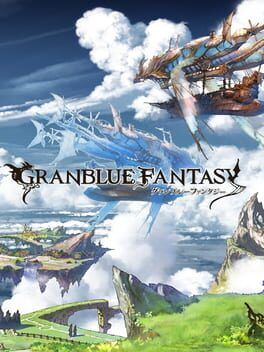

Cygames is finally bringing the original Granblue Fantasy to PC worldwide via Steam in March 2026. Here’s what the standalone client means for longtime browser and mobile players, how it could follow Umamusume’s accelerated rollout model, and why this veteran gacha still has a place in 2026’s crowded live‑service market.
In March 2026, Granblue Fantasy will do something it arguably should have done years ago: arrive on PC worldwide with a dedicated Steam client.
For most live‑service games, year twelve is when you start talking sunsets and wrap‑up events. For Cygames’ flagship RPG, it is the moment the studio finally opens the main gate for global PC players instead of a side door through browsers and sideloaded apps.
This is not just a port. It is a separate global build with its own account ecosystem, pacing, and potentially its own meta. That structure has major implications for existing fans and for how Granblue can compete in a market dominated by newer, flashier gacha hits.
What exactly is launching on Steam?
Cygames is releasing the original free‑to‑play Granblue Fantasy on Steam on March 10, 2026, timed with the game’s twelfth anniversary in Japan. This is a fully localized, officially distributed PC version aimed at players outside Japan and select regions.
The crucial detail is that this Steam version is a distinct global client, not just a new login front‑end for the Japanese servers. Accounts used on the current browser version or on the long‑running Japanese mobile apps cannot be carried over. If you have spent eleven years grinding Bahamut weapons and uncapping Zooey, that progress stays on the original servers.
On the upside, Cygames is not just slapping a browser wrapper on Steam. The PC client reworks the UI into a 16:9 layout better suited to monitors, modernizes presentation, and puts Granblue in front of a massive audience that has grown accustomed to discovering their gacha games through Steam’s front page or curator lists.
In other words, this is Granblue Fantasy relaunching as a PC‑first global live‑service, not just gaining another platform.
Why this matters for longtime browser and mobile players
For veterans who have played via the Japanese browser client for years, the announcement cuts both ways.
On one side is the obvious frustration: twelve years of progress, collab trophies, and limited‑time welfare units cannot be imported to the global Steam version. The very players who shaped Granblue’s meta and community will need to restart from zero if they want to participate in this new ecosystem. That is a tough sell for anyone with a decade of spark history.
On the other side, the global release could fix some of the biggest friction points that kept Granblue at arm’s length for many would‑be fans. No more navigating Japanese app stores, no more clunky browser setup, no more explaining to friends how to pin the Chromium app or set up bookmarklets for combat. Instead, players can just hit “Install” on Steam, pick English, and jump in.
For existing fans who want to evangelize Granblue in 2026, that convenience is huge. It turns Granblue from a “hardcore import scene” title into something closer to Genshin Impact or Blue Archive, where recommending the game no longer requires a tutorial on VPNs and browser settings.
There is also a psychological reset in play. The original servers are defined by years of power creep and social expectations around things like Guild Wars participation. A fresh global server gives lapsed players a place to return without feeling permanently behind veteran whales, and it gives dedicated fans a chance to relive the early‑game arc in a shared environment where everyone is scrambling for their first Magna grid again.
The trade‑off is stark: keep your old account and your entrenched progression in the browser version, or embrace the new global client as a clean, modern, PC‑native reintroduction.
The Umamusume blueprint and accelerated content rollout
Cygames has already run a high‑profile experiment with global live‑service rollout through Umamusume: Pretty Derby. The worldwide version launched as a separate build with its own schedule, and then began closing the gap with the Japanese server through accelerated events, banners, and quality‑of‑life updates.
Siliconera’s reporting already hints that Granblue’s global Steam release could follow a similar pattern. That has several practical implications for how players experience the game.
First, content order is likely to be curated rather than strictly chronological. Instead of slowly reenacting every old collaboration and seasonal rerun in original order, Cygames can pick showcase arcs and fan favorites that best sell Granblue to a modern audience. Early on, that might mean a focus on core story chapters, key side stories that unlock evergreen characters, and foundational raids like Omega and Primarchs that define the grid‑building meta.
Second, pacing is almost certain to be faster than it was in 2014. The Japanese version spent years slowly layering in features like classes, EX skill systems, and eternals. The global client can short‑circuit that learning curve, launching with more modern systems in place so that new players are not stuck in an outdated design era for years.
Third, an accelerated schedule allows Cygames to shape hype cycles around big moments that already proved effective in Japan. Anniversary celebrations, festival banners featuring Grand and Premium Gala units, and iconic raid events can be timed to quickly build a rhythm of must‑log‑in beats. That approach mirrors how Umamusume used rapid content drops to catch up on core story arcs and character releases.
The difficult question is how deeply Cygames will compress eleven years of storytelling. Granblue’s strength lies in its long‑form character arcs and in how small side stories snowball into massive crossover events. Too much acceleration risks flattening that narrative texture. The sweet spot will be a schedule that keeps up modern gacha expectations for frequent new units and events without turning the story into a cliff‑notes tour of the skies.
A fresh economy in an old world
Launching as a separate global build means Granblue’s economy effectively resets for those servers. That is not just about reroll culture and the race to the first spark; it also reboots the balance between free and paid progression in a way Cygames has to get right in 2026.
New players will be walking into a system that was originally tuned for a 2014 mobile gacha market. The Steam release gives Cygames an opportunity to modernize early‑game generosity, daily missions, and free draw campaigns to align better with what players now expect from titles like Honkai Star Rail or Goddess of Victory: Nikke.
At the same time, Granblue has a reputation in gacha circles as a game where time and knowledge can substitute for spending. The layered weapon grid system, complex raid ecosystem, and abundance of grindable resources made it possible to build competitive teams with patience rather than just cash. Preserving that identity will be crucial if Cygames wants Granblue to stand out in a landscape flooded with more aggressively monetized competitors.
Given how Umamusume handled its global economy, it is reasonable to expect launch campaigns with large login bonuses, focused beginner banners, and perhaps targeted sparks to quickly anchor players’ rosters. The challenge will be ensuring those boosts do not trivialize early raids or erase the satisfying climb from SR starter grids to the first complete Magna and Primal setups.
Why Granblue still matters in 2026
Bringing Granblue Fantasy to Steam in 2026 might sound like a relic finally catching up, but there are concrete reasons this veteran gacha still has something to offer in a crowded live‑service market.
The first is sheer depth. While many modern gachas lean on auto‑battle and short‑session design, Granblue remains one of the most system‑dense RPGs on the market. Weapon grids, summon synergy, element counterplay, character support skills, and layered buffs and debuffs form a combat sandbox that rewards experimentation. That complexity is precisely what has given the game such long legs with theorycrafters and raid groups.
The second is narrative weight. Across its main story, numerous side stories, seasonal events, and collaborations, Granblue has built a cohesive fantasy world that feels closer to a long‑running JRPG series than to a set of disconnected gacha episodes. Characters cross arcs, grow across years, and often get multiple versions that reflect actual development rather than just costume changes.
The third is the broader Granblue ecosystem. In 2026, new players discovering the series on Steam will step into a franchise that already has fighting game spin‑offs, a full‑scale console action RPG in Granblue Fantasy: Relink, and multiple anime seasons. That transmedia footprint gives the Steam release a marketing advantage many new IP gacha launches do not have. Cygames does not need to convince players that Granblue’s world is worth investing in; it simply needs to make the original game accessible.
Finally, there is the cultural angle. Granblue helped define the template for modern Japanese mobile RPGs when it launched in 2014. Its belated global PC release doubles as a kind of living history exhibit for the genre, now retouched for a contemporary audience. In the same way that Final Fantasy XIV’s A Realm Reborn revitalized an older idea of the MMO with modern sensibilities, Granblue’s Steam debut is a chance to show how an earlier era of gacha design can still feel relevant after careful modernization.
The risks of a second life
None of this is guaranteed. There are meaningful risks baked into Cygames’ strategy.
The lack of account transfer is already controversial among longtime players, many of whom would have happily shifted to a PC client if they could keep their existing rosters. Some will simply ignore the Steam version and keep playing through the browser. Others may feel burned enough to disengage entirely rather than grind back to their current power level.
Cygames also has to walk a tightrope with pacing. An accelerated schedule that is too aggressive could create burnout, particularly if major raids and grid systems are introduced back to back with little breathing room. On the other hand, a conservative rollout will draw immediate comparisons to more polished, modern gachas and risk the perception that the global version is years behind the competition.
There is also the challenge of presentation. Compared to modern live‑service hits, Granblue’s origins as a 2014 browser title are plain. Updating its UI and resolution for a 16:9 PC screen will help, but core screens, menu density, and the overall flow of quests and raids may still feel archaic next to the slick onboarding of newer games.
But if any studio is positioned to make that transition work, it is probably Cygames, which already steered Umamusume’s global strategy and has spent the last several years modernizing the Granblue IP through Relink and Granblue Fantasy Versus.
A new way into the skies
Twelve years after its debut, Granblue Fantasy is finally stepping onto the global PC stage, not as a nostalgic reissue but as a separate, live, evolving service. For longtime players, the lack of account linkage is a bitter pill. For curious newcomers and lapsed fans, though, the Steam release could be the most approachable and visible way to experience one of gacha’s foundational RPGs.
If Cygames can balance accelerated content with narrative pacing, modernize early progression without erasing the value of mastery, and leverage the wider Granblue ecosystem to support the launch, this global client could give the series a genuine second life.
In 2026’s crowded live‑service landscape, that alone makes Granblue Fantasy’s Steam debut one of the most intriguing experiments to watch.