
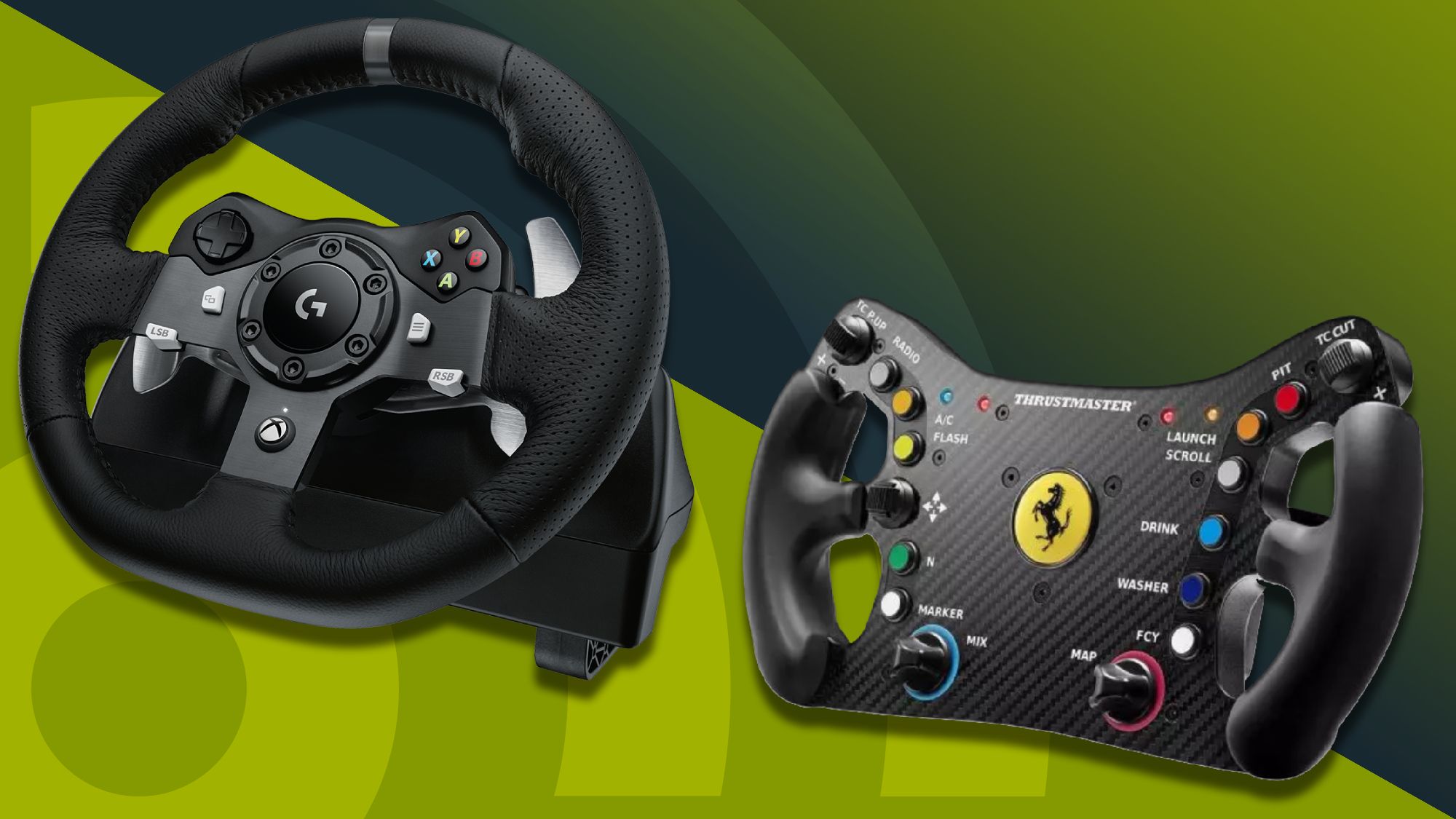
Thrustmaster’s T-GT III is an official Gran Turismo 7 wheel for PS5 and PS4, priced at $749.99. Here is who it suits, what is confirmed, and who should wait.
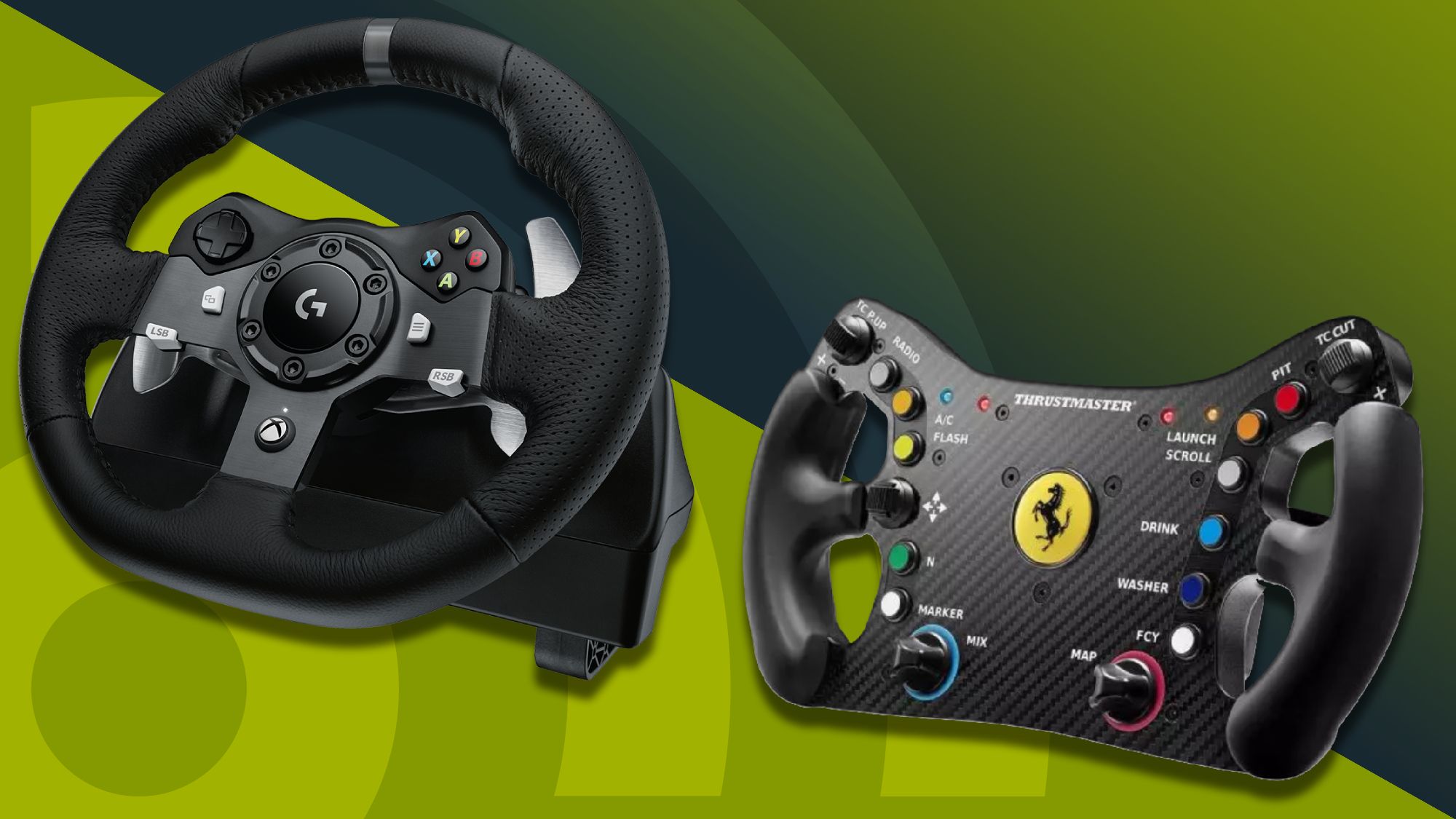
Image: techradar.com
A $750 official GT7 wheel arrives with a familiar question
Thrustmaster has revealed the T-GT III, an officially licensed Gran Turismo 7 wheel and pedal bundle for PlayStation 5 and PlayStation 4, with sales due to begin on December 3, 2026. Push Square reports a US price of $749.99, with regional pricing listed at £649.99 and €699.99, while GTPlanet and BoxThisLap also list ¥119,000 for Japan and say wider availability is expected before Christmas.
That price immediately defines the tension around this Thrustmaster PS5 racing wheel. It is positioned well above entry-level force feedback hardware, but the reported specification also makes clear that this is not an open-ended pro-sim base aimed at PC-only cockpit builders. It is a console-first, Gran Turismo-branded package built around Thrustmaster’s Direct Axial Drive technology, a GT-specific rim, haptic effects, and a load-cell brake setup.
For Gran Turismo 7 players, the reveal is concrete in the ways that matter most before launch: platform support, price, release timing, official licensing, and the broad technical package are now public. What remains less settled is whether the T-GT III should be treated as a major new step for existing Thrustmaster owners or as a cleaner, premium bundle for players who were already ready to move into a dedicated PS5 racing wheel ecosystem.
What Thrustmaster is actually selling
The T-GT III is being presented as the next flagship Gran Turismo package from Thrustmaster. TechRadar reports that the wheel has been announced for PS4 and PS5 and is designed for Gran Turismo 7, while Push Square cites Thrustmaster’s press material describing the hardware as built around “Direct Axial Drive motor architecture” and “inspired by today’s most advanced performance hypercars.”
BoxThisLap provides the most direct technical framing from the supplied sources: the T-GT III moves the Gran Turismo line from the belt-driven force feedback approach used by the T-GT II to Thrustmaster’s newer Direct Axial Drive architecture. According to BoxThisLap, that system produces 5 Nm of constant torque and supports Thrustmaster’s +100 percent overshoot technology, allowing short-duration effects that can reach around 10 Nm rather than sustaining that level continuously.
That distinction matters for feel. Constant torque is the level the base can hold through a long loaded corner, while short overshoot effects are used for impacts, sudden oversteer, kerb strikes, and quick directional changes. In practical driving terms, a 5 Nm constant base can already be physically demanding over long stints if force feedback is set aggressively. The claimed 10 Nm bursts are about transient detail and punch, not the same thing as a wheelbase that can hold 10 Nm lap after lap.
GTPlanet reports that the bundle includes a leather-wrapped Gran Turismo-style rim similar to the T-GT II wheel, upgraded with Thrustmaster’s newer quick-release system. It also notes the presence of four metal rotary encoders mapped to Gran Turismo’s in-race settings. For GT7, those dials are not decoration. They are the kind of controls that make brake balance, traction control, fuel map, and other race-management changes easier to handle without reaching for a controller mid-corner.
The Gran Turismo-specific haptics are the headline feature, but tuning will decide their value
Thrustmaster is also promoting the T-GT III through its Harmony high-frequency haptic system. Push Square quotes the press release highlighting two effects: Gear Jolt, which lets players feel gear shifts, and Engine Roar, which makes the chassis resonate in time with engine RPM. BoxThisLap describes the same system as high-frequency vibration transmitted through the steering wheel, separate from the main force feedback torque.
On paper, that is a sensible direction for Gran Turismo 7. Traditional force feedback is best at steering load, tire slip, impacts, self-aligning torque, and weight transfer. High-frequency effects can fill in a different band of information, such as drivetrain harshness or rev-related vibration. If tuned carefully, it can make the car feel more alive without corrupting steering information.
The open question is whether these effects will feel informative or intrusive over longer sessions. GTPlanet notes from prior T598 experience that Gear Jolt was already present there and could feel strong even at its lowest setting. That is a useful caution for buyers: extra vibration does not automatically mean better car control. A wheel can communicate more while also becoming noisier, especially if high-frequency effects compete with the cleaner signals a driver needs at corner entry and exit.
Thrustmaster says, according to Push Square and GTPlanet, that it will continue updating and supporting the wheel alongside Gran Turismo 7. That support pledge is important because GT7 continues to evolve through Spec updates, and wheel behavior can change meaningfully with firmware, game-side force feedback profiles, and compatibility tuning. For a $749.99 sim racing wheel, long-term software attention is part of the product, not an optional nicety.
The T-GT III looks less like a surprise revolution and more like a curated Thrustmaster bundle
The strongest buyer-context detail comes from GTPlanet and BoxThisLap: both frame the T-GT III as closely related to Thrustmaster’s existing T598 hardware. GTPlanet says Thrustmaster does not name the base in its press release, but that the specs and appearance line up with the T598 Servo Base: 5 Nm of constant torque with short bursts up to 10 Nm. BoxThisLap similarly says the T-GT III uses the same underlying Direct Axial Drive approach already used by the T598, packaged specifically around Gran Turismo with a different wheel and upgraded pedals.
That changes how the price should be read. GTPlanet reports that the T598 launched at $499 with a rim and two-pedal set, while the GT Wheel Add-On rim sells separately for $299.99. By that comparison, buying the base T598 package and the GT rim separately would total around $799, before adding a load-cell brake upgrade. GTPlanet says the T-GT III undercuts that route by roughly $50 while including the load-cell brake, which it identifies as a $179.99 upgrade.
So the T-GT III’s value case is not simply “new wheel, higher price.” It appears to be a more complete official Gran Turismo bundle that collects the pieces many GT7 players would want anyway: a PlayStation-compatible Direct Axial Drive base, a GT-focused rim with useful rotary controls, and a load-cell brake pedal setup. For a new buyer moving from a controller or an older gear-driven wheel, that bundle logic is easy to understand.
For existing T598 owners, the case is much narrower. If GTPlanet’s and BoxThisLap’s readings are correct, the T-GT III does not appear to deliver a higher constant-torque class than the T598. The upgrade would be about the rim, load-cell braking, official GT packaging, and any GT7-specific integration benefits, rather than a fundamental leap in motor output.
Who this PS5 racing wheel is really for
The most obvious audience is the Gran Turismo 7 player who wants a premium PlayStation-native setup without piecing together a base, rim, and pedals separately. Official licensing matters in this part of the market because console compatibility, button mapping, in-game recognition, and support expectations carry real weight. A fast wheel that fights the console layer is not a good racing tool.
The load-cell brake is also a major part of the appeal. The supplied sources do not provide measured brake force or pedal travel data, so it would be wrong to judge the pedal set as if it had already been tested. Still, the presence of a load-cell brake is a meaningful step over basic potentiometer-style pedals because it lets braking be judged more by pressure than by pedal position. In GT7, that can help with trail braking consistency, especially in cars where the last few meters before apex decide whether the front axle bites or washes wide.
The T-GT III is less clearly aimed at players who want the maximum possible torque per dollar or a platform-neutral PC sim rig. The confirmed platforms are PS5 and PS4 in the supplied reporting, and the branding is explicitly Gran Turismo 7. Nothing in the provided source material establishes Xbox compatibility, and buyers should not assume cross-platform support unless Thrustmaster lists it for the final retail package.
It is also overkill for casual players who mainly use chase cam, automatic transmission, and short single-player sessions. A $749.99 PS5 racing wheel starts to make sense when the driver is already spending serious time in GT7’s Sport Mode, time trials, license tests, endurance-style events, or league racing. If the wheel will live clamped to a coffee table and come out twice a month, the money may be better spent elsewhere.
The timing is good for GT7, but the market may get more crowded
The reveal lands at a useful moment for Gran Turismo 7’s hardware scene. GTPlanet reports that the announcement coincided with the Gran Turismo World Series event in Singapore, where Polyphony Digital also planned to share more on GT7’s Spec IV update during the broadcast. Push Square also notes that Gran Turismo 7 continues to receive support, which makes a new official wheel easier to justify than it would be for a game nearing the end of active development.
There is another reason to pause before pre-ordering. Push Square reports that Polyphony Digital announced a partnership earlier in 2026 with rival wheel maker Moza Racing, and suggests that Moza’s own officially licensed setup could follow. The supplied material does not confirm a Moza product name, price, specification, or release window for such a wheel. It does, however, confirm that Thrustmaster may not be the only company trying to occupy the official GT7 hardware lane.
That competition matters because sim racing hardware is a system decision. Once a player buys into a wheelbase, rims, pedals, and mounting hardware, switching ecosystems can be expensive. The right answer is rarely based on one headline spec. Pedal quality, rim options, firmware cadence, mounting stability, console compatibility, warranty support, and upgrade path all affect the ownership experience.
If the T-GT III ships before Christmas as reported, early adopters will likely get the first official GT-branded Direct Axial Drive option in hand quickly. More cautious buyers should wait for independent testing that measures force feedback behavior, heat management, pedal feel, noise, desk and rig mounting stability, and how well the Harmony effects behave across different GT7 car classes.
Who should buy, who should wait
Based on the reported specifications, the T-GT III makes the most sense for Gran Turismo 7 players upgrading from an older belt-driven or gear-driven wheel who want a single official PS5 racing wheel bundle with a modern direct-drive-style motor, GT-specific controls, and load-cell braking. The price is high, but GTPlanet’s component comparison suggests the bundle may be cheaper than assembling similar Thrustmaster parts separately.
Existing T598 owners should be more careful. GTPlanet and BoxThisLap both indicate that the T-GT III is closely tied to the T598’s Direct Axial Drive platform and the same 5 Nm constant torque class. If you already own that base, the smart comparison is not T-GT III versus controller. It is the cost of adding a GT rim and load-cell brake to your current setup versus replacing the whole package.
Players who are still unsure about committing to GT7 as a regular hobby should also wait. A wheel at this price rewards repetition: learning braking pressure, muscle memory, slip cues, and car setup behavior over many sessions. Without that time investment, the T-GT III’s strongest advantages will be hard to feel.
The best near-term advice is simple: treat the December 3 date as the beginning of availability, not the deadline for a decision. The confirmed facts make the T-GT III one of the most important Gran Turismo 7 wheel releases of the PS5 era, but the unanswered questions are exactly the ones that matter in sim hardware. Until review units and retail buyers confirm the feel, firmware maturity, and long-session comfort, this is a promising premium bundle rather than an automatic upgrade.