
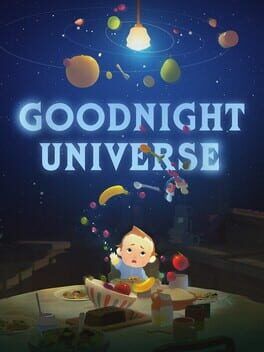

With full eye-tracking and facial-recognition support finally live on Switch 2, Goodnight Universe at last plays the way Nice Dream intended. Here’s why that matters so much for one of the most emotionally driven narrative games of 2025.
Goodnight Universe was always pitched as a game you do not simply play with your hands. On PC, Nice Dream’s follow up to Before Your Eyes watched your gaze, tracked your micro-reactions and folded those invisible inputs into the story of Isaac, a six month old baby with budding psychic powers. When the game launched on Nintendo Switch 2 in 2025 without camera support, it arrived as a strong narrative port, but not the full experience. With the latest update finally adding Switch 2 camera compatibility, that gap is closed. For the first time on console, Goodnight Universe feels complete.
The new patch lets Switch 2 owners plug in a compatible USB camera, including Nintendo’s official unit, and instantly unlock the features that defined the PC version. The game now reads where you are looking, how long you linger and how your face subtly shifts during key scenes. Skybound and Nice Dream recommend a well lit room, a camera about half a meter from your face and a quick in game calibration to make sure your whole face is in frame. Once that setup is done, traditional button prompts mostly melt away. The interface finally trusts your eyes and expressions to carry much of the interaction.
Calling this a “definitive edition” milestone is not exaggeration, because Goodnight Universe’s design was always inseparable from those camera driven systems. As Isaac, you are still physically helpless in the usual videogame sense. You cannot run around or swing a sword. Instead, the world is filtered through the intense, hyper focused perception of an infant. On PC, the game leaned on eye tracking to mirror that tunnel vision, letting a glance at a mobile dangling overhead or a parent’s worried expression become a choice. Without camera support, the Switch 2 version had to approximate this with stick aiming and button presses. It was functional, but the baby’s perspective felt one step removed.
With the update, that perspective finally clicks into place. Looking away from a tense argument in the living room is no longer a matter of tilting a stick, it is a human reflex the game can see. When Isaac’s nascent powers attract the attention of a tech corporation, scenes that hinge on fear, curiosity or resistance suddenly feel less like cutscenes and more like conversations between your subconscious and the screen. Glancing just a little too long at an experiment in progress, or refusing to look at something frightening, now carries weight because the game is reacting to what you genuinely did rather than what you told a controller to simulate.
This has a quiet but powerful effect on the narrative’s emotional rhythm. Goodnight Universe is short, heartwarming and often very still. Much of its best writing is about how a family negotiates love, anxiety and the strange responsibility of raising a child who is not ordinary. In that context, your face becomes part of the script. A tiny smile when Isaac’s parents finally relax, a grimace when a researcher crosses a line, the instinctive urge to squeeze your eyes shut in a stressful moment, all help the story feel specific to you. The Switch 2 version at launch preserved the text and performances, but it could not fully preserve that feeling of your own body being woven into the drama.
The Switch 2’s added horsepower also quietly helps sell this new camera integration. The latest patch includes a small visual fidelity bump, and while it is not a ground up remaster, it matters that the game’s subtle facial animations and soft lighting hold up when the system is literally studying your own face. When Isaac locks eyes with a parent, or when clinical lab light washes over his crib, the visual detail and the eye tracking combine to make these scenes uncomfortably intimate. On handheld, with the camera perched just above the screen, it can feel like Goodnight Universe is peering back at you.
There is also a design lineage here that becomes clearer now that the Switch 2 version is feature complete. Nice Dream’s earlier Before Your Eyes used involuntary blinking as its main verb, turning an ordinary human reflex into a devastating narrative device. Goodnight Universe extends that philosophy from eyelids to the whole upper half of your body. On PC this was already evident, but the arrival of full camera support on a mass market console pushes the idea further into the mainstream. It signals that this sort of performance driven storytelling is not just a PC curiosity, but a viable console experience.
For players who picked up the game on Switch 2 at launch, the update is an invitation to a second playthrough that will likely feel surprisingly different. Choices that once felt like menu selections now flow from where your attention naturally goes. Because the story is compact and tightly paced, the added input layer does not bloat playtime. Instead it sharpens the emotional peaks and troughs. For new players, the advice is simple: if you have access to a compatible camera, this is the way to experience Goodnight Universe. The traditional controls are still there as an accessibility backup, but with the patch installed, they finally feel like the alternative rather than the default.
From an industry angle, this moment quietly repositions Goodnight Universe on Switch 2. At launch it was an accomplished port of a critically praised PC narrative adventure, compromised mainly by hardware limitations. With the latest update, it graduates into the definitive console edition, feature complete and true to the studio’s intent. For a game that lives and dies on whether you feel connected to its tiny protagonist and his worried, loving family, that fidelity matters more than any resolution bump or frame rate target. Now, when Goodnight Universe asks you to look, to flinch, to refuse or to accept, it is finally speaking the same language on Switch 2 that it always spoke on PC.