
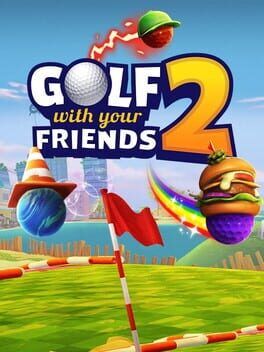

After years of relative silence, Golf With Your Friends 2 is finally teeing off in fall 2026. Here is why the chaotic 12-player sequel makes sense now, what is new versus the original, and whether Team17 can turn a modest social hit into a true current-gen party staple.
After a long spell in the rough, Golf With Your Friends 2 suddenly popping back up with a fall 2026 date feels like an unlikely comeback. The original was never a blockbuster, but it became a dependable fixture on Discord servers and Game Pass libraries, a low-pressure social space where shouts of triumph and disaster mattered more than the scorecard. That kind of word-of-mouth hit has a habit of fading, yet the sequel is arriving at a moment when drop-in party chaos is valuable again.
Golf With Your Friends 2 is targeting PC, PS5, Xbox Series X|S and Nintendo’s next system, with online support for up to twelve players and full cross-platform play. Where the first game slowly grew into its role with updates and DLC, the sequel is being pitched as a more confident, fully formed package from day one, something closer to a modern party platform than a scrappy indie curio.
The core idea has not changed. It is still simultaneous mini-golf where everyone shoots at once, collisions and wild physics turn tidy putts into slapstick, and the lobby banter is as important as the par. What has changed is the scope and intentionality behind that chaos. Team17 and Radical Forge are leading with six new courses, each built around distinct mechanics instead of just fresh scenery. Early descriptions highlight gravity tricks, moving hazards and course-specific rules that are meant to produce unforgettable moments rather than simple difficulty spikes.
That design emphasis matters because the original Golf With Your Friends slowly revealed the limits of its toolset. Once you had played the community’s favorite maps a dozen times, chaos became routine. The sequel appears to be tackling that longevity problem more directly. New physics twists and bespoke gimmicks per course suggest a structure closer to a curated playlist of toys than a flat collection of holes, keeping twelve-player lobbies unpredictable for longer.
At the center of that effort is a much more ambitious level editor. The first game’s course creation scene had passion but also friction. Building something that felt good to play required wrestling with clunky tools, and sharing or discovering courses was more effort than many casual players were willing to invest. Golf With Your Friends 2 is talking up accessibility, flexibility and sharing from the start, promising a cleaner interface, more granular control over hazards and physics, and clearer routes for publishing creations to friends across every platform.
If Team17 and Radical Forge deliver on that, the editor becomes more than a side feature. It turns Golf With Your Friends 2 into a social sandbox, a canvas for inside jokes and competitive one-upmanship between friend groups. A twelve-player lobby playing a cursed custom course that only one of them understands can generate the sort of personal stories that keep a party game installed for years. The trick is not just giving players pieces but making sure that building and browsing new courses feels as frictionless as joining a match.
Twelve player support is also more significant than it first appears. In an era where friend groups are scattered across multiple platforms and time zones, the difference between eight and twelve bodies in a lobby can define whether a game works as the default hangout. Golf With Your Friends 2 combines that headroom with cross-play, which is crucial for a social title that will live or die by spontaneous invites. If the netcode can keep twelve balls, overlapping collisions and dynamic hazards stable, it will earn a place in rotation alongside the likes of Fall Guys and Party Animals.
The question is whether Team17 can turn that modest social hit into something with stronger current-gen staying power. The first game thrived because it felt different from the growing pile of physics party titles. It was simple, low-spec and immediately readable, with rules that anyone could grasp in a minute. The sequel cannot just upscale the visuals and add a few gimmicks. It has to feel physically better to play. That means smoother camera controls, more consistent ball behavior, smart use of haptics on PS5 and better visual clarity on busier courses.
There is also room to modernize how progression and unlocks feed into the party loop. Cosmetics were fun in the original, but they often felt disconnected from the matches themselves. Golf With Your Friends 2 could lean harder into shared goals and cooperative unlocks, things that encourage a group to say one more course instead of treating the game as a throwaway warm-up before something else. Seasonal updates, featured community picks and rotating playlists can give it the cadence of a live party platform without smothering the laid-back tone with grind.
Silence between the initial tease of a sequel and this formal 2026 announcement created a small risk that the moment had passed. Yet the current landscape actually favors what Golf With Your Friends 2 is trying to be. The novelty of massive battle royales has cooled, and many players are searching for lighter, low-commitment games that simply let them exist with friends for an evening. A social mini-golf title that emphasizes cross-play, quick lobbies and an endless supply of user-made courses fits that desire neatly.
Execution will matter more than ever. If the upgraded editor and twelve-player chaos are supported by robust netcode, smart curation of community content and thoughtful quality-of-life touches, Team17 has a real chance to transform a cult favorite into a foundational party staple for the PS5 and Xbox Series era. If not, Golf With Your Friends 2 risks feeling like a belated expansion rather than a confident sequel.
Right now, though, the pitch is promising. Golf With Your Friends 2 understands what people loved about that original surprise hit and seems determined to lock in the energy that made so many evenings disappear into shouts of disbelief after a single disastrous putt. In a crowded market of social games, that kind of focused, chaotic simplicity could be exactly what keeps it on people’s dashboards long after the fall 2026 launch window has passed.