
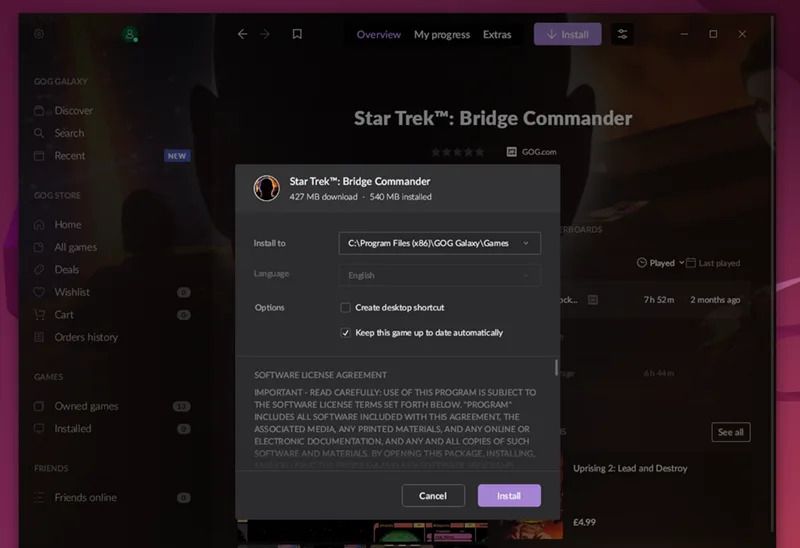

GOG says it is actively exploring Linux support for GOG Galaxy, but the company has not announced a release date, feature set, or SteamOS plan yet.
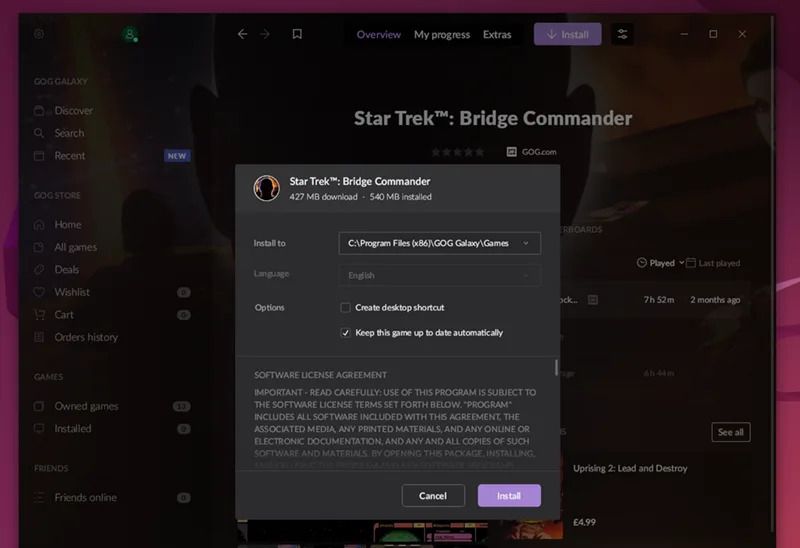
Image: yahoo.com
GOG has finally put Linux on the Galaxy roadmap, but not on the calendar
GOG is officially working toward GOG Galaxy on Linux, according to a statement from joint-CEO Krzysztof Papliński provided to GamingOnLinux. The concrete news is that GOG now has a Linux specialist on board after a role announced earlier this year, and the company is “actively exploring the best way to approach Linux support for GOG GALAXY.”
The immediate tension is timing. Papliński told GamingOnLinux that Linux support is “a significant undertaking” and that GOG is “not ready to share any specific plans, timelines, or results just yet.” That makes this a real shift in direction, but not a product announcement with a launch window. For anyone searching for GOG Galaxy Linux, the honest answer is encouraging but unfinished: GOG has confirmed investment and exploration, while a downloadable Linux client remains unannounced.
That distinction matters because GOG Galaxy has been absent from Linux since the client’s original release, as GamingOnLinux notes. GOG already supports Linux through its web store by offering Linux downloads for games that have Linux builds, but the official Galaxy app itself has remained a Windows-first convenience layer for library management, installs, updates, and storefront-adjacent features. Linux users have had the games, in some cases, without the same official desktop client experience.
The clearest signal came from GOG, not a leak or store-page accident
This is not a rumor cycle built around a database scrape or an optimistic compatibility note. GamingOnLinux reported that it contacted GOG by email and received a response from Papliński, who said Linux remains “one of the topics we hear the most about from our community.” He added that GOG appreciates “the passion and patience” of players asking for it.
Papliński’s wording is careful. GOG is investing “time and effort” into the area, and the company is “excited about the possibilities,” but it has not committed publicly to the shape of a Linux release. There is no confirmed package format, supported distribution list, SteamOS target, beta date, feature parity promise, or Galaxy 2.0 roadmap in the source material.
That careful language should set expectations for anyone waiting on a GOG Linux client before reorganizing a library. “Working toward” is meaningful because it comes from GOG leadership and follows hiring activity reported earlier in the year. It is also not the same thing as “coming next month.” If GOG were already deep into a release candidate, the statement would likely contain more practical detail. Instead, the company is describing early platform work and discovery.
The community demand has been visible for years, and GOG’s own wishlist shows it
GOG does not need to guess whether Linux users care. The company’s public Community Wishlist has long-running requests for official Linux support across Galaxy and download tooling. The wishlist item titled “Release the GOG Galaxy client for linux” shows 43,223 votes and 5,269 comments in the provided listing. A separate wishlist item, “Release GOG Galaxy 2.0 for Linux,” shows 18,945 votes and 1,494 comments. Another request, “Linux version of officiial GOG Downloader,” shows 8,997 votes and 265 comments.
Those numbers do not reveal GOG’s internal business case, but they do show sustained user pressure on GOG’s own site. The comments also point to the audience GOG would be serving. One recent comment on the Galaxy client request mentions Mint and Steam Deck as reasons the user wants to move toward GOG but feels held back by Steam’s convenience. The Galaxy 2.0 Linux wishlist includes recent mentions of CachyOS and Mint. These are small snapshots, not market data, yet they line up with Papliński’s statement that Linux is among the most-heard topics from the community.
There is also evidence of a parallel ecosystem growing around the gap. A GitHub topic page for “gog-galaxy” lists 68 public repositories matching the topic, with language filters including 29 Python repositories, 4 JavaScript repositories, 3 TypeScript repositories, and 2 PowerShell repositories. One listed project describes itself as a client for Epic, GOG, and Amazon games across Windows, macOS, and Linux. That does not make any third-party launcher equivalent to official Galaxy support, but it illustrates the practical reality: players have been building and using workarounds because GOG has not provided a native client.
For DRM-free games on Linux, the client question is about convenience and confidence
GOG’s Linux store support already gives players a direct route to Linux builds where developers provide them. That is the confirmed present-day option: use the web store and download Linux versions for games that support Linux, as GamingOnLinux states. For players who value DRM-free games on Linux, that direct download model is still central to GOG’s appeal, because a library should not depend entirely on whether one launcher is behaving nicely on a given evening.
The missing piece is the everyday quality-of-life layer. A native GOG Galaxy on Linux could make GOG libraries feel less like a set of individual downloads and more like a maintained collection on the machines Linux players actually use. That could matter especially for indie and platformer fans, where libraries often sprawl across short-form gems, experimental releases, and replayable comfort games. The friction is rarely dramatic, but it accumulates: finding the right installer, checking whether a Linux build exists, keeping track of updates, and deciding whether to use a workaround when a game is Windows-only.
None of the provided statements confirm what the Linux version of Galaxy will do. It may launch with a narrower feature set than the Windows client, it may arrive first as a test build, or it may take a long time to reconcile GOG’s existing client architecture with Linux packaging and compatibility expectations. Those are possibilities, not announced facts. The confirmed point is simpler: GOG knows the client gap exists, has hired specialist help, and is actively studying how to address it.
Handheld PC users may be the pressure point, but SteamOS support is still unannounced
The Linux client conversation is no longer only about desktop hobbyists. GamingOnLinux points readers to its guide for installing and managing GOG games on SteamOS and Linux, which reflects the current workaround-heavy state of play. The GOG wishlist comments also show users explicitly naming Steam Deck alongside Linux Mint. That is enough to say handheld PC users are part of the demand signal, even if GOG has not announced a Steam Deck or SteamOS-specific plan.
A native GOG Galaxy on Linux could be especially useful on handheld PCs because those devices reward simple library flows. On a couch or train, the best launcher is the one that gets out of the way. Steam has an obvious advantage there because SteamOS and Steam’s library model are already aligned. GOG can compete on ownership-friendly distribution and older PC catalog access, but convenience still matters when a device is controlled with thumbsticks and a touchscreen.
The realistic reading is that handheld owners should be interested, not expectant. GOG has not said whether Galaxy on Linux will support gamepad-friendly interfaces, SteamOS integration, Proton or Wine management, cloud saves on Linux, offline behavior changes, or compatibility tools for Windows-only GOG games. Until GOG shares those details, Steam Deck and other handheld PC users should treat the announcement as a promising platform signal rather than a reason to rebuild their setup immediately.
What Linux players should do while GOG builds toward Galaxy
If you already own a GOG library on Linux, nothing in the current announcement changes your practical options today. The web store remains the official path for Linux downloads when a game supports Linux. GamingOnLinux also notes that players can install and manage GOG games on SteamOS and Linux through existing guidance, while the broader GitHub ecosystem shows that community tools continue to fill part of the gap.
If you are deciding where to buy a game right now, base that decision on the current store page, the availability of a Linux download, and your tolerance for launchers or compatibility layers. Do not buy a game assuming a native GOG Galaxy Linux release will arrive in time to make installation easier. GOG has not announced timing, results, or specific plans, and Papliński’s “significant undertaking” language is the clearest reason to keep expectations grounded.
Still, this is the strongest official movement Linux users have had from GOG in a long time. The company has acknowledged the demand, hired specialist help, and publicly confirmed that GOG Galaxy on Linux is an area of active investment. For a platform built around the appeal of owning and preserving PC libraries, that is a sensible direction. Now GOG has to turn a welcome statement into a client Linux players can actually install.