
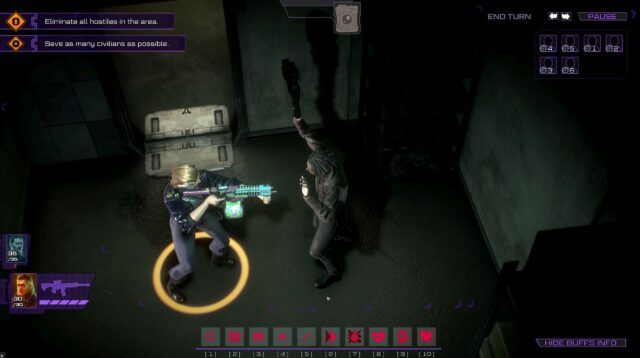

Strange Scaffold has revealed Gods With Badges, a PC narrative tactics game for 2027 that uses bodycam choices, police procedure, and turn-based force decisions to question authority systems.
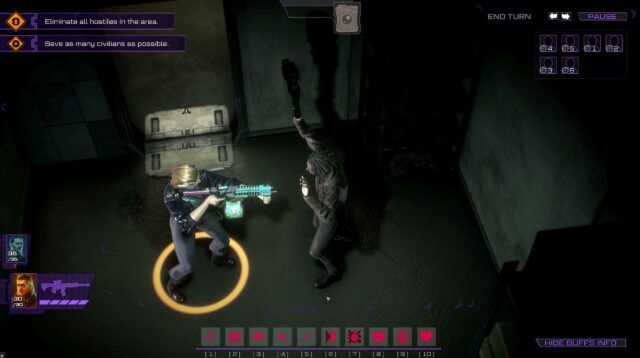
Image: monstervine.com
Strange Scaffold’s new tactics game makes the bodycam a rules question
Strange Scaffold has announced Gods With Badges, a narrative tactics game about law enforcement power where turning off a police body camera is a mechanical choice rather than background flavor. The studio unveiled the project during the Triple-I Initiative showcase on October 8, according to Eurogamer, Gematsu, MonsterVine, and the announcement carried by Games Press. The confirmed release plan in the press materials and Steam listing coverage is PC via Steam in 2027.
The immediate tension is unusually direct for an indie strategy game: when a situation escalates, the player can temporarily disable protagonist Harrow McClellan’s bodycam. Strange Scaffold’s announcement, as reproduced by Gematsu and Games Press, says doing so unlocks new tactical and dialogue options while removing the public record of what happens next. That turns accountability into an economy of opportunity. The player gains options, but the system also asks what kind of options only become available when oversight disappears.
That is the core design hook separating Gods With Badges from a conventional police tactics game. Its combat is isometric and turn-based, with cover, hostage rescues, and force decisions, but the most interesting strategic resource may be institutional protection. Strange Scaffold’s own overview says Harrow operates under qualified immunity and holds power over life and death. The game’s title is blunt about the fantasy it is interrogating: “You are a god with a badge.”
Harrow McClellan’s reputation is part of the battlefield
Gods With Badges casts players as Harrow McClellan, a disgraced police officer transferred back to her original post after the scandal that drove her away became legend inside law enforcement. The studio’s description, cited by Eurogamer and Gematsu, frames every dialogue choice and turn-based encounter as a decision to lean into that reputation or attempt to rise above it.
That matters for the tactics layer because the revealed systems do not stop at hit chances and cover positions. Strange Scaffold says dialogue choices, arrests, and uses of force shape Harrow’s relationships with fellow officers, the public, and the surrounding institutions. In strategy terms, this sounds less like a clean mission ladder and more like a reputation web, where tactical optimization could create political, social, or procedural debt elsewhere.
The setting is Scarhelm, a dystopian future city made up of open hubs. Players patrol those spaces, seize contraband, investigate civic and criminal complaints, and search back alleys for evidence, according to the official overview. MonsterVine also reports that the campaign is an anthology structure and that encounters include customizable officer loadouts. Those details suggest Strange Scaffold is building a loop around patrol decisions before combat begins, then letting those decisions bleed into relationship states and encounter outcomes.
For a tactics audience, the question is how hard the game pushes against optimal play. If disabling the camera consistently grants stronger tools, players will quickly treat oversight as a cooldown. If relationships, institutional responses, public trust, and later mission states meaningfully punish that shortcut, the bodycam becomes a long-term strategic wager. The reveal confirms the premise, but it does not yet show the size of those consequences.
The bodycam framing creates unease because it changes what the player can do
Bodycam aesthetics have often been used in games to intensify visual realism, especially in shooters. Gods With Badges is aiming at a different kind of discomfort. The camera is not only a viewpoint. Based on Strange Scaffold’s announcement, it is a constraint on available actions and a record of accountability. Turning it off opens new routes through combat and conversation, but it also erases the public documentation of the scene.
That is a sharp design choice for a narrative tactics game because turn-based systems usually reward transparency. Players study rules, forecast consequences, and reduce uncertainty. Gods With Badges appears to put a moral and institutional fog over that process. If the best tactical answer is hidden behind a decision to remove oversight, the game can force players to ask whether they are solving a crisis or exploiting a system built to protect the person wearing the badge.
Noisy Pixel reports that combat includes decisions between executing suspects and attempting arrests, with different risks and consequences. MonsterVine similarly describes decisions around killing suspects or risking Harrow’s position to secure an arrest. Those are reported details, not yet demonstrated through hands-on impressions in the provided source material, but they point toward a structure where nonlethal or procedurally accountable play may come with real tactical cost.
That is where the satire and critique appear to sit. Strange Scaffold has not announced Gods With Badges as a comedy, and the provided materials describe it as examining power, social dynamics, and institutional pressures. Still, the title, the dystopian setting, and the bodycam mechanic all push the same uncomfortable idea: authority is strongest when its systems can decide when accountability applies.
From Hard Justice to Project Share, the production history is part of the story
Gods With Badges did not begin as a blank-page Strange Scaffold project. The announcement says it was originally conceived by Artificer under the name Hard Justice, then left unrealized. Strange Scaffold is building on that project’s foundations and development materials while reinterpreting it through its own creative lens, according to Games Press and Gematsu.
That inheritance is important because Artificer is identified in the announcement coverage as an acclaimed strategy studio, while Strange Scaffold is better known in the provided sources for games such as I Am Your Beast, El Paso, Elsewhere, CLICKOLDING, and Space Warlord Baby Trading Simulator. The result is a potentially unusual mix: a strategy project with inherited tactical foundations, reworked by a studio associated with aggressive narrative premises and compact, high-impact games.
The game is also part of Strange Scaffold’s Project Share initiative, which the studio says encourages developers to exchange technology and explore more sustainable production methods. The earlier Project Share result cited in the announcement was Creepy Redneck Dinosaur Mansion 1: Re-Raptored. In an industry where canceled projects often vanish, Gods With Badges is being positioned as a resurrection and reinterpretation rather than a continuation under another name.
Studio head Xalavier Nelson Jr. called Gods With Badges one of the most ambitious projects Strange Scaffold has undertaken, citing its unusual production circumstances and its desire for cultural impact. He also thanked the original Artificer developers for trusting Strange Scaffold with the project and said the team is treating the material seriously. That quote matters because this premise carries obvious tonal risk. A game about police power, bodycam control, and institutional protection has little room for careless edge.
The strategy test will be whether consequences outlast the mission
As a strategy design pitch, Gods With Badges has a strong first move: it turns an ethical question into a rules interaction. The challenge will be whether the campaign can make that interaction durable. Good tactics games create pressure at multiple time scales. The immediate turn asks how to survive. The mission asks how to complete objectives. The campaign asks what kind of player behavior the economy, roster, reputation, and narrative systems reward.
The confirmed systems suggest several possible pressure points. Harrow’s relationships with officers, residents, and institutions can change. Arrests and uses of force are tracked as meaningful choices. The bodycam can be disabled, with additional options unlocked and public recording removed. Scarhelm’s open hubs give the game room to make patrol decisions matter before combat starts. None of the provided sources confirm exactly how branching, failure states, or campaign persistence work, so any deeper claims would be speculation.
Still, Strange Scaffold’s premise creates a clear design burden. If the bodycam is mostly a binary prompt for alternate dialogue, the game risks reducing accountability to a novelty switch. If it reshapes witness reactions, officer trust, evidence credibility, public response, and Harrow’s available tools over time, it could become one of the more interesting mechanics in the current indie strategy game field. The reveal gives enough information to see the ambition, but not enough to judge the execution.
There is also a balance question. Tactical games often let players rationalize harsh choices through efficiency: fewer risks, fewer turns, fewer injuries. Gods With Badges appears to be aimed directly at that habit. The strongest version of this design would make players feel how quickly optimization language can sanitize abuse of power.
Release details are narrow, and one listing conflict is worth noting
The practical details are currently limited. Games Press, Gematsu, Eurogamer, and MonsterVine all report Gods With Badges for PC via Steam in 2027. Gematsu links to a Steam page for the game. No price, exact date, system requirements, demo plan, Steam Deck status, console versions, or publisher details are included in the provided source material.
There is one conflict in the coverage. Noisy Pixel says the game is listed on PC via Steam, but also states that platforms and a release window have not been announced. That conflicts with the official announcement text carried by Games Press and with Gematsu, Eurogamer, and MonsterVine reporting PC via Steam in 2027. Based on the publisher-facing announcement and multiple aligned reports, PC on Steam in 2027 is the strongest confirmed reading from the available sources.
For players, the useful guidance is simple: wishlist if the premise interests you, but wait for gameplay breakdowns before assuming how deep the systems go. The announcement trailer establishes the concept, and the press materials outline patrols, open hubs, turn-based combat, bodycam toggling, and relationship consequences. What remains unanswered is the part that will define the game for tactics players: how consistently the campaign remembers what Harrow does when the camera is on, and what it chooses to forgive when the camera goes dark.