
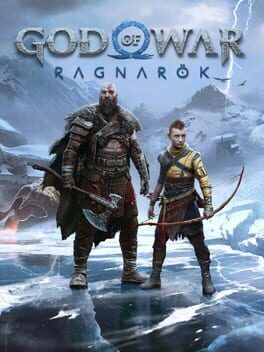
A games-first look at Amazon’s God of War TV adaptation, why casting Ryan Hurst as Kratos matters after his turn as Thor in Ragnarok, how closely the show plans to follow the last two games, and what a faithful series could mean for the future of the God of War franchise.
Amazon’s God of War TV series has finally found its Kratos, and it is a name that already means a lot to PlayStation fans. Ryan Hurst, the actor who embodied Thor in God of War Ragnarök, is stepping into the boots and red paint of the Ghost of Sparta for Prime Video’s live action adaptation. On paper it is a curious move: the man who brought one of Kratos’ most memorable rivals to life will now define him for a much wider audience.
From a games-first perspective though, this casting says a lot about what Amazon and PlayStation want this show to be. This is not just a celebrity face for a game brand. It is an attempt to bottle the performance-driven storytelling that turned the 2018 soft reboot and Ragnarök into prestige narrative benchmarks for the medium.
From Thor to Kratos: Why Ryan Hurst Makes Sense For God of War
For many players, Hurst is already an integral part of the modern God of War era. His Thor in Ragnarök was heavy, wounded, and quietly tragic, a god who looked like a blunt instrument but played like a man crushed by expectation and grief. That performance, backed by full performance capture, helped sell Ragnarök’s interpretation of Norse myth as intimate and human rather than just bombastic.
Casting him as Kratos pulls that same expertise right into the center of the adaptation. Hurst has already proven he can work within Santa Monica Studio’s tone: grounded conversations that flip violently into balletic violence without losing emotional stakes. Kratos in the 2018 game and in Ragnarök is not the screaming PS2-era demigod so much as a middle aged father trying, and often failing, to escape his past. Translating that version of Kratos to live action depends less on sheer physical presence and more on mastering quiet shame, tightly coiled anger, and the rare, fragile moments where he lets Atreus see something softer.
Games often struggle when they move to television because the performances that defined them are inherently digital. In Kratos’ case, the legacy of T.C. Carson and especially Christopher Judge already looms large. Rather than chase a lookalike or a soundalike, the choice of Hurst feels targeted at capturing the same philosophy: an actor who can own the part physically but is primarily there to navigate the emotional journey that made the last two games resonate beyond their combat arenas.
The Show’s Stated Plan: Following The Last Two Games
Amazon and PlayStation are not hiding what story they want to tell. The series is described as closely following the path of the last two games. That means starting in the Norse era, with Kratos and Atreus in the cabin, Faye already gone, and the world on the brink of prophecy.
The rough outline is familiar to anyone who played the 2018 game. Kratos and Atreus embark on a journey to spread Faye’s ashes at the highest peak in the realms. Along the way the pair clash over secrets, expectations, and the nature of godhood itself. The adaptation’s logline leans into this, presenting their dynamic as a mutual project: Kratos trying to teach Atreus to be a better god, while Atreus tries to teach Kratos to be a better human.
If the show really does track both 2018 and Ragnarök, it has a ready-made three act arc. Season one can focus on the road trip structure of the first game, letting viewers learn the rules of this Norse world as Kratos slowly opens up. A follow up can lean into the escalation of Ragnarök’s war of gods, the revelations around Atreus’ identity, and the question of what kind of god he will become. In game form this played out over tens of hours punctuated by fierce, technical combat encounters. On television it becomes much more about pacing character beats against large scale mythic set pieces without losing the smaller father son conversations that defined both games.
The encouraging part is the creative leadership attached to the adaptation. Ronald D. Moore knows how to treat a genre property as a character drama first and a spectacle generator second, and director Frederick E. O. Toye has already cut his teeth on action heavy, morally messy shows like The Boys and Fallout. If they stick to Santa Monica Studio’s structure, the show will not need to invent a story arc from scratch. It just needs to decide which of the games’ many side threads survive the jump to a ten episode format.
What “Faithful” Should Mean For A God of War Adaptation
When producers say a series will closely follow the games, that promise can cut two ways. A shot for shot recreation risks turning into expensive cosplay. Too much deviation risks losing what made the original work. For God of War, a genuinely faithful adaptation is less about direct plot lifts and more about bottling three core pillars of the modern series.
First is the continuous camera perspective. The 2018 game stunned players by essentially never cutting. The camera stayed over Kratos’ shoulder from the opening to the credits, a formal trick that created a constant feeling of physical presence. Television cannot fully mimic that without becoming a gimmick, but it can borrow the idea. Longer, more intimate takes that stay close to Kratos and Atreus during key scenes could give the show a visual identity rooted in how the games feel to play.
Second is the collision of brutal combat with quiet domesticity. In both games, the biggest swings are often followed by humble downtime in the boat, or by slow walks through the cabin as Atreus processes what just happened. A faithful show should resist the temptation to cut away from those pauses. They are where the series’ themes of parenthood, cycles of violence, and self control actually land.
Third is the treatment of mythology as a character problem rather than a trivia book. God of War does not toss in Odin, Freya, or the Jötnar just to name check Norse lore. It rewrites them around Kratos and Atreus’ journey. If the adaptation keeps that focus, every god that shows up should represent some angle of Kratos’ past or Atreus’ possible future. That is how the games turned what could have been a tour of Norse landmarks into something that felt personal.
Get those three pillars right and the show can diverge from side quests, cut or combine characters, and still feel accurate at a deeper level. Fail them and even perfect recreations of Valkyrie fights and boss arenas will ring hollow for players who lived in that world for dozens of hours.
How A Strong TV Series Could Reshape The God of War Brand
From the game side, the biggest question is not whether Prime Video can stage a good Leviathan Axe throw. It is how a hit TV show might reshape what God of War is expected to be going forward.
If Kratos and Atreus land with a broader streaming audience, Sony suddenly has a multimedia anchor that extends well beyond consoles. That kind of visibility tends to harden a character’s image. Once millions of people know Hurst’s version of Kratos, the studio will need to consider how far future games can stray from that portrayal without creating whiplash. The series already transitioned Kratos from Greek antihero to Norse father figure. A successful show could lock in that second phase as the default public understanding of the character.
That has design implications. Future games may feel nudged toward stories that can be summarized for non players as basically more of what you saw on Prime. That could mean keeping Kratos and Atreus in focus longer than Santa Monica Studio originally planned, or at least echoing the same themes of parenthood, guilt, and self determination even if the cast changes. It might also push the studio toward clearer, seasonal arcs inside the games themselves, with cleaner break points that mirror television pacing.
On the mechanical side, God of War’s combat is already cinematic in a way that plays well in marketing clips. The adaptation will further highlight specific moves, weapons, and visual beats: axe recalls, Blades of Chaos whips, shield bashes. Once those are burned into the wider audience’s mind, they become touchstones future titles are expected to hit. Iteration becomes about remixing familiar signatures rather than reinventing Kratos from the ground up as the series did when it left Greece.
At the same time, there is opportunity here. A widely watched show gives Sony room to experiment elsewhere while God of War holds the center. Santa Monica Studio has already hinted that Kratos’ Norse saga is wrapping up and that Atreus has his own journey ahead. The television series can double down on the core father son narrative while the games gradually branch out into new mythologies, timelines, or protagonists. In a best case scenario, the show anchors the classic story for new fans while the games stay slightly ahead, exploring what happens once that story is complete.
Where The Games Could Go After The Adaptation
Assuming the series adapts the full Norse saga across multiple seasons, the big creative question for the games is what comes after Ragnarök in a world where that storyline is constantly resurfacing on television.
One path is to let the show become the definitive telling of the Kratos and Atreus era while the games leap forward in time or sideways into other myths. That keeps the console experience as the place where players go to see what is next. Prime Video can retell what players already loved, at a scale that works for passive viewing, while Santa Monica Studio turns its attention to questions the series likely will not touch, such as the long term consequences of breaking cycles of violence or the fate of gods in a more interconnected, post mythic world.
Another path is tighter synergy. Future games could quietly respect beats laid down by the show, perhaps in smaller ways like leaning into certain interpretations of side characters or preserving specific character designs. This would be less about making the games beholden to the series and more about maintaining a coherent brand silhouette across media.
What feels unlikely now is a full return to the raw, unchecked rage of the original Greek trilogy as the primary identity of the franchise. Once millions of viewers know Kratos as a struggling father and reluctant mentor, going back to pure revenge fantasy would read as a regression. Instead, combat heavy spin offs could carry that older tone while mainline entries keep exploring reflection and responsibility.
A Test Case For Game First Storytelling On TV
More than anything, Amazon’s God of War stands as an early test of whether prestige TV can pull its weight by respecting what games already do well instead of trying to flatten them into traditional blockbuster stories. Casting Ryan Hurst, fresh from one of the series’ standout performances, is a signal that the people involved understand where the heart of modern God of War really sits.
If the series follows through on its promise to track the last two games, leans into performance and perspective rather than just spectacle, and takes Kratos’ long journey from monster to mentor seriously, it could end up doing more than just selling a few extra copies. It could set expectations for how PlayStation adapts its other big brands and gently steer where the God of War saga heads next.
For players, the interesting part will be watching the feedback loop form. The games informed this show. The show will feed back into how millions of people see Kratos and Atreus. What Santa Monica Studio decides to do under that new spotlight will define the next era of God of War just as surely as the move to Norse myth once did.