
How the secret code unlock works, how co-op is structured, and whether The Pit’s roguelike loop can win back players who bounced off Sons of Sparta’s campaign.
How To Unlock The Pit’s Secret Roguelike Mode
God of War: Sons of Sparta shipped with a big asterisk on the back of the box. The two player “roguelike challenge mode” was plastered across marketing, yet anyone who picked up the game at launch discovered that The Pit only unlocked after finishing the 20 hour campaign. For a lot of players who bounced off the main story’s pacing or retro level design, that might as well have meant never.
Following a predictable backlash, Sony Santa Monica quietly pushed a fix that feels more like a playful concession than a simple menu toggle. The Pit can now be accessed from the very start of the game via a classic cheat style input on the title screen:
Up, Up, Down, Down, Left, Right, Left, Right, L1, R1, Touchpad.
Punch that in on the main menu and a new option appears that drops you straight into The Pit without needing a cleared save. There is no requirement to touch the campaign at all if all you want is the roguelike mode. It is still framed as “endgame content” and it borrows your current unlock set if you have one, but from a structural point of view The Pit is now a parallel path into Sons of Sparta rather than a post credits dessert.
What The Pit Actually Is
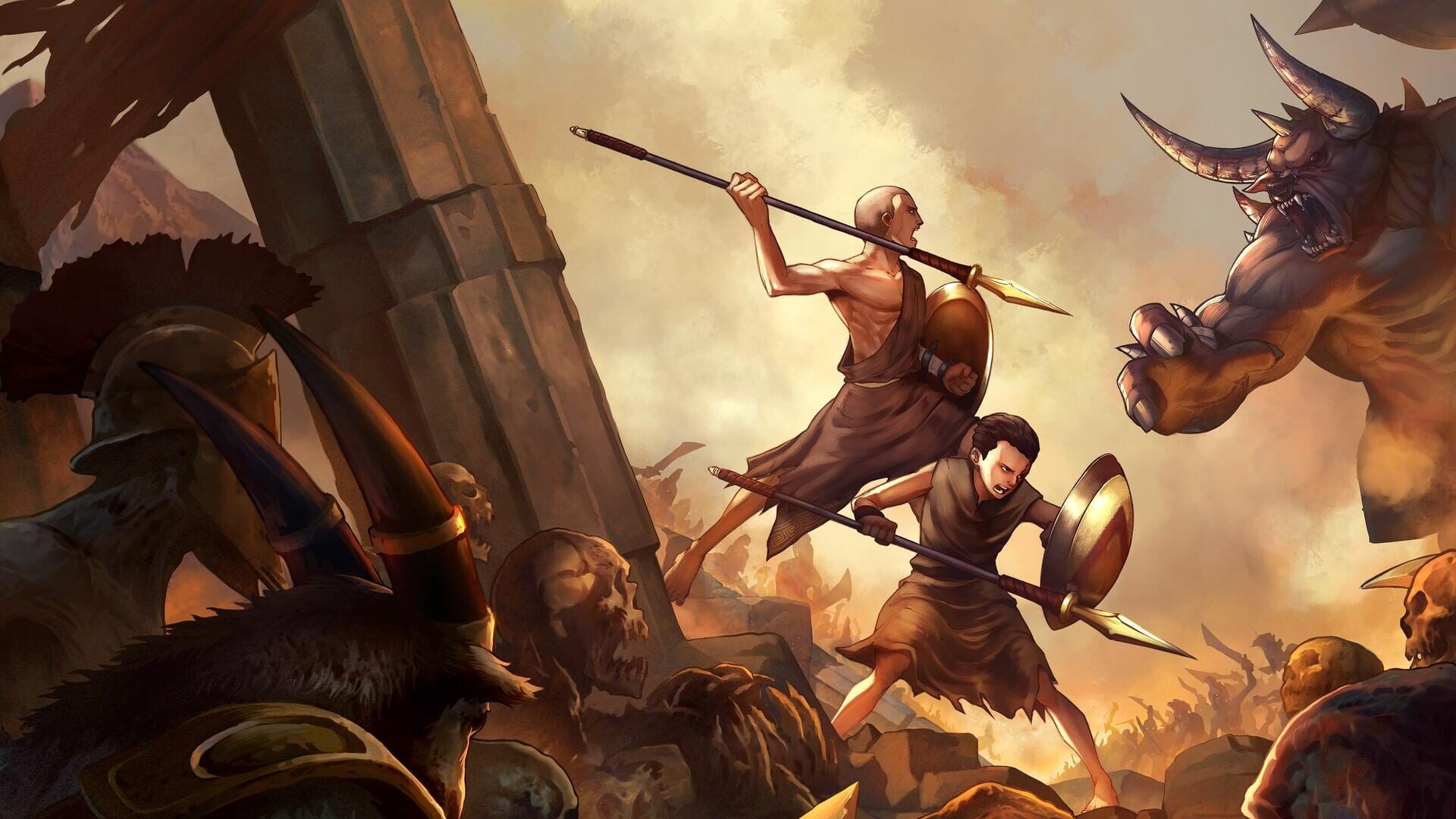
In practice The Pit feels closer to a compact arcade brawler with light roguelite trimmings than to the cinematic, heavily scripted God of War campaigns of recent years. Each run is a self contained gauntlet of bite sized combat arenas, randomized enemy lineups and shifting reward pools.
You begin every attempt by “Choosing Your Agony,” a global modifier that shapes the entire run. Agonies are essentially curses that trade safety for scoring potential and unlocks. Agony of Torment litters arenas with fragile healing vessels that must be smashed or enemies regenerate health. Agony of Calamity turns every kill into a small explosion, forcing you to think about spacing and crowd control. Later Agonies, unlocked as you progress, twist fundamentals even harder, playing with cooldowns, parry timing windows and environmental hazards.
As you clear rooms you are offered more Agonies or upgrades to the one you started with. You can stack several at once, creating bespoke runs that feel wildly different despite reusing the same tile set arenas. A conservative build might focus on modest damage buffs and manageable debuffs, while a score chasing run piles on explosive deaths, elite enemy variants and limited healing in exchange for a shower of rewards.
Two currencies sit behind the mode’s long tail. Symbols of Suffering are earned based on the Agonies you equip and how deep into a run you get. Accumulating them unlocks new Agonies, enemy mutators and arena variants. Ashes of Agony act as a meta progression resource used to purchase permanent upgrades that persist between runs, smoothing out the early difficulty curve in the way roguelite fans expect.
It is not as systemic or run defining as something like Hades or Slay the Spire, but for a budget priced spin off it is a surprisingly robust loop that makes the most of Sons of Sparta’s punchy, animation driven combat.
How Co op Works In The Pit
Sons of Sparta is a staunchly old school project and The Pit leans into that philosophy. Co op in the mode is local only, shared screen couch play. Player one controls Kratos, player two jumps in as his brother Deimos. There is no online matchmaking, no progression pass, no separate co op inventory to level.
From the moment you unlock The Pit, you can start a run solo and have a second player press a button on the controller to drop in. Health bars, cooldowns and upgrades are shared across both Spartans, so you are effectively piloting one build with two bodies rather than running two independent characters. That design keeps the mode readable in hectic moments and avoids the usual split in loot that can make co op roguelikes feel stingy.
The tradeoff is that The Pit is at its best when both players are on roughly the same mechanical page. With healing tightly rationed and Agonies constantly altering basic expectations, a partner who dodges out of sync or burns cooldowns sloppily will absolutely get you both killed. On the flip side, when you and a friend sync parries, juggle enemies between you and use Deimos’ crowd control kit to set up Kratos’ big finishers, The Pit starts to feel like the co op arena mode many players wanted from Ascension but never quite got.
Importantly, nothing in The Pit’s reward structure is gated behind co op. All Agonies, meta upgrades and cosmetic unlocks can be earned solo. Co op is framed as a flavor choice and a way to raise the skill ceiling rather than a mandatory grind multiplier.
Does The Pit Redeem Sons of Sparta For Campaign Dropouts?
The natural question for anyone who bounced off Sons of Sparta’s main campaign is whether The Pit meaningfully changes the game’s value. If you walked away after a few hours of stiff platforming or found the story beats too slight, is it worth coming back just for this mode?
The answer depends entirely on what you wanted from the game in the first place.
If you were hoping for a dense, story driven God of War epic, The Pit will not fix that. It barely acknowledges narrative at all beyond a thin framing about Spartan trials. There are no cinematics between floors, no character development, no new environments that recontextualize Kratos’ early years. You are here for combat and only combat.
If, however, your issue with the campaign was that its combat sandbox took too long to get going or that the level design kept pulling you out of fights for climbing and light puzzling, The Pit is almost the ideal antidote. It strips out traversal, story pacing and collectibles, then repackages Sons of Sparta’s chunky melee as a pure score chasing arcade mode. Because enemy compositions and Agonies change between runs, you hit interesting decisions much faster than in the linear story, which often repeats similar encounter layouts for hours.
The early gate on The Pit made this proposition hard to sell at launch, because you had to endure the very campaign you might be lukewarm on just to see whether the roguelike experiment landed. With the secret code now in place, it is easier to recommend Sons of Sparta to a specific audience: players who like God of War combat systems but do not care about the mainline series’ blockbuster storytelling.
In that light The Pit almost feels like the actual core of the package, with the 20 hour story acting as a lengthy, optional tutorial. It offers a compact, replayable mode that respects your time, encourages mastery, and finally justifies the presence of local co op in a God of War title. It will not convert everyone who bounced off the campaign, but if you ever wished the game would stop talking and just throw you into fights, The Pit is the part of Sons of Sparta that finally delivers.