
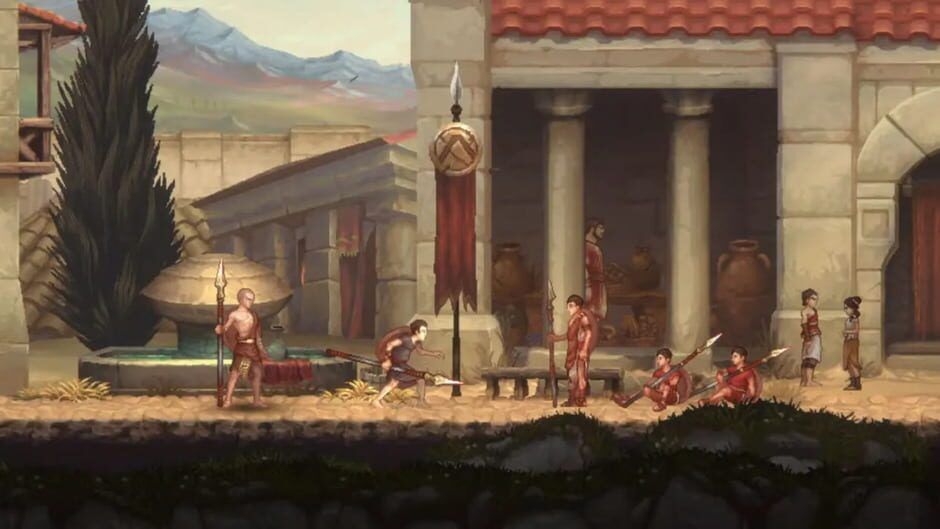

How a single store tag and an unlock condition turned Sons of Sparta’s couch co‑op feature into a controversy over design, messaging, and player trust.
Sony pitched God of War: Sons of Sparta as a smaller, side‑scrolling spin‑off that would let players experience Kratos’ Spartan upbringing. The game’s store pages also quietly carried a powerful promise: support for co‑op play. For a lot of fans, that translated into a simple, attractive pitch: a cheaper God of War they could play locally with a friend or family member on day one.
Once players actually booted up Sons of Sparta, they discovered a very different reality. The main campaign is strictly single‑player, and the only way to access any kind of cooperative play is to first beat the entire story, which then unlocks a separate challenge mode that can be played solo or in local two‑player couch co‑op. There is no online co‑op at all.
On paper, that structure is defensible as a design choice. In practice, the way it was communicated turned it into a controversy that has quickly overwhelmed discussion of the game itself.
How Sons of Sparta Marketed Co‑op
Across listings and pre‑launch coverage, God of War: Sons of Sparta was clearly labeled as supporting co‑operative play. The PlayStation Store and database entries categorized it as both single player and co‑operative, and early write‑ups highlighted that you would be able to play with a second player locally.
Crucially, most of this messaging stopped at the checkbox level. There was little to no explicit qualifier that co‑op applied only to a post‑game challenge mode, or that players would have to finish the full campaign before they could even access it. Fans coming in from the most recent God of War entries, which leaned heavily on the relationship between Kratos and Atreus, were primed to imagine a story‑driven co‑op experience that could be shared from the moment they pressed Start.
Store pages rarely spell out feature unlock conditions unless they are central to the marketing hook. When a game includes a line like "co‑op play supported," the default expectation in 2026 is that this is a meaningful mode available early and that it relates to the core experience in a visible way. Sons of Sparta technically fulfills the label, but only in a narrow, post‑credits context that most buyers were not prepared for.
The Unlock Requirement And Why It Stung
Sony Santa Monica and Mega Cat Studios clarified the situation only after confusion spread on social media. Co‑op exists, but exclusively in an unlockable challenge mode that appears once you have completed the main story. Until that point, Sons of Sparta behaves like a fully single‑player game.
There are reasonable design motives behind that decision. By forcing players to go solo through Kratos and Deimos’ training arc, the developers ensure that everyone has a common baseline of mechanical understanding before they jump into higher‑intensity challenge stages. Narrative pacing is also easier to control when you are not trying to design every encounter around the possibility of a second player dropping in.
The problem is less the structure itself and more how it collided with modern expectations about what co‑op means. Parents who bought Sons of Sparta specifically as a couch co‑op game for younger players suddenly discovered they had to clear an entire campaign alone just to unlock the thing they actually wanted. Friends planning launch‑night co‑op sessions ended up with a solo campaign and a feature sitting behind a finish‑line that might take them a weekend or longer to reach.
Unlockable modes are not new. Arcade‑style games have hidden characters and challenge towers that open up after completion. The difference here is that co‑op was treated in marketing as a primary selling point but implemented in design as an optional victory lap. That disconnect is what turns a design quirk into a consumer‑facing problem.
False Advertising Accusations And Social Media Fallout
Once the unlock requirement became widely known, backlash escalated quickly. Social media threads and comment sections filled with posts from players saying they felt misled, with some explicitly stating that they wanted a refund because the game did not deliver the co‑op experience they believed they had purchased.
The language used by frustrated fans has centered on words like "cheated," "tricked," and "baited." That response is fueled by a familiar pattern. Over the past decade, the industry has seen multiple cases where broad feature tags glossed over important limitations. Online only multiplayer that works in a fraction of modes, cross‑play that is really just cross‑progression, or performance claims that quietly rely on day‑one patches have all contributed to an atmosphere of skepticism.
In that context, Sons of Sparta’s co‑op implementation looks to many like another instance where the marketing line item told one story and the actual game told another. The fact that co‑op technically exists is not enough to quell those reactions, because what is at stake is the perceived spirit of the promise rather than the literal wording.
The Design Problem: Co‑op As A Reward Instead Of A Pillar
From a designer’s perspective, there are two very different ways to treat co‑op. It can be a core pillar that shapes encounters, pacing, and even narrative, or it can be a bonus mode that gives players something extra to do after they have finished the main course. Sons of Sparta clearly lands in the latter camp, but the outward‑facing messaging implied the former.
By gating co‑op behind story completion, the developers effectively repositioned it as a reward for dedicated players, something to spice up post‑game mastery. That is a valid creative choice for a $29.99 spin‑off with limited scope. The trouble is that the marketplace context does not distinguish between "pillar co‑op" and "reward co‑op" when both use the same generic co‑op tag.
Players do not see the internal resource balancing that leads a studio to prioritize a polished solo campaign over fully integrated co‑op. They see a checkbox promising the ability to play together and a product that demands a full solo run before honoring that promise. It is the gap between invisible constraints and visible expectations that drives anger here.
What This Says About Feature Labels And Player Trust
The Sons of Sparta situation casts a harsh light on how digital storefronts present game features. Tags like "single player" and "co‑operative" are treated as neutral metadata, but in reality they function as compressed marketing statements. Their simplicity leaves no room to express nuance such as "local co‑op in post‑game challenge mode only."
As games grow more complex and mode structures more varied, this lack of nuance becomes dangerous. When a product is sold primarily through a digital page, how those features are described becomes the de facto contract with the consumer. A player’s trust in that contract is cumulative. Once enough experiences feel like technical truths that dodge the spirit of the pitch, skepticism becomes the default.
Sons of Sparta’s co‑op controversy did not occur in a vacuum. It is part of a wider conversation about disclosure and clarity. If co‑op is a late‑game extra, does that need to be headlined as prominently as core features? Should platform holders require more specific descriptors for modes that are significantly limited or gated? These are not just legal questions but issues of long‑term brand health.
The Original Creator’s Criticism And Legacy Expectations
The backlash gained additional visibility when the original creator of God of War criticized Sons of Sparta’s co‑op setup and overall positioning. His comments were less about frame rates or console loyalty and more about how the game plays with the legacy of the series.
From his perspective, attaching the God of War name to a smaller spin‑off inherently raises expectations about intensity, clarity of purpose, and how honestly the experience is communicated to fans. When a title under that banner advertises a feature as emotionally loaded as local co‑op and then hides it behind completion of a solo campaign, it feels, in his view, like a mismatch between brand heritage and delivery.
His criticism also taps into a broader creative concern. God of War has always been closely tied to strong, immediately understandable hooks. A bloody revenge saga. A single‑shot camera following a father and son across a mythic world. Fans expect that same clarity when it comes to new ideas like couch co‑op. When those ideas are pushed into side modes with opaque unlock rules, it can read as indecisive design rather than bold experimentation.
Having the original creator speak out does not settle the argument, but it does legitimize the sense that this is not just a minor misunderstanding. It turns a scattered fan complaint into part of a larger debate about how first‑party publishers steward their biggest franchises and communicate scope to their most dedicated audiences.
Moving Forward: Lessons For Co‑op Design And Messaging
What makes Sons of Sparta worth examining is not that it is uniquely deceptive but that it sits at the intersection of clear pressures. A smaller budget spin‑off trying to offer added value, a franchise whose fans hunger for new ways to share the experience, and a digital storefront culture that compresses complex mode structures into a handful of broad tags.
There are practical lessons that both Sony and other studios can take from this. If a mode is gated behind full completion of the story, that fact should be surfaced plainly in pre‑launch interviews, trailers, and store descriptions. If co‑op is limited to local play in a discrete challenge mode, that specificity should be part of how the game is framed, not a detail clarified after reviews and tweets highlight confusion.
On the design side, teams building recognizable brands need to consider not just what a mode technically offers, but how it will be perceived by people who only skim a store page and remember a trailer. In an era of crowded release schedules and quick purchasing decisions, feature clarity is as crucial as combat feel or art direction.
God of War: Sons of Sparta’s co‑op is not inherently a bad idea. For some players, finishing the campaign and then tackling post‑game challenges with a friend will be exactly the kind of extra content they want. The controversy arises because the game was sold to many as something slightly different from what it truly is. In a generation where trust is fragile and attention is scarce, that small gap in expectation can make all the difference.