
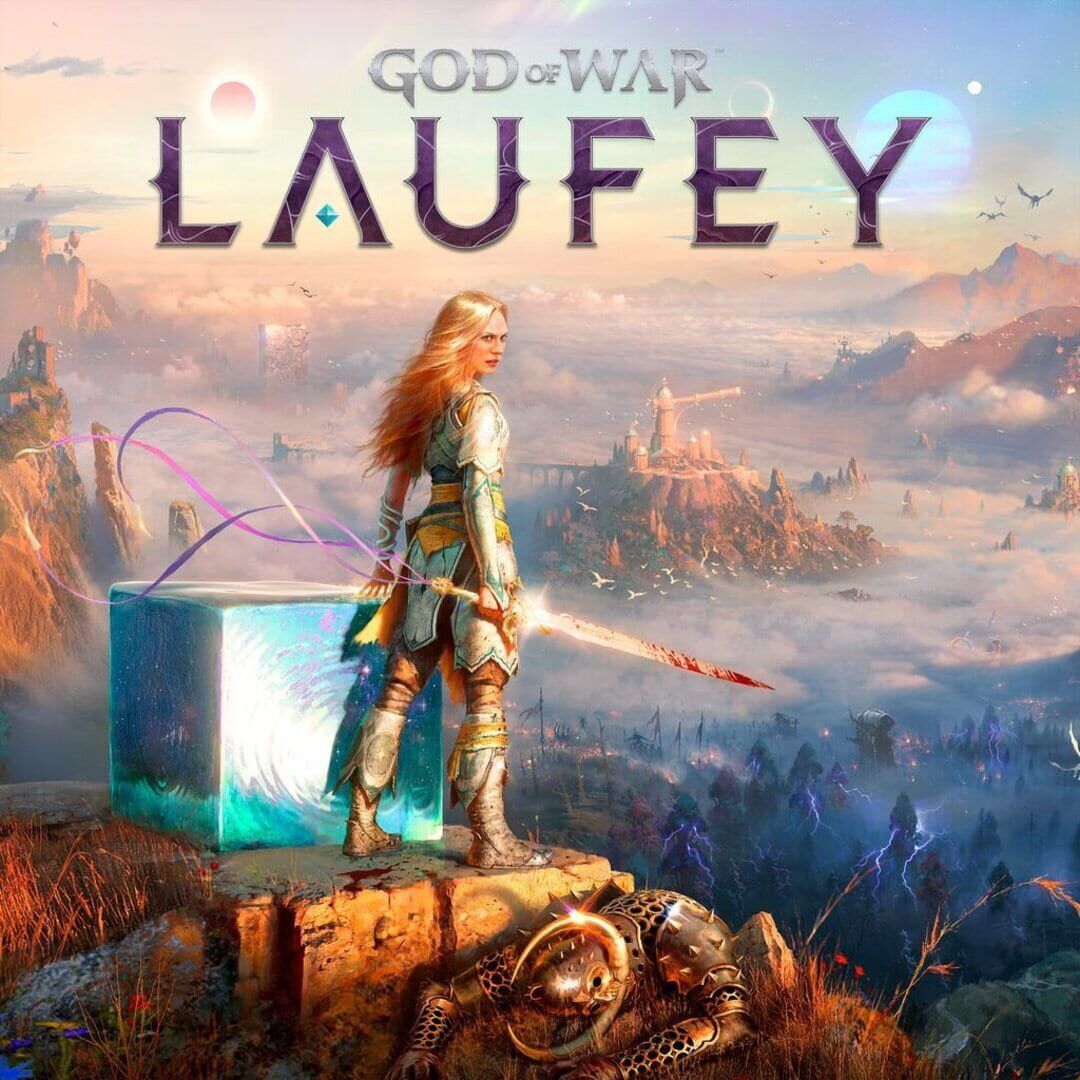
Breaking down the reveal of God of War Laufey, Faye as the new protagonist, the Everywhen setting, evolving combat, what it all means for the God of War saga, and how fans are reacting to Kratos finally taking a back seat.
Sony Santa Monica is not just making another sequel. With God of War Laufey, it is pulling the camera away from Kratos for the first time in two decades and pointing it at the woman whose plans secretly shaped the entire Norse saga. The State of Play reveal and PlayStation Blog deep dive outline a game that is both a spiritual continuation of 2018 and Ragnarök and a sharp pivot into new territory.
The Reveal: A New God of War Without Kratos Up Front
The announcement trailer opens on familiar emotional ground: the aftermath of Faye’s funeral. What should have been the end of her story instead becomes the beginning. She wakes in the Everywhen, a surreal afterlife for gods that folds in characters and creatures from multiple mythologies.
The reveal messaging is very deliberate. This is not branded as a spin-off or side story. It is positioned as the next mainline God of War entry, built on the same pillars of brutal combat, exploration, and character-driven storytelling but with a completely new point of view. Santa Monica frames Laufey as a payoff to the question the Norse games kept circling: who was Faye really, and what did she set in motion before we ever met her?
Faye Becomes The Protagonist
Faye has so far existed as absence. In 2018 she is the loss that pushes Kratos and Atreus onto the road. In Ragnarök she becomes a presence in dreams and flashbacks, a strategist whose choices engineered the larger conflict. Laufey finally lets players inhabit that perspective instead of hearing it secondhand.
As the Golden Hand of the Jötnar, Faye is more than a warrior. She is a planner, a protector, and a manipulator of magic and souls. The reveal emphasizes that she wakes in the Everywhen with one clear terror: the intricate safety net she wove around Kratos and Atreus is unraveling. That premise aligns her combat fantasy with her narrative identity. The way she fights is another expression of the way she thinks, always redirecting, reusing, and repurposing what is in front of her.
Casting helps sell this shift. Deborah Ann Woll returns to play Faye with a mix of steel and regret, and director Ariel Lawrence is foregrounded as the creative lead rather than simply framed as carrying forward Cory Barlog’s vision. The subtext is clear. This is a God of War built around a woman’s story, but it is still part of the franchise’s core continuity.
The Everywhen: God of War’s Multiversal Afterlife
If the Greek saga was grounded in Olympus and the Norse saga in the Nine Realms, Laufey’s Everywhen is something stranger. PlayStation describes it as the source and destination of all magic and the afterlife of the gods, a crossroads where deities and monsters from wildly different pantheons coexist, clash, and scheme.
On a pure lore level, the Everywhen finally answers a question the series has been teasing since Kratos started cutting a path through mythology: what happens to gods after they die? Instead of opting for a simple underworld, Santa Monica goes for an almost metaphysical hub. This is where the souls of Sekhmet of Egypt and Begtse of Mongolian tradition can stand alongside the ghosts of Norse and Greek figures while all of them fight for power over the same cosmic resource.
For the broader saga, that has huge implications. The Everywhen is a lore device that can connect the Greek past, the Norse present, and any future pantheons Sony wants to explore. Ragnarok already hinted that the world of God of War was bigger than one mythology. Laufey makes that explicit. If this is where gods go, then Kratos’ victims, allies, and enemies all potentially have a path back into the story.
Combat: Greek-Speed Meets Norse-Weight
On the mechanical side, God of War Laufey is pitched as a fusion of two eras. The Greek games were fast and combo-heavy, while the Norse duology leaned into weighty, grounded strikes and tactical pacing. Faye is designed to bridge that gap.
She fights with a sword rather than an axe or chained blades, and the combat highlight is mobility. Santa Monica talks about seamless movement between ground and aerial attacks, constant forward momentum, and a rhythm that feels closer to the original trilogy’s flow while keeping the layered, deliberate enemy design of 2018 and Ragnarök.
What truly separates Faye is soul manipulation. As the Golden Hand of the Jötnar, she can literally knock the soul out of an enemy, target that soul as a separate object, and fold it into her combos. That opens the door to combat puzzles where positioning and timing matter as much as raw aggression. Do you isolate a boss’s soul to stun them, weaponize a lesser enemy’s essence against the crowd, or stockpile souls for a massive finisher?
Companions reinforce that sense of dynamism. Phranque, a talkative cosmic cube voiced by Jack Quaid, and Rue, an enchanted ribbon guardian played by Perlina Lau, are not just comic relief. The way they are described suggests support roles that interact with both traversal and Faye’s magic, layering in utility and banter reminiscent of Atreus but in a new flavor.
Narrative Stakes For The Saga
From a story perspective, Laufey is not a detour. It is a lens shift. Kratos and Atreus are still at the emotional center of the series, but now we are viewing them from the outside, through the woman who tried to shield them from the very destiny they walked into.
The Everywhen setting makes it possible to revisit, challenge, or even undo pieces of the past without breaking the emotional throughline. If gods persist in this space, then history is no longer a closed book. Kratos’ rampage through Greece, his reluctant heroism in Midgard, Atreus’ choices as Loki, and whatever lies ahead can all echo through Faye’s journey. She is fighting not only to secure her family’s future but to grapple with the consequences of a life lived in secret plans and half-truths.
Laufey could also serve as a narrative handoff. Kratos took center stage through two mythological arcs. Atreus seemed primed to inherit that mantle at the end of Ragnarök. Now Faye steps in as a full protagonist from the past, operating in a cosmic present. The Everywhen lets the writers move between those timelines and characters freely. If the franchise evolves into a broader anthology of godly perspectives, this is the bridge.
Kratos In The Back Seat And The Community’s Response
Taking Kratos out of the lead role for the first time was always going to spark debate, and the early reaction reflects that split. A segment of the community is uneasy seeing the series logo attached to a game where the Ghost of Sparta is only a looming presence instead of a playable character. Some worry that sidelining Kratos dilutes the core identity of God of War, especially for fans who came to the series for his particular brand of rage and catharsis.
At the same time, there is a strong wave of enthusiasm around the choice of Faye. Players who loved the more introspective storytelling of the Norse games see Laufey as the natural next step. The idea of finally exploring the woman who outmaneuvered Odin, set the giants’ plan in motion, and reshaped Kratos’ life has been a community wish-list item since 2018. Many view the Everywhen’s cross-mythology approach as a clever way to keep escalating the stakes without retreading old ground.
Broader industry reaction has framed the announcement as Santa Monica’s equivalent of moving from The Last of Us to Part II in terms of boldness. It is still the same universe, still the same emotional DNA, but the studio is clearly willing to risk fan discomfort to avoid stagnation. If the combat system can deliver on its promise of blending classic speed with modern depth, and if Faye’s story lands as a true centerpiece rather than a side chapter, God of War Laufey could define what the series looks like after the Kratos era concludes.
Sony has not committed to a release date yet, but with wishlists live on PlayStation 5, the next evolution of God of War’s saga has officially begun. Whether fans are ready or not, the future of this world now runs through the Everywhen and the woman who once only existed as a name on a wooden pyre.