

How a long‑planned Faye spinoff, a talking cube, and a new afterlife setting quietly reshaped God of War’s Norse saga.
Sony and Santa Monica Studio only just revealed God of War: Laufey at the start of June, but the game itself is anything but a sudden detour. According to star Deborah Ann Woll, Faye’s solo adventure has effectively been on the whiteboard since before the 2018 reboot hit store shelves. That single detail changes how the last decade of God of War looks in hindsight, and it hints at just how foundational this project is for the series’ future.
A game that predates the reboot’s release
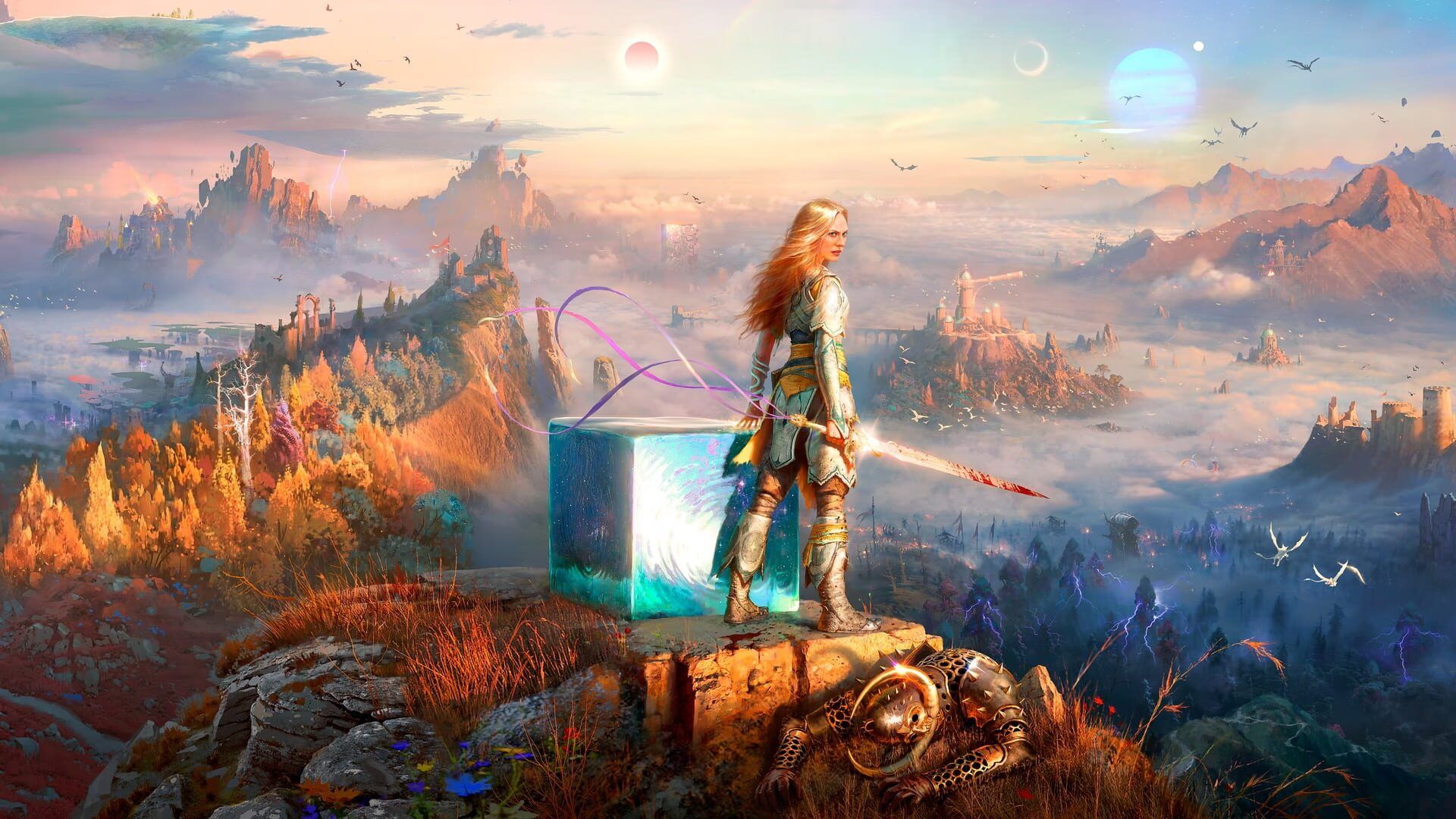
Speaking with multiple outlets, Woll describes a pitch meeting going back to 2018, when Cory Barlog brought her into the studio to talk about returning as Faye in God of War Ragnarök. Alongside footage of the 2018 game, he also showed her something surprising: a poster for a separate God of War title where Faye was front and center, accompanied by a mysterious cube.
“He pitched it to me in 2018, and they had known about it before then,” Woll recalls. That means Laufey as a concept existed while Santa Monica was still rolling out the Norse reboot, long before fans knew Faye was more than a memory and some ashes. From the very beginning of Kratos’ new era, the studio was already sketching the story where his late wife would become the lead.
This fits with what we have learned over the years about Santa Monica’s planning. The 2018 game and Ragnarök were conceived together as a two‑part Norse arc, but those plans apparently had a third pillar sitting just off to the side. Laufey was never a reaction to the popularity of Faye; she was always meant to step out of the mural and into the role of protagonist.
It also recontextualizes some of the choices in the earlier games. Faye’s limited screen time in 2018, the slow drip of information about her Jötnar heritage, and the way Ragnarök keeps returning to who she was rather than what Kratos believed about her all feel more deliberate when you know the team was quietly building toward a story with her voice at the center.
Faye as a playable lead changes the series’ heart
Laufey’s biggest shift is obvious: this is the first major God of War title in nearly two decades that does not put Kratos in the foreground. Instead, players follow Faye after her death as she wakes up in the Everywhen, a strange afterlife‑like realm where timelines blur and gods from different mythologies collide.
Putting Faye in control has implications far beyond a new move set. Kratos’ journey in the Norse saga has been about regret, restraint, and the slow unlearning of a lifetime of violence. Faye, by contrast, has always been portrayed as the quiet architect of that change: a giant who carries secrets, chooses her battles, and plays an impossibly long game so that her family is not crushed under prophecy.
Centering her reframes God of War’s usual power fantasy. Trailers and previews show familiar weighty combat, with Faye wielding a sword, magic, and the agility to dart around enemies in a way Kratos never quite could. But the tone feels different. She is not a fallen god trying to outpace his own legend. She is a strategist, a guardian, someone who has always been two moves ahead. The result is action that still looks brutal, but filtered through a character defined more by precision and intent than sheer rage.
That sensibility extends into the supporting cast. The most immediate example is Phranque, the talking cube that has apparently “been there since the beginning.” Jack Quaid’s strange, chatty companion is not just comic relief; he is presented as a key part of the lore, bound up with how the Everywhen functions. It is difficult to imagine a character like Phranque anchoring Kratos’ story, where the tone has stayed relatively solemn. Through Faye, Santa Monica can lean into weirder, more playful dynamics without losing emotional weight.
The missing years, finally explored
For fans of the Norse games, perhaps the most exciting part of Laufey is what it can fill in. 2018 and Ragnarök often hint at the years before Atreus’ story begins: the time when Kratos and Faye meet, the conflicts Faye fights alone, the giant politics she navigates, and the elaborate contingency plans she leaves imprinted on murals and hidden shrines.
Because Laufey opens after Faye’s death, it avoids simply becoming a prequel checklist. The Everywhen setting lets Santa Monica explore those missing years through memory, fractured time, and encounters with echoes of the past. That is a smart way to answer long‑standing questions without being locked into a strict chronology.
We can reasonably expect to see new perspectives on key players like the Jötnar, Odin’s regime, and even Kratos and young Atreus themselves, but filtered through how Faye saw them. The series has spent two games telling us that Faye was a force strong enough to scare Odin and to outmaneuver fate itself; Laufey is the game that finally has to show the work.
It also opens the door to stories about everyday life in this world, something God of War touches on but rarely lingers over. How did Faye balance being a warrior, a mother, and a conspirator hiding the last giant from a pantheon of gods? What did she sacrifice to make the quiet cabin in the woods possible? By anchoring everything to her point of view, Laufey can ground its cosmic stakes in the small decisions that defined her family.
Everywhen and the wider God of War multiverse
The other major expansion point is structural. Everywhen is described as a place where gods from different mythologies vie for power, a kind of metaphysical crossroads that sits outside a single pantheon. That has huge implications for where God of War goes next.
For years, the series has teased that Kratos’ world is bigger than Greece and the Norse realms. References to other cultures and the existence of multiple pantheons suggested a wider map, but the games stayed focused on one mythic tradition at a time. Everywhen provides a canonical way to connect those spaces without simply turning God of War into a plane‑hopping anthology.
Putting Faye there first is clever. She is a character who already straddles worlds, marrying a Greek god of war and carrying the legacy of the giants while living in the shadow of Asgard. In that context, exploring a crossroads of mythologies through her eyes feels organic, not like a marketing‑driven attempt to launch a “God of War universe.”
Narratively, this opens up opportunities for the series to intersect threads from past and potential future games. Echoes of Greek figures, hints of Egyptian or other pantheons, and stories about how these gods relate to one another can all be seeded here, without pulling Kratos or Atreus into the spotlight. Laufey becomes a bridge, not just between Norse titles, but between eras of God of War.
A planned pivot, not a spin‑off afterthought
The revelation that Laufey has been on the board since at least 2018 goes a long way toward explaining just how confident its reveal felt. Sony debuted it with an extended gameplay slice, a clear sense of character, and a tone that leans into riskier ideas like a talkative cube companion and a metaphysical afterlife setting.
That level of ambition suggests this is not a side project. It is more like a third chapter in a larger plan that began with God of War 2018, broadened with Ragnarök, and now steps fully into Faye’s story to point the way forward. Knowing that the team has been aiming at this point for close to a decade makes the Norse saga feel less like the “Kratos and Atreus show” and more like the first movement in a longer composition.
If Laufey can make good on that setup, it will not just answer lingering questions about one of the series’ most intriguing characters. It will redefine what a God of War game can be, proving that the franchise is strong enough to move beyond its original protagonist while expanding its universe in a way that has been quietly, carefully planned from the start.