
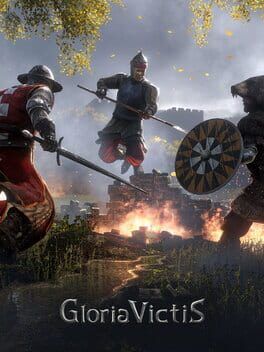

After shutting down its servers in 2023, medieval PvP MMO Gloria Victis has returned in 2026 under a new publisher and a free to play model. We break down how the revival happened, what the community thinks, what’s planned next, and why relaunching an MMO in 2026 is both an opportunity and a minefield.
Gloria Victis was not supposed to come back.
When Black Eye Games sunset the medieval PvP MMO in 2023, most players filed it away with other ambitious but doomed indies that never quite escaped the niche. It was a game known for bruising non target combat, brutal sieges and a grounded low fantasy world that asked a lot from its community and often gave as much back.
In 2026, it is suddenly one of the most talked about revivals in the genre.
Gamigo has acquired the Gloria Victis license, servers are live again as a free to play relaunch on Steam, and veterans who once mourned their lost characters are debating whether to suit up one more time. For an MMO to die and return at scale is still rare, and Gloria Victis is trying to turn that rarity into momentum.
From shutdown to surprise comeback
The original Gloria Victis run ended with familiar indie MMO problems: limited resources, a relatively small but hardcore audience, and the difficulty of supporting a siege and territory control MMO without a steady influx of new players. The 2023 sunset left its community fragmented across Discords, YouTube channels and assorted PvP sandboxes.
Behind the scenes, though, Black Eye Games kept looking for a way back. In late 2025 and early 2026, hints surfaced on the official Discord that a publishing deal was in the works. By February 2026, gamigo publicly announced that it had acquired the Gloria Victis license and would bring the game back as a free to play title.
A short revival teaser trailer and a FAQ on the new Gloria Victis site confirmed the key beats. Servers would return, the business model would change, and the game would go into a round of testing and polish aimed at a proper 2026 relaunch rather than a simple server flick back on.
Closed tests and an open "Medieval Fest" beta followed, letting returning players stress test sieges, crafting, and the revamped onboarding before a June 17, 2026 launch window.
Community reaction: cautious hype from a burned fanbase
The emotional arc inside the Gloria Victis community has been complicated. This is a playerbase that already lived through the full grief cycle of an MMO shutdown, sold off their resources, uninstalled the client and moved on to other titles.
When the first whispers of a revival surfaced, the tone was sceptical. Some veterans were wary of gamigo’s mixed reputation around legacy MMOs, pointing to past titles where support tapered off after a strong start. Others questioned whether a niche, skill based PvP game could pull numbers in a 2026 market dominated by battle passes and smoother, more accessible combat.
That scepticism softened as details emerged. The promise that existing owners and former players would receive recognition and rewards for their prior investment made a difference. So did the decision to relaunch as fully free to play on Steam, lowering the barrier for guilds to drag in friends who had always watched from the sidelines.
During the Medieval Fest open beta, community sentiment shifted from "this will never work" toward a more measured "this could work if they stick with it." Siege nights filled up again, streamers who covered the shutdown returned to tour old strongholds, and Discords that had gone quiet started posting build theorycrafting and crafting spreadsheets once more.
That said, the fear of a second death haunts almost every discussion. Players repeatedly bring up concerns about long term support, monetization creep and whether the game can avoid repeating the population cliffs that hurt it in the first place. The revival has earned Gloria Victis attention and goodwill, but not yet unconditional trust.
The new Gloria Victis: what’s changing for the relaunch
The core pitch of Gloria Victis remains intact in 2026. It is still a low fantasy medieval sandbox defined by three things: action combat without hard lock targeting, large scale PvP and sieges over fortifications, and a player driven economy that runs through gathering, crafting and trading.
What has changed is the structure around those systems.
The most obvious shift is the move to a free to play model. Gamigo is positioning Gloria Victis as an accessible siege MMO where anyone can jump in, fight for a banner and then decide whether they care enough to invest. The publisher has signaled that monetization will focus on cosmetics and convenience rather than direct power, something the PvP focused community is watching closely.
Technical and onboarding polish have also been priorities. The beta periods ahead of relaunch concentrated on performance in crowded battles, cleaner UI communication during sieges and better tutorialization for new players who might otherwise bounce off the intricate crafting and stamina based combat.
Guild and territory systems appear largely familiar, with tweaks aimed at smoothing out time zone coverage and siege schedules so that smaller groups can still participate meaningfully. The goal is to keep the strategic layer alive between big set piece battles, preventing the map from stagnating the way it sometimes did during the original run.
Incentives and support for returning players
Bringing back an MMO is not only about luring new blood. It is also about convincing people who already said goodbye to return to a world they once invested hundreds of hours into.
For Gloria Victis, that means building a bridge between the 2016 to 2023 era and the 2026 relaunch.
Gamigo and the development team have leaned on several incentives aimed specifically at veterans. Prior ownership of the original buy to play version is recognized, with in game rewards promised to early backers and long time players to acknowledge the shutdown period. Medieval Fest beta rewards are being delivered at launch, including cosmetics and titles that signal a player’s status during the revival testing phase.
Equally important is communication. The official FAQ and press releases are written in a way that directly addresses veterans, affirming that Gloria Victis is "coming back" rather than marketing it as a completely new product. Messaging emphasizes community feedback during the tests, trying to show that the players who stuck around on Discord helped shape the relaunch.
There is also a softer incentive that matters in sandbox MMOs: social gravity. Guilds that survived the shutdown in other games are treating the 2026 launch as a reunion event. For many, the chance to reclaim old rivalries, restart trade networks and rediscover long forgotten battlefields is as powerful as any cosmetic pack.
Post launch roadmap and development plans
To make a second life stick, Gloria Victis needs more than a good opening weekend. The developers and gamigo have started sketching out a roadmap that focuses on three fronts: stability, fresh content and systemic refinement.
Immediately around launch, the focus is on stability and balance. The official Steam community page teases launch preparations centered on optimization, bug fixes and overall polishing, with a full changelog promised as things settle. Given the game’s reliance on large scale battles, server performance and client optimization will probably define player sentiment in the first weeks.
Beyond that, publisher communication and MMO press coverage highlight a post launch content update already in the works. The details are still light, but the intent is clear: avoid the dreaded post launch content drought by shipping at least one meaningful update relatively quickly. In a PvP sandbox, that could mean new siege locations, tweaks to territory rules, additional crafting layers or fresh PvE opportunities for players who want to gear up between wars.
Longer term, the challenge will be the same one that faces every niche MMO in 2026: maintaining a cadence of changes that feel significant without destabilizing the meta every month. Gloria Victis has an advantage in that it is not trying to be everything to everyone. Its systems are focused enough that surgical adjustments to combat, economy and territory can have a big impact without requiring massive expansion packs.
The hard realities of relaunching an MMO in 2026
As exciting as the Gloria Victis comeback story is, it lives inside a very different MMO landscape than the one it originally entered. Free to play is no longer a novelty. Almost every major live service competes aggressively on seasonal content and highly tuned retention systems. Player expectations around polish, onboarding and social tools are higher than ever.
For a revived indie rooted MMO like Gloria Victis, that creates several specific challenges.
The first is perception. Many players associate MMO relaunches with short lived "classic" servers or nostalgia stunts. Gloria Victis has to convince people that this is a genuine second life, not just a temporary event. Consistent updates, transparent communication and visible in game population will all shape that perception more than any trailer.
The second is trust around monetization and support. Gamigo’s catalogue includes examples of both long running MMOs and games that saw more turbulent lifecycles. Veterans will scrutinize every shop addition and every announcement for signs that support might waver if growth is slower than hoped. Avoiding pay to win optics in a loot heavy PvP game will be critical.
The third is competition for time. Even players nostalgic for Gloria Victis now juggle battle royales, extraction shooters, co op survival sandboxes and larger MMOs that have evolved significantly since 2016. Gloria Victis has to justify high investment systems like its crafting and skill based combat with payoffs that feel worth learning in 2026, not just in the context of its original era.
Finally, there is the emotional weight of a second shutdown. Once a game has died publicly, the possibility that it could happen again is always present. Every maintenance window, every slow patch cycle, every dip in Steam charts reactivates that anxiety. The only real antidote is time and a track record of steady, if modest, growth.
Why Gloria Victis’s revival matters
Whether Gloria Victis succeeds or struggles in its second life, this relaunch is important for the broader MMO ecosystem.
It shows that smaller, mechanics driven MMOs can sometimes find a path back if they have a dedicated base and a publisher willing to inherit the risk. It pushes back against the idea that an MMO shutdown is always final. And it gives designers a living case study in how to reintroduce a complex sandbox to a market that is used to highly curated, heavily guided experiences.
For players, it is a rare chance to revisit a world that once felt permanently gone. Veterans can reclaim cities they bled for, while new players get to experience the sieges, economy and bruising melee combat that old forum posts still rave about.
Gloria Victis is not the biggest MMO on the market, and it probably never will be. But if its 2026 revival can translate nostalgia and community loyalty into a sustainable, if smaller, live game, it could quietly become one of the genre’s most significant comeback stories.
For now, the gates are open again, the banners are raised, and the medieval fields of Gloria Victis are once more crowded with warriors testing their mettle. In a genre where most farewells are permanent, that alone makes this second chance worth watching.