
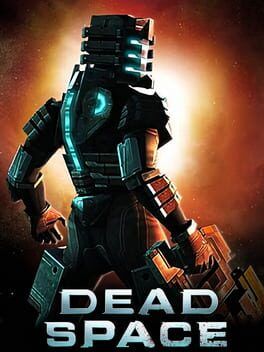

Dead Space creator and Call of Duty veteran Glen Schofield is retiring from day-to-day game development after 35 years, closing a career that shaped survival horror and blockbuster shooters.
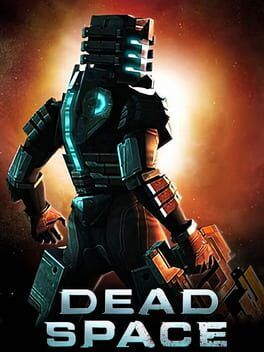
Image: IGDB
Store links: Dead Space on Steam
A creator steps back while the genres he shaped keep searching for pressure
Glen Schofield, the Dead Space creator and Call of Duty veteran, has announced that he is retiring from the day-to-day work of game development after roughly 35 years in the industry. Shacknews quotes Schofield’s LinkedIn video directly: “After 35 years of making games and directing them and running teams, it’s time for me to officially retire from the day-to-day work.” IGN reports that he thanked fans, colleagues, and the industry in an emotional video, while also acknowledging that the business is facing difficult conditions.
The wording matters. This is a retirement from daily development work, not a publisher announcement about the future of Dead Space, Call of Duty, or The Callisto Protocol. Schofield did not give an explicit reason for stepping away, according to IGN. That leaves the confirmed fact narrow but significant: one of the few modern developers with major credits in both survival horror and annualized blockbuster action is leaving the production floor.
For horror players, Schofield’s name is tied to a specific kind of pressure: low light, hostile sound, ugly silhouettes, and weapons that feel like industrial tools first and heroic instruments second. For action players, his Sledgehammer years sit inside the machinery of Call of Duty, where timing, spectacle, platform stability, and studio coordination are survival systems of a different kind. His retirement lands at a moment when both spaces are under strain. Horror is enjoying renewed interest, but expensive horror games still have to justify their budgets. Blockbuster shooters remain enormous, but the cost and coordination behind them have only grown heavier.
Dead Space turned scarcity, anatomy, and audio into modern survival horror language
Schofield’s most durable creative legacy remains 2008’s Dead Space, developed at EA’s Visceral Games. IGN says that after Schofield worked on Bond at EA, the publisher gave him freedom to create a new IP, which became Dead Space. Inven Global describes him as the executive producer of the game and says the title is widely credited with opening new horizons for survival horror. IGN similarly calls it one of the scariest games ever made, while noting that it took inspiration from games like Resident Evil.
That influence is not difficult to trace, even if the sources stop short of a design postmortem. Dead Space made tension tactile. Its famous combat premise, centered on cutting apart Necromorphs rather than simply firing into center mass, changed how players read an enemy under stress. In survival horror terms, that is the whole room tightening around you: the player is asked to aim with intention while the monster is moving wrong, shrieking in the vents, or falling in pieces that may still be dangerous.
The game also helped popularize a kind of horror presentation where the interface, soundscape, and resource pressure worked together instead of acting as separate layers. Schofield did not create every idea that fed into Dead Space, and the game was made by a team at Visceral, a point every obituary-style career summary needs to preserve. But his role in getting that original IP made at EA is central to why “Glen Schofield Dead Space” remains a search term years later. Dead Space became a reference point for developers trying to make action feel unsafe again.
His Call of Duty years show a different survival test: scale, speed, and studio triage
Schofield’s second act moved from ship corridors to one of the largest production machines in games. IGN reports that Activision recruited him to co-found Sledgehammer Games with Michael Condrey after Dead Space, and that the studio worked for six months on a third-person Call of Duty set in Vietnam before being asked to help co-develop Call of Duty: Modern Warfare 3 following Infinity Ward’s 2010 upheaval. Shacknews reports that Schofield thanked Activision for allowing him to lead development on three Call of Duty titles: Modern Warfare 3, Advanced Warfare, and WWII.
Those accounts describe the same broad arc but with an important nuance. Modern Warfare 3 was a co-development situation involving Infinity Ward and Sledgehammer, according to IGN, while Shacknews relays Schofield’s own thanks to Activision for leadership across those three entries. The safe reading is that Schofield was a major Sledgehammer leader on Call of Duty during a period when Activision needed the new studio to prove it could operate inside a franchise with enormous commercial stakes.
That is a very different design pressure from Dead Space. A survival horror team can hold a player in dread by starving them of ammunition, making every noise suspicious, and forcing them to choose when to stand their ground. A Call of Duty team has to keep momentum from collapsing across campaigns, multiplayer, deadlines, and technical expectations. IGN says Sledgehammer helped deliver Modern Warfare 3 and solidified itself as one of Call of Duty’s core teams. Inven Global frames Sledgehammer as one of the franchise’s three pillars alongside Infinity Ward and Treyarch.
Schofield then helped steer Call of Duty: Advanced Warfare, which IGN describes as innovative but notably divisive, before Call of Duty: WWII returned the series to its roots in 2017. For anyone tracking the phrase “Call of Duty veteran retires,” this is the part of the career that matters most: Schofield was involved in both disruption and correction, first moving the series into a more futuristic register, then helping pull it back toward a historical setting.
The Callisto Protocol made his horror return more complicated than a victory lap
Schofield’s final credited game as a studio lead was The Callisto Protocol. Shacknews identifies it as his last game and notes that it was developed by Striking Distance Studios. IGN describes it as a Dead Space-inspired sci-fi horror game and says it was the last game Schofield helmed. Inven Global adds the harsher commercial and critical context, reporting that the game faced criticism at release for repetitive combat, weak narrative, and optimization issues, and that Schofield left Striking Distance in 2023 while taking responsibility for its commercial underperformance.
That context matters because Schofield’s retirement is being read through two legacies at once. Dead Space proved that a big publisher could back a hard-edged, systems-driven horror game and create a franchise. The Callisto Protocol showed how difficult it is to return to that territory under modern expectations. Horror players are highly sensitive to repetition because repeated threat loses its teeth. If melee rhythms, enemy responses, and scare cadence become predictable, the pressure drains away. Technical issues also hurt horror more than many genres, because stutter, input frustration, or uneven performance can turn intended panic into irritation.
The sources do not support reducing The Callisto Protocol to failure, nor do they provide new sales figures or post-launch development details tied to this retirement. They do support a narrower conclusion: Schofield’s last major horror project arrived under heavy expectation because of Dead Space and did not escape that comparison. His exit from day-to-day game development leaves horror without one of its most recognizable big-budget champions, but it also underlines how risky expensive survival horror remains when combat, pacing, and performance do not lock together.
Retirement does not announce Dead Space 4, and it does not close the door for EA
Readers looking for practical implications should separate Schofield’s personal announcement from franchise news. No source material provided here includes a new Dead Space game announcement, a platform list, a release window, a price, or an upgrade path. IGN reports that Schofield made efforts to pitch a fourth Dead Space game to EA around the time of the 2023 remake of the first game, but that is not the same as confirmation that EA accepted a pitch or placed a sequel into production.
That leaves Dead Space fans in a familiar kind of silence. The 2023 remake renewed attention on the franchise, and Schofield’s name still carries weight because of the original game’s identity, but his retirement does not determine what EA can do with the IP. Dead Space belongs to EA, and any future release would depend on EA’s plans, not Schofield’s daily involvement. As of the sourced reports, there is no confirmed Dead Space 4 tied to this news.
For players, the guidance is simple: do not treat the Glen Schofield retirement as evidence that a Dead Space sequel is canceled or secretly moving forward. It confirms that the original creator is stepping away from routine development work. Anything beyond that, including whether EA revisits Dead Space again, remains unannounced in the material available.
A 35-year career ends with a warning and a vote of confidence
The career summaries from IGN, Shacknews, and Inven Global outline a path that began far from the genres that made Schofield famous. Inven reports that he started in 1991 with Barbie: Game Girl at Hi Tech Expressions, later joined EA as a producer, and worked on games including The Lord of the Rings: The Return of the King. IGN also notes his work on James Bond and Lord of the Rings titles before Dead Space. Shacknews adds Gex to the list of franchises touched by his career.
PC Gamer’s headline quotes Schofield as saying he had “a front row seat to one of the greatest creative explosions in history.” GamesRadar’s headline quotes him acknowledging that “times are tough right now” while saying the future is “really, really bright.” IGN similarly reports that he acknowledged current industry hardships but pointed to great minds still making great games. The sources do not define those hardships in detail within the provided text, so the responsible reading is broad: Schofield is retiring during a difficult period for the games business, while publicly expressing confidence in the people still building it.
His impact sits in the overlap between authorship and team production. Dead Space carries the stamp of a strong creative lead, but it was made by Visceral. Call of Duty entries ship through large, interlocked studio structures, not solitary vision. The Callisto Protocol showed both the pull of a recognizable creative lineage and the danger of being measured against your own best-known work. That is the useful lesson in this gaming industry retirement: genres do not advance only through ideas, but through the production conditions that let those ideas survive contact with deadlines, budgets, hardware, and players.
Schofield leaves behind a career that helped define how modern horror applies pressure and how blockbuster action absorbs pressure. One made players count shots in the dark. The other made studios count months, teams, and expectations at massive scale. His day-to-day work is ending, but the design problems he spent decades wrestling with are still very much alive.