
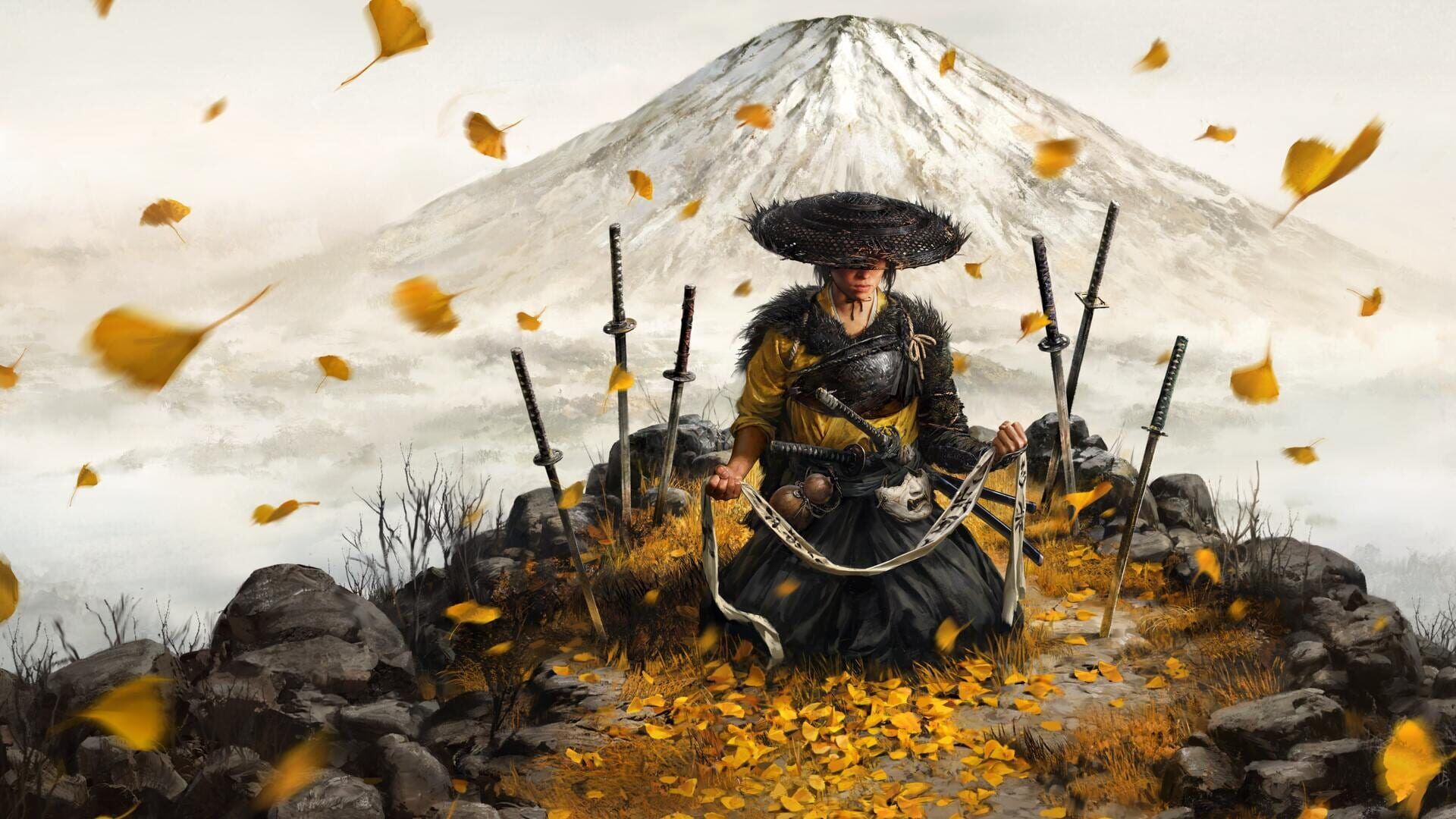

Sucker Punch’s final major update for Ghost of Yōtei Legends delivers a refined four‑player Raid that doubles as a farewell to the multiplayer mode. We break down the Raid’s design, its co‑op endgame structure, and whether Legends ultimately worked as a long‑term companion to Ghost of Yōtei.
Sony and Sucker Punch have confirmed that the new Legends Raid in Ghost of Yōtei is the last major planned update for the game’s co‑op mode. In other words, this is the endgame for Legends in every sense, both narratively and structurally.
Rather than simply ship a brutal gauntlet and call it a day, Sucker Punch has treated this Raid as a statement on what Legends is, what it learned from Ghost of Tsushima’s multiplayer, and how it wants co‑op in Ghost of Yōtei to be remembered.
A Four‑Player "Escape Room Where People Are Trying To Kill You"
Lead designer Darren Bridges describes the Legends Raid as an escape room where people are trying to kill you. That pitch captures how the mode fuses tightly tuned combat with layered puzzles and coordination checks. The Raid takes four players into the final confrontation with the supernatural Yōtei Six, culminating in encounters with the Dragon and Lord Saito.
Every arena is built around a single clear idea. One section turns the battlefield into a synchronized movement test, where all four players must read patterns and execute in lockstep. Others create space for individual heroics, letting a single clutch revive or perfectly timed ultimate drag the team back from a wipe. It is never just about damage numbers. Sucker Punch wants teams to talk, improvise, and build a shared language for each mechanic.
The studio has talked about how much it enjoys listening to players invent their own callouts. Rather than plastering the UI with labels, the Raid leans on visual clarity and repeatable patterns. Over time, Dragon bombs, Saito phases, and platform sequences become shorthand within a group, which helps the fights feel learnable despite their initial chaos.
Teaching Through Pain, Not Padding
The Ghost of Tsushima Legends Raid developed a reputation for marathon sessions and punishing resets that could stretch runs toward six hours. For Ghost of Yōtei’s Raid, Sucker Punch tried to keep the teeth while cutting the bloat.
Encounter pacing is the biggest visible change. Mechanics are introduced early in the Raid in forgiving contexts before they show up in lethal form in the boss fights. Hazards you first see as a side problem in a hallway room later become core to staying alive against the Dragon. Similarly, attacks that feel like ambient pressure in mid‑Raid arenas are eventually the centerpiece of Saito’s final patterns.
Crucially, the team also addressed the logistical frustrations that made long Raids feel like a part‑time job. Players are able to rejoin lobbies more reliably after disconnects, and the structure allows groups to hop back into specific boss fights without replaying the entire Raid from scratch. This keeps more of a team’s time focused on solving the actual mechanics instead of slogging back through already mastered content.
The result is still demanding content. Sucker Punch watched elite squads spend about an hour learning Saito before finally piecing together a world‑first clear that melted the boss in minutes. For most teams, the learning curve is closer to two or three hours, but that is a sharp improvement over the original Legends Raid’s notorious length.
Co‑op Endgame Built Around Roles, Builds, And Emergent Tricks
The new Raid also serves as a showcase for how far Ghost of Yōtei Legends has come as a buildcrafting playground. Each class brings its own tools to the group puzzle, and the design makes that interdependence feel intentional rather than incidental.
Ahead of the final Saito confrontation, a Gear Station lets players retool their loadouts based on what has actually been killing them. Need more survivability for a brutal group mechanic. Swap into damage mitigation perks or lean on healing heavy builds. Struggling to meet a DPS check. Adjust for perfect parry bonuses and burst windows. This pre‑boss respec opportunity transforms failure into data instead of just frustration.
The Raid also happily embraces emergent strategies when they align with the mode’s spirit. One notable interaction the team discovered in testing: bombs that track individual players during a Dragon phase can be completely trivialized if a Shinobi goes invisible and the team stacks in stealth, effectively skipping the danger. Instead of patching it out, Sucker Punch left it in place. The thinking is clear. If four players coordinate class picks, cooldowns, and positioning tightly enough to nullify a mechanic, they have earned that shortcut.
That openness keeps the Raid from feeling like a fragile scripted sequence that breaks the moment players get creative. Bridges compares the work to building an obstacle course then watching Olympians tear through it in ways the designers never quite predicted.
A Deliberate Curtain Call For Legends
The Raid also marks a turning point for Ghost of Yōtei as a live product. Sucker Punch has framed this update as the last major planned expansion to Legends. Smaller balance tweaks or stability patches are always possible, but players should not expect more story chapters, classes, or large‑scale modes.
Narratively, the Raid closes the book on the Yōtei Six saga. What began as a supernatural offshoot of Ghost of Yōtei’s historical fiction now has a definitive finale that feels appropriately climactic. Mechanically, it gathers everything Legends has been experimenting with since launch into a single, coherent challenge that rewards groups who have stuck with the mode.
That finality is important context when assessing Legends as a long‑term companion to the main game. This is not a pivot into a forever game with endless seasonal ladders. It is a completed co‑op side project that has reached its intended scale and tone.
Did Ghost Of Yōtei Legends Work As A Long‑Term Multiplayer Mode?
Whether Legends succeeded depends on the yardstick. As a traditional live service chasing years of content cadence, Ghost of Yōtei Legends was always fighting an uphill battle. It launched alongside a sprawling single‑player epic, carving out a supernatural parallel tale and then layering in survival modes, story missions, and now a capstone Raid. The studio never promised a decade of support, and its final update cadence reflects that.
Measured as a companion mode, however, Legends looks far more successful. It gave combat fans a reason to keep returning after finishing the main story, especially in small groups of friends who could loop weekly challenges or chase perfect gear rolls. Each new update nudged the meta into more interesting territory rather than inflating the grind for its own sake.
The Raid in particular shows how well Sucker Punch internalized feedback from Ghost of Tsushima and from early Ghost of Yōtei seasons. Shorter run times, more forgiving reconnections, better in‑game teaching of mechanics, and support for emergent play all suggest a studio that listened carefully to its community. Instead of endlessly widening the treadmill, it chose to refine one excellent destination at the top.
There is also value in a multiplayer mode that actually ends. Players can step into Ghost of Yōtei Legends now knowing that their builds, routes, and strategies are not going to be invalidated by a sudden gear reset or a new raid tier in three months. For many, that makes it easier to treat the Raid as a bucket‑list challenge rather than a lifestyle obligation.
A Strong Sendoff, Not A Soft Sunset
The Legends Raid will not change the trajectory of the larger live service landscape, but it does offer a compelling alternative for narrative‑driven single‑player studios experimenting with co‑op. Sucker Punch proved, first with Tsushima and now with Yōtei, that it can build co‑op experiences that respect players’ time while still demanding mastery.
As the final major update, this Raid feels like a handshake between studio and community. It rewards the squads who have been there since day one with a dense, replayable climb, and it packages Legends as a complete multiplayer expansion for anyone picking up Ghost of Yōtei in the future. Taken together, that is a quiet but confident success for a mode that was never intended to dominate the calendar, only to deepen an already rich world.