
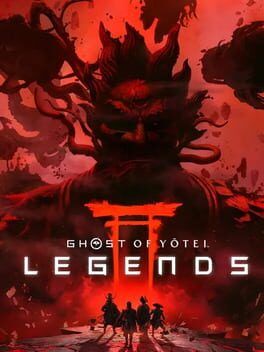

Breaking down classes, missions, progression, and difficulty in Ghost of Yōtei’s new Legends co‑op mode, and how it strengthens rather than replaces the single‑player campaign.
Ghost of Yōtei Legends arrives as a free online co‑op mode for all owners of Ghost of Yōtei, and it is positioned less as a side distraction and more as a second pillar of the overall experience. Built in parallel with the main campaign instead of bolted on after the fact, Legends leans into myth, folklore, and exaggerated versions of the game’s warlords to create repeatable co‑op content that still feels rooted in Atsu’s story.
At the heart of Legends is the Yōtei Six, a pantheon of legendary versions of major antagonists you meet across the single‑player journey. At launch you can challenge four of them: the Spider, the Oni, the Kitsune, and the Snake. Each is presented not as a simple boss rematch but as a nightmare retelling, with arenas and mechanics that push well beyond what the base game’s grounded combat allows. Two more foes, the Dragon and Lord Saito, arrive in April as the centerpiece of a dedicated four‑player raid.
Legends is structured around three main types of activity. Two‑player story missions act as your on‑ramp, diving into short, cooperative tales that frame who the Yōtei Six are in this twisted folklore canon. These missions remix campaign locations with supernatural twists and ask you and a partner to coordinate stealth, ranged cover, and crowd control more deliberately than in solo play. Four‑player Incursion missions then push you deeper into each boss’s territory. Every launch boss gets a themed Incursion that slowly ramps up enemy density, introduces more exotic enemy types, and culminates in set‑piece encounters that foreshadow the final boss fights. Finally, Survival mode throws four players into wave‑based, area‑defense skirmishes where you must protect three zones at once. Each zone carries its own blessings and curses, so holding one area might boost your damage at the cost of constant elite spawns, while another might be easier to defend but limits your healing. Lose control of a zone and the curses intensify, forcing your team to triage the battlefield.
Class design is where Legends most clearly evolves the ideas of Ghost of Tsushima’s multiplayer while trying to keep the playing field even. Rather than a single generic build, you choose from multiple classes that emphasize different combat roles. One class leans into stealth and crowd control, specializing in silent takedowns, smoke, and debuffs that set enemies up for your allies. Another focuses on ranged damage, keeping pressure on tougher targets and interrupting dangerous abilities from afar. A more traditional samurai archetype builds around front‑line survivability and stagger damage to keep mobs off squishier teammates, while a support‑leaning class trades raw output for powerful healing, buffs, and revives. Sucker Punch stresses that every class is intended to be viable in all activities, and the progression system is built so that you are encouraged to experiment rather than grind a single optimal choice.
Progression in Legends wraps around those classes instead of your single‑player build. Each run, whether in story, Incursions, or Survival, feeds experience into your currently selected class. Leveling unlocks new abilities, passives, and gear options that can radically change your playstyle, and higher difficulties pay out more experience to accelerate that growth. Loot and XP are tied to the missions you tackle and the challenge you accept, so pushing into higher tiers is rewarded with better gear quality and faster class advancement. Importantly, this entire track is separate from your campaign character, which means Legends progression does not trivialize your story encounters and the story’s careful difficulty curve does not get distorted by gear meant for co‑op.
Difficulty is a player choice right from the start. Legends surfaces clear gear and level recommendations for each tier of challenge, but it stops short of hard‑gating you out of anything. You can try content that is technically above your current recommended power, and the game simply responds by scaling enemy health, aggression, and composition while quietly boosting the XP and loot quality if you prevail. Lower difficulties give you a forgiving way to learn encounters and experiment with builds, while higher tiers introduce more punishing enemy mixes, stricter fail conditions in Survival, and tighter timing windows in boss mechanics. This flexible structure helps Legends feel approachable for players who mostly come for the story while still giving dedicated co‑op fans meaningful headroom.
The mode’s strongest signal that it aims to be a long‑term pillar rather than a short‑lived curiosity is the raid content. Arriving in April, the raid takes the form of an extended multi‑stage assault tied to the Dragon and Lord Saito, and the developers have been clear that it is explicitly built for a full team of four. Where most of Legends can be muddled through with loose coordination, the raid expects role clarity, communication, and knowledge of each class’s toolkit. Puzzles, split‑lane objectives, and mechanics that must be handled simultaneously are meant to ensure that no single carry can drag under‑leveled friends through the finish line. In other words, the raid is designed as a capstone test of your investment in both progression and teamwork.
Even with that emphasis on co‑op, Legends is not trying to replace Ghost of Yōtei’s single‑player campaign. The mystical framing and folklore filter give it permission to exaggerate characters and locations without compromising the more grounded narrative of Atsu’s journey. Progression and loot remain siloed, so someone who cares only about the story can safely ignore Legends without feeling underpowered, while players who fall in love with the co‑op loop can keep grinding without burning out on replaying the same campaign beats. The narrative beats in Legends riff on the campaign rather than advancing its plot, which lets returning players enjoy a layer of fan‑service and alternate takes on familiar villains without making the mode feel mandatory.
Taken together, Ghost of Yōtei Legends looks like a genuine post‑launch pillar for the game. Its mix of two‑player narrative missions, four‑player Incursions, a flexible Survival mode, and an upcoming raid gives it a structure that can support regular updates, new bosses, and rotating modifiers. The choice‑driven difficulty and class‑centric progression should give both casual and hardcore players reasons to return, whether they are chasing cosmetics and builds or just looking for a shared space to keep swinging swords in Yōtei’s world. Instead of competing with the campaign, Legends feels built to sit alongside it, extending the life of Ghost of Yōtei without compromising what made the original story work.