
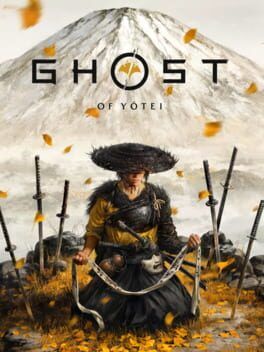

PushSquare and Shacknews crowned Ghost of Yotei one of 2025’s definitive PS5 experiences. Here’s how it refines Ghost of Tsushima’s combat and open‑world storytelling, why its critical legacy is already taking shape, and where the series could go next on PS5.
Ghost of Yotei was always going to live in the shadow of Ghost of Tsushima. Sucker Punch’s PS4 swan song became a modern PlayStation touchstone, one of those games that lives in the “must play” tier of the library. A follow up set centuries later, with a new protagonist and a new island, sounded like a risk.
Two things happened instead. First, Ghost of Yotei landed with the kind of rapturous reception that instantly pushes a game into the platform’s canon. Second, it quietly rewrote what players expect from PlayStation’s prestige open worlds.
PushSquare slotted it at number 4 in its 2025 Game of the Year list, calling it “another cracker from PlayStation Studios.” Shacknews went even further, handing it Best PS5 Game of 2025. That double hit of GOTY recognition did more than decorate the box. It framed Ghost of Yotei as the showcase for where Sony’s samurai saga can go on PS5.
A different kind of legend
PushSquare’s feature is careful to point out that Ghost of Yotei is not just Ghost of Tsushima 2 in everything but name. It is set roughly 300 years later, far north of Tsushima, in the lands surrounding Mount Yōtei in Ezo. Snowy fields give way to wind‑raked plains and frozen forests. The world is still romanticized, but it carries more harshness, more visual contrast, than Tsushima’s golden haze.
At the center is Atsu, a young woman driven by grief and rage after the Yotei Six destroy her family. Where Jin Sakai was torn between honor and necessity, Atsu is introduced as someone already broken and willing to lean fully into vengeance. PushSquare describes the opening as “bold and brutal,” and Shacknews leans on the language of classic samurai cinema, citing Seven Samurai and Rashomon as tonal reference points.
That framing matters. Many sequels chase escalation. Ghost of Yotei goes narrower. Its story is smaller in geopolitical scope but more intimate emotionally, anchored by Erika Ishii’s performance as Atsu. Shacknews calls it some of their best work, and it shows in how the game sells tiny shifts in Atsu’s resolve more than big, showy monologues. This is a revenge story where the protagonist’s internal arc matters as much as the cutscene choreography.
GOTY praise versus the wider critical conversation
The PushSquare and Shacknews accolades line up on the broad strokes. Both outlets celebrate Ghost of Yotei as an ideal sequel, one that refines rather than reinvents. Both highlight its PS5 exclusivity as a strength, arguing that being built purely for current hardware lets Sucker Punch stretch farther in visuals, performance, and world detail.
Outside those big GOTY spotlights, the broader critical and community conversation paints a more granular picture.
Review threads and comparison features are almost unanimous on one point: mechanically, Ghost of Yotei is a clear step up from Ghost of Tsushima. Commenters on boards like GameFAQs and IconEra praise its “best in class” open world combat and its smoother character movement. Several reviewers describe the game as Tsushima with every system polished, from stance switching to stealth flow.
On structure and storytelling, though, opinions split. Some critics argue that Tsushima’s three‑act island campaign told a more cohesive, sweeping story. By comparison, Yotei’s focus on the Yotei Six and Atsu’s personal vendetta can feel smaller, even if it is more tightly written on a scene‑to‑scene basis. Other outlets flip that reading and say the smaller stakes let Yotei explore character and consequence in ways Tsushima only hinted at.
There is also discussion around choice. One Reddit breakdown notes that Ghost of Yotei mostly abandons the binary “honor vs ghost” decisions that shaped Jin’s journey. Atsu’s story is described as bittersweet and more fixed, with fewer branching payoffs. For some players this is a downgrade from Tsushima’s multiple endings. For others it fits the archetype. Classic chanbara tales tend to march toward tragic or morally complicated conclusions, and Sucker Punch seems more interested in delivering that kind of singular, authored arc than letting players steer the outcome.
Even points of critique underline why outlets like PushSquare and Shacknews pushed the game to the front of their lists. Where detractors call the campaign “less epic” than Tsushima’s, supporters counter that Ghost of Yotei’s legacy will be built on how its gameplay and world feel rather than how many castles you liberate.
Sharpened steel: how combat evolves Tsushima
If Ghost of Tsushima’s swordplay felt like a stylish action movie, Ghost of Yotei’s combat is more like a duelist’s sim simplified for an open world audience. It does not completely abandon Tsushima’s accessible foundation, but almost every layer gains extra teeth.
Across reviews and community analysis, three themes keep surfacing.
The first is lethality. PushSquare calls Yotei more dangerous, and reviewers echo that by noting how quickly enemies can cut Atsu down when you overcommit. Fights push you toward measured aggression, rewarding well‑timed parries and dodges instead of mashing light attack. This change might sound small, but it dramatically shifts how you read encounters. Tsushima allowed players to lean harder on armor, charms, and ghost tools to brute force fights. Yotei dials those safety nets back and makes each duel feel like a high‑stakes dance.
The second is breadth of options. Several fan comparisons highlight a more expanded arsenal, both in stance variety and in how non‑katana tools integrate into your main flow. Where Tsushima’s extra weapons sometimes felt like separate modes, Ghost of Yotei intertwines them with a smoother input rhythm so changing approach mid combo becomes second nature. Bounty targets and weapon‑master training missions, which PushSquare singles out, double as tutorials that test these systems in controlled spaces before throwing you into brutal late game encounters.
The third is boss design. Both PushSquare and Shacknews call out boss fights as standouts, and the broader review ecosystem backs that up. Duels push pattern recognition further, layering multi‑phase movesets and unique arena conditions without losing clarity. Crucially, boss fights feel readable rather than cheap. Attacks telegraph through animation, and when you die it feels like a failure to adapt, not a failure of the camera or controls.
Put simply, Ghost of Yotei takes Ghost of Tsushima’s foundation and raises the skill ceiling while preserving that fantasy of being a calm, unstoppable swordsman. That balance is a big part of why critics are treating it as one of the generation’s benchmark combat systems.
An open world that guides without shouting
Ghost of Tsushima was already praised for how it tried to remove clutter from the HUD. The Guiding Wind was a smart compromise between traditional waypoints and pure map reading. Ghost of Yotei pushes that philosophy further.
PushSquare describes Ezo as a place where interesting things “pull you” off your current path. Shacknews goes a step further, calling it one of the most immersive worlds they have explored in years. Across other reviews and impressions, you see the same praise repeated. Shrines sit framed by jagged cliffs that you can spot through the snow. Distant campfires hint at bandit hideouts or traveling merchants. A plume of birds or a fox’s trail can tempt you off the beaten path in ways that feel authored but not forced.
This kind of design works because activities have more variety and nuance than Tsushima’s early game could muster. PushSquare lists bounty hunts, duels with weapon masters, local legends, hot springs, and even a coin flicking minigame that becomes weirdly addictive. Elsewhere players highlight side hunts involving yokai‑like myths and more grounded stories of farmers, hunters, and outcasts scraping by in a harsher climate.
Crucially, Sucker Punch seems to have taken criticism of Tsushima’s repetitive side content to heart. Side quests in Ghost of Yotei are consistently cited as more bespoke, with fewer copy‑pasted camp clearouts and more multi‑stage vignettes that tie into Atsu’s journey. The net effect is that checking an icon on the map feels less like work and more like uncovering another little folktale.
All this is framed by PS5‑only production values. Every GOTY write‑up leans on the same adjectives: crisp, cinematic, absurdly pretty. Dynamic weather shifts across Ezo’s biomes in real time, and DualSense haptics give subtle feedback when your stance breaks or your blade catches on armor. Fast travel is instant enough that revisiting far flung bounties or legends never feels like a chore.
The result is an open world that justifies its size through density and texture rather than raw acreage. In a genre where map fatigue is common, Ghost of Yotei earns praise for making players want to ride in a random direction just to see what the next hill reveals.
Storytelling in motion
If Ghost of Tsushima sometimes separated its strongest storytelling into long cutscenes and relatively straightforward missions, Ghost of Yotei works harder to carry narrative weight into moment‑to‑moment play.
Atsu’s revenge quest against the Yotei Six gives the game a clear spine. Each of the six is tied not just to a region but to a flavor of side content and local legend. As you track them down, you brush through the stories of the people living under their shadow. It is a structure that echoes Tsushima’s mythic tales and ally questlines but with a stronger sense of forward motion.
The absence of big mechanical morality choices gives Sucker Punch space to lean on smaller, contextual decisions. Who you help on the road, which bounties you take, how you respond in brief dialogue exchanges or optional scenes at hot springs, all help shade Atsu without ever splashing “Honor +1” on the screen. Combined with an ending that several critics describe as bittersweet, the whole story lands closer to a Japanese period drama than a Western RPG.
There is friction here. Players who loved wrestling with Jin’s internal conflict, and earning multiple endings, can see Yotei’s straighter path as a step back. Others argue that the focus gives the game a clearer identity. Either way, it is notable that much of the post‑launch discourse has revolved around how people interpret Atsu and her choices. That level of character engagement suggests Sucker Punch succeeded in giving the series a new, distinct voice.
A new pillar for PlayStation, and where it goes next
By anchoring two major GOTY lists and racking up high aggregate scores, Ghost of Yotei has already secured a place in the PS5 conversation alongside juggernauts like God of War Ragnarök and Spider‑Man 2. Its legacy, though, will likely be measured by what Sucker Punch and Sony do with it.
In the near term, PushSquare notes that a Legends‑style co op mode is planned, echoing Ghost of Tsushima’s surprise multiplayer hit. That alone could extend the game’s tail considerably, especially if Sucker Punch leans into Atsu’s era and Ezo’s harsher myths to craft stranger, more supernatural raids and story missions.
Beyond that, Yotei’s setting opens obvious paths for expansion. The Ezo frontier, with its distance from mainland politics, gives Sucker Punch permission to tell more self contained stories that still brush against Japan’s shifting history. There is room for a direct sequel following Atsu’s later years, or for side stories that follow other blades wandering the same wilds.
On a systems level, future entries are likely to double down on the three ingredients that set Yotei apart.
Expect combat to become even more expressive, possibly adding deeper weapon specializations or stance‑specific skill trees while preserving the clarity that makes fights readable. Anticipate even more diegetic navigation tricks, using wildlife, sound, and environmental cues to guide players. And look for storytelling that continues to favor intimate, morally tangled arcs over large scale war epics.
Ghost of Yotei does not blow up Ghost of Tsushima’s formula. It does something subtler but just as important. It proves that Sucker Punch’s take on samurai open worlds can thrive beyond Jin Sakai, beyond Tsushima itself, and beyond the cross gen compromises of the PS4 era. In doing so, it sets a high bar for whatever blade the studio sharpens next on PlayStation 5.