
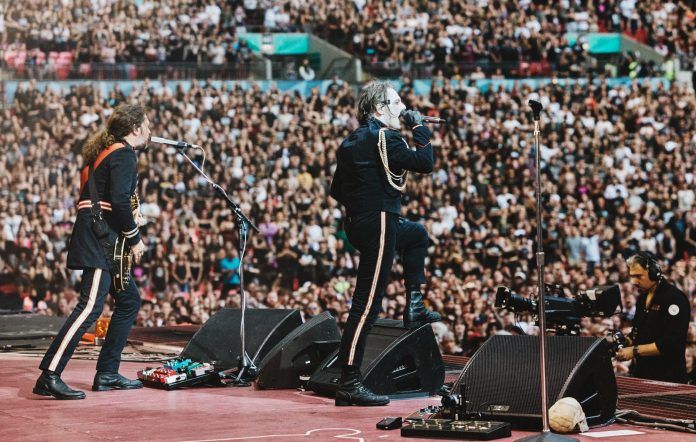
Gerard Way’s Wembley exchange about Baldur’s Gate 1, Dungeons & Dragons, and BG3 became a rare mainstream nod to the old CRPG pipeline that shaped a generation of players.
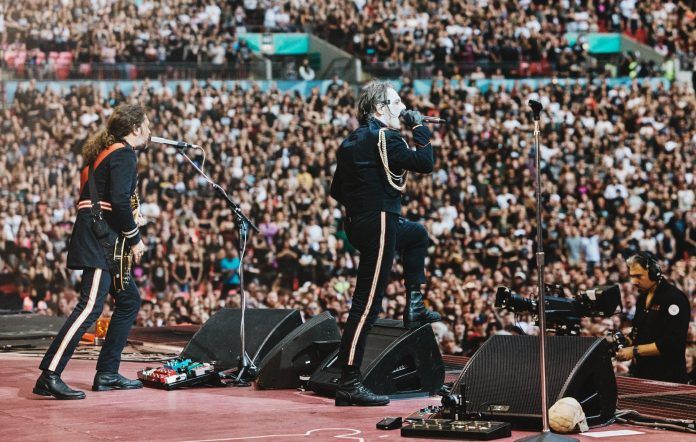
Image: nme.com
Gerard Way’s Baldur’s Gate answer became the loudest quiet moment at Wembley
Gerard Way paused My Chemical Romance’s July 11 Wembley Stadium show after a fan banner asked whether he had played Baldur’s Gate 3, and his answer cut through the usual celebrity gaming crossover noise because it was so specific. According to NME, Way told the crowd he had not played Larian’s hit sequel and had “only played Baldur’s Gate 1.” IGN and PC Gamer both reported the same exchange, with Way adding that he probably would have liked the second and third games, but “ran out of time.”
The moment happened during My Chemical Romance’s European leg of the Long Live The Black Parade anniversary tour, which NME says has the band performing The Black Parade in full before a second set on a b-stage. That setting is part of why the clip traveled so quickly. This was not a gaming convention panel, a sponsored stream, or a press junket. It was an arena-sized emo revival suddenly making room for a late-1990s computer RPG memory.
Way’s key line, reported by NME, IGN, PC Gamer, and Player.One, was that the first Baldur’s Gate “was the closest thing at the time to playing Dungeons & Dragons.” That is the culture story inside the viral clip. The crowd wanted to know whether Gerard Way had met the modern Baldur’s Gate 3 phenomenon. His answer instead pointed backward to the older route many players took into tabletop fantasy: a PC, a party of adventurers, a rule system that felt bigger than the screen, and the sense that D&D could be discovered alone before it was shared around a table.
The fan question was about BG3, but Way answered like a classic RPG player
The banner came from TikTok user Katana Luciana, according to IGN, Kotaku, NME, and Player.One. Kotaku reported that Mikey Way spotted the sign and brought the question to Gerard on stage. The wording was simple: had he played Baldur’s Gate 3? The crowd’s reaction, as described by multiple outlets, turned the exchange into a call-and-response. Way asked whether the audience had played it, then whether it was good, and the venue answered with loud approval.
That rhythm says a lot about the gap between Baldur’s Gate 3’s current pop-cultural footprint and the older Baldur’s Gate that Way name-checked. The fan prompt came through a BG3 lens, with the TikTok caption referencing Astarion and Dark Urge fandom. Way’s answer came from a different RPG memory bank. He remembered the first Baldur’s Gate, said he had not made it to the later numbered entries, and also mentioned playing what he called the “Icewind Dale expansion,” a detail repeated in reports from IGN, PC Gamer, Kotaku, Player.One, and NME.
There is a systems-minded honesty in that answer. RPGs ask for time, and Way’s explanation was essentially about backlog attrition. He did not frame Baldur’s Gate 3 as something beneath him or outside his interests. He said he assumed he would like it. He also identified the precise appeal that made the first game stick: it approximated Dungeons & Dragons at a time when that experience was harder to access through mainstream games.
For players who came up through classic RPGs, that is familiar progression logic. You do not necessarily finish every branch of a series. You remember the one that taught you the language: party composition, alignment, dice logic, spell preparation, class fantasy, dialogue choices, and the feeling that a quest could be approached as a character rather than as a checklist. Way’s comments landed because they sounded less like a celebrity endorsement and more like someone remembering the build that got him into the genre.
Baldur’s Gate still resonates because it made D&D feel playable outside the table
Way’s “closest thing at the time” comment is doing most of the work here. It explains why the original Baldur’s Gate still has cultural gravity even in a post-Baldur’s Gate 3 moment. Players who discovered Baldur’s Gate before they had a regular tabletop group often remember it as a translation device. It took the intimidating promise of Dungeons & Dragons and made it navigable through menus, party portraits, combat feedback, and quest logs.
That does not mean the first Baldur’s Gate and Baldur’s Gate 3 occupy the same design space. The current audience is responding to Larian’s cinematic reactivity, companion arcs, romance routes, and the character fandom that has made names like Astarion travel well beyond traditional CRPG circles. The Wembley banner itself reflects that newer fandom language. But Way’s response identified a different kind of attachment: the memory of a game that felt like access.
Classic RPG nostalgia can be misread as resistance to newer games, but the Wembley clip shows something more patient. Way did not reject BG3. He asked the crowd if it was good and seemed to accept their answer. The nostalgia was not a vote against the new game. It was a reminder that Baldur’s Gate’s name carries multiple generations of RPG entry points.
For some players, Baldur’s Gate means the modern Larian phenomenon that won Game of the Year at The Game Awards 2023, as Player.One noted. For others, it means an earlier period when PC RPGs were a practical way to experience Dungeons & Dragons without needing a group, a schedule, or someone willing to run a campaign. Way’s answer traveled because both audiences were in the same venue, listening to the same pause between songs, and recognizing different versions of the same lineage.
My Chemical Romance and D&D have been adjacent for longer than this clip
IGN pointed out that the question did not come entirely out of nowhere. My Chemical Romance’s video for “I’m Not Okay (I Promise)” opens with a spoken list that includes “You like D&D, Audrey Hepburn, Fangoria, Harry Houdini, and croquet.” That old reference matters because it places Dungeons & Dragons inside the band’s long-running vocabulary of outsider identity, gothic taste, theatrical self-mythology, and fandom-coded specificity.
The Wembley exchange also arrived during a show that NME framed as part of a major anniversary tour built around The Black Parade. That album’s continued live life depends on memory, ritual, and audience participation, which are also part of why older RPGs endure. A band can return to a defining work and find new listeners who were too young to be there the first time. A game series can do the same when a new entry sends players digging backward through its lineage.
NME also reported that Way used another moment in the set to pay tribute to British illustrator John Blanche, known for his Warhammer work. That detail broadens the frame. The Baldur’s Gate exchange was not an isolated “singer mentions game” curiosity. It sat within a night where fantasy art, tabletop-adjacent culture, and old hobby references surfaced in front of a stadium crowd.
That is why the My Chemical Romance Baldur’s Gate moment feels different from a random celebrity saying they play a blockbuster. Way’s comments fit a longer pattern of genre fluency. He did not offer a lore lecture, and he did not pretend to have played BG3. He named the game he actually played, admitted the limits of his experience, and connected it to D&D in plain language.
Larian joined the joke, but there is no new Baldur’s Gate announcement here
After the clip spread, Kotaku reported that Baldur’s Gate 3 developer Larian Studios responded on social media with an offer: “Gerard, there’s a @baldursgate3 code with your name on it if you fancy trying it.” That is the cleanest commercial aftershock of the viral moment. Larian saw a public figure with confirmed affection for the original Baldur’s Gate and treated the exchange like an invitation.
What is confirmed is narrow. Way said he has not played Baldur’s Gate 3. Fans cheered when he asked if it was good. Larian offered him a code. The source material does not confirm that he accepted it, started a campaign, picked an origin character, or plans to comment further. It also does not turn the exchange into a tease for Baldur’s Gate 4, a collaboration, or music tied to the game.
That distinction matters because Baldur’s Gate 3 fandom is currently very good at turning small signals into large hopes. The TikTok caption itself referenced Astarion and Dark Urge enthusiasm, which is a real part of the game’s social spread. But a viral stage interaction is still a stage interaction. It tells us something useful about the shared audience between CRPGs and alternative music fandom. It does not tell us anything concrete about future Baldur’s Gate content.
IGN noted in its coverage that Larian has moved on to work in its own Divinity universe and that any future Baldur’s Gate entry would sit under a different set of expectations. Within the provided reporting, the Wembley moment is best read as a culture flashpoint rather than a product signal. The game industry may enjoy the attention, but the news remains Gerard Way RPG comments made in public, fan response, and Larian’s playful follow-up.
For returning players, the practical takeaway is about expectations, not urgency
If the clip made you want to revisit classic RPGs, the useful question is not whether you must choose between old Baldur’s Gate and Baldur’s Gate 3. Way’s comment suggests a better split: ask what kind of Dungeons & Dragons experience you are looking for. The original Baldur’s Gate is being remembered here as a way into D&D’s structure and imagination. Baldur’s Gate 3 is being celebrated by the Wembley crowd as the current standard-bearer for the series’ mainstream reach.
The provided sources do not include current store pricing, platform availability, performance guidance, or upgrade paths for any Baldur’s Gate release, so there is no responsible buying chart to build from this reporting alone. What can be said is that the cultural pressure around BG3 has become strong enough that fans can bring a banner to a My Chemical Romance show and reasonably expect the question to land. What can also be said is that Way’s answer gives older players a cleaner way to describe the first game’s appeal: it felt like D&D when D&D was still harder to find in videogame form.
That may be the reason the clip has legs beyond its novelty. The internet initially latched onto the apparent contradiction of a gothic rock frontman with D&D credentials not yet having played the biggest modern Baldur’s Gate. The more durable part is that he remembered the original in exactly the terms many classic RPG players use when trying to explain their attachment. Not graphics, not status, not completion percentage. Access, imagination, and the sense that a computer game could open the door to a tabletop world.
For a genre built on party management and long campaigns, “I ran out of time” may be the most believable answer possible. It is also a neat bridge between generations. The old guard hears the ache of unfinished CRPGs. The BG3 crowd hears a pending recommendation. Larian hears a potential new player. And somewhere in the middle, Baldur’s Gate keeps doing what it has always done at its best: sending people toward Dungeons & Dragons through the promise of a character sheet and a dangerous road ahead.