
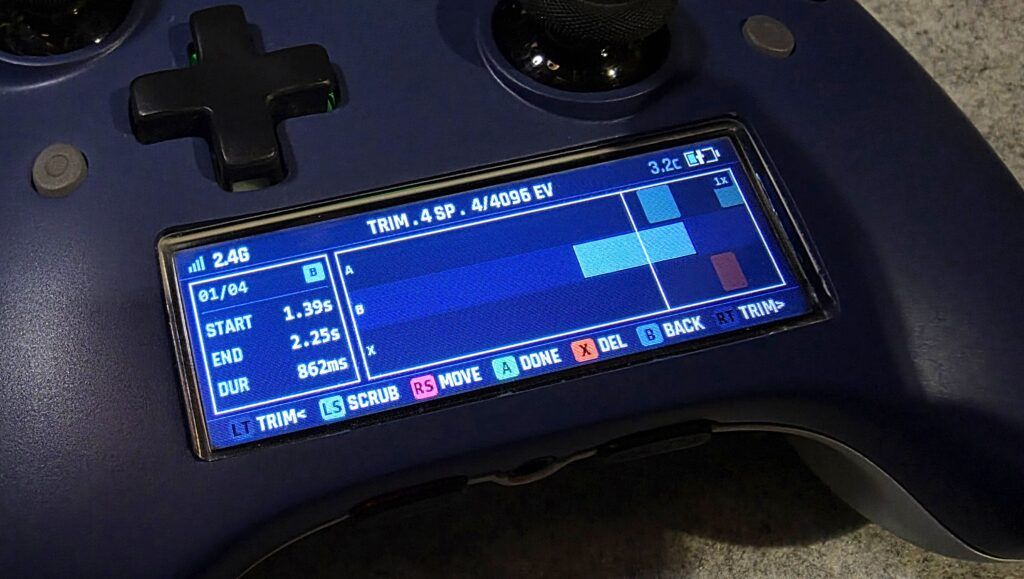

Early Genki Manta hands-on impressions point to an ambitious Switch 2 controller, but players should watch final pricing, firmware, latency, and retail details before buying the hype.
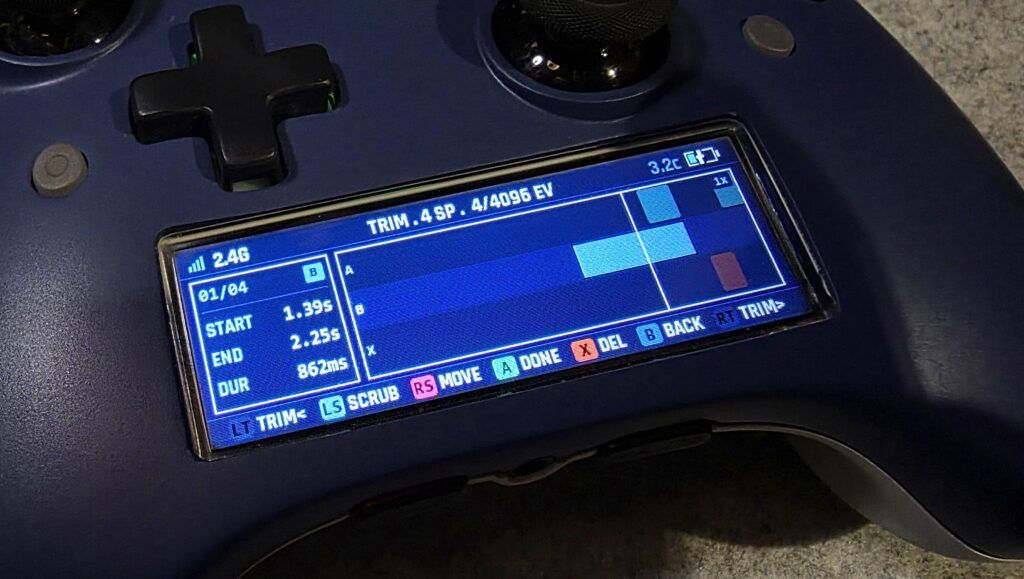
Image: booredatwork.com
Genki Manta’s first hands-on report makes a strong prototype case
The most concrete news around Genki Manta right now is that at least one PAX West 2026 hands-on report came away impressed by the controller’s prototype, especially after initial skepticism about its size and shape. Superjump Magazine’s show-floor writeup describes the Manta as looking, at first glance, like an Xbox-style controller with a small screen where an old chatpad might sit. The same report says those concerns faded once the writer actually held the prototype.
That tension is the story. Genki Manta is being positioned as a premium gaming handheld accessory built around deep customization, extra inputs, and an onboard screen that does far more than show a battery meter. Early hands-on impressions suggest the design may be more comfortable than photos make it appear, but the product buyers will eventually receive is still the key unknown. Superjump explicitly handled a prototype version of what the Manta will become, which makes the praise meaningful but also limited.
For Switch 2 players, that distinction matters. The early impression is not a retail review, and the available source material does not confirm a final price, shipping date, final firmware state, or long-term durability. What it does confirm is that Genki has built a controller concept aimed at people who care about input feel at a granular level. That is exciting territory for platformer players, action fans, and anyone who tweaks a controller until it disappears in the hand. It is also exactly the kind of pitch that needs careful scrutiny before preorders or accessory hype take over.
The prototype’s biggest surprise was comfort, not the screen
The obvious attention-grabber is the rectangular screen in the middle of the controller, but Superjump’s hands-on report starts with something more fundamental: ergonomics. The writer says the Manta “doesn’t photograph particularly well,” then describes the prototype as immediately comfortable, with an Xbox gamepad-style layout, contoured grips, and a dense set of additional controls that did not feel awkward in use.
According to the report, the Genki Manta prototype includes six total triggers, two removable flappy paddles, and two extra back buttons. Superjump says none of those inputs felt out of place or unusable during the hands-on session. That is an important early signal because accessory makers often win attention by adding inputs, then lose players when those inputs are hard to reach, easy to press accidentally, or tiring during longer sessions.
The controller’s build also earned praise in that hands-on. Superjump says the prototype had “very solid build quality” despite not being final hardware, and that it felt capable of surviving intense play sessions. That does not prove retail durability, since prototypes shown at events can differ from mass-produced units, but it does suggest Genki is not presenting the Manta as a flimsy concept shell.
From a platformer perspective, comfort is the feature that determines whether all the clever extras matter. A controller can have profiles, graphs, paddles, and sensitivity curves, but if the grip angle fights your hands during precise jumps or repeated dashes, the rest becomes decoration. The early report’s strongest practical claim is that the Manta felt better than it looked. That is useful, especially because its shape may look bulky in images.
The customization pitch goes deep, maybe deeper than most players need
Superjump’s PAX West 2026 report describes the Manta as a controller built around unusually detailed customization. The article says everything on the controller is customizable, including analogue face buttons and joystick sensitivity. One mechanical detail stands out: the writer says twisting the joystick left or right, with more force than regular play would produce, tightens or loosens the stick’s sensitivity. If that feature carries into the final retail unit as described, it could give players a physical way to tune feel without relying entirely on software menus.
The central screen appears to be the hub for that tuning. Superjump reports that the Genki team repeatedly emphasized “transparency” during the interview, with the screen acting as the main place where customization options flow. The report says the controller supports 12 separate profiles, and that each profile can have its own control setup. It also describes dead-zone tools with a circular graph and an S-curve display that show what a change is doing, rather than hiding it behind a vague slider.
That kind of visualization could be genuinely useful. Dead zones are one of those settings that many players only notice when they are wrong: drift, sluggish aim, missed diagonal movement, or a character that feels slightly delayed. Showing the curve on the controller itself could make the Manta friendlier for players who want precision but do not speak fluent controller-engineering language.
The same report says the hub handles sensitivity for analogue buttons, including button depth and general layout, along with full layout customization across back paddles, extra buttons, and extra triggers. The source text provided cuts off as it begins to mention “rum,” so we should not treat any rumble-related details as confirmed here. The confirmed picture is still ambitious: Genki Manta is being shown as a controller for players who want multiple tuned layouts available without treating a companion app as the only interface.
Genki is building around Switch 2 as an accessory ecosystem, not a single gadget
The Manta hands-on also lands in the middle of a broader Genki push around Switch 2 accessories and handheld gaming setups. Genki’s own product page for Covert Dock 3 lists it as a compact 65W GaN travel dock for Switch 2 and handheld gaming, priced at $69.99 USD and marked “now in stock” on the listing. The same page says the dock can connect to a TV or pair with ShadowCast 3 for play on an iPad or laptop.
That store page reads less like a single dock listing and more like a map of Genki’s accessory ecosystem. It promotes related products including ShadowCast 3 Pro, Moonbase, Energy Pack, Attack Vector, Force Field 2, Aegis Shield, Dual Wield Delta Grips, Pocket Pro, and Saya Carry. Those names matter less than the pattern: Genki is selling the idea that Switch 2 and other handheld gaming hardware can be wrapped in a modular travel setup, from power and docking to grips, capture, controllers, and carrying solutions.
TechRadar’s broader Switch 2 accessory guide frames the category in similar practical terms, saying the best Nintendo Switch 2 accessories range from nice-to-have to “borderline essential,” especially for frequent console users. That is not a Manta-specific endorsement, but it helps explain why a product like this can attract attention. Switch 2 players are already being asked to decide which extras meaningfully improve daily play and which ones mainly feed the upgrade itch.
Manta fits the high-end end of that conversation. A controller with a screen, multiple profiles, six triggers, removable paddles, back buttons, analogue button tuning, and stick sensitivity adjustment is not competing with a simple spare pad. It is chasing players who want a portable-console controller that behaves more like a configurable performance tool. The question is whether enough Switch 2 players need that level of control, and whether Genki can make the final version simple enough that its complexity becomes an asset rather than homework.
The unanswered buying questions are practical, not cynical
The early Genki Manta PAX West 2026 impression gives players reasons to pay attention, but the source material also leaves several buyer-critical details unresolved. The provided hands-on does not confirm final retail price, final release timing, exact battery life, latency figures, platform compatibility beyond the Switch 2-oriented accessory context, warranty terms, or how the customization screen will behave after months of firmware updates. Those are not small omissions when the pitch depends on precision.
Prototype praise should be treated as an early signal, not a purchase verdict. Event hardware can be carefully maintained, supervised by engineers, and shown under conditions that do not reveal edge cases. A controller like Manta needs to prove that its paddles remain secure, its screen stays readable, its profiles save reliably, its sticks resist drift, and its extra inputs do not create accidental presses during tense play. None of that is disproven by a strong hands-on, but none of it is settled by one either.
There is also a software-support question. A controller centered on profiles and deep tuning depends on interface clarity and long-term updates. Superjump’s report says the screen is designed to make customization transparent, with visual dead-zone tools that helped the writer understand adjustments. That is a promising sign. Still, buyers should wait to see how final firmware handles profile switching, calibration, resets, and any companion setup process, if one exists. The best version of Manta would let players tune quickly, then forget the machinery during play.
Latency is another area to watch, especially for the audience most likely to care about a controller this detailed. Platformers, fighters, rhythm games, and precision action titles expose even tiny control problems. The source material provided does not include latency testing, wireless performance details, or side-by-side comparisons with Nintendo’s own controller options. Until those appear from retail units, performance-sensitive players should keep the Manta in the “promising” column rather than the “proven” one.
Who should watch Manta closely, and who should wait
Based on the available reporting, Genki Manta looks most interesting for players who already know what they dislike about standard controllers. If you routinely adjust dead zones, remap shoulder inputs, prefer back buttons for jump or dodge actions, or want separate control profiles for different genres, the Manta’s feature set is speaking your language. Superjump’s hands-on suggests the prototype is comfortable despite its busy design, and the described screen-based customization could make advanced settings easier to understand.
For many Switch 2 players, though, the smarter move is patience. If you mostly play relaxed adventures, turn-based RPGs, party games, cozy games, or platformers where the standard controller already feels natural, Manta’s extra hardware may be impressive without being necessary. A premium gaming handheld accessory earns its place when it solves a real friction point. Extra profiles and six triggers sound great, but only if they improve the games you actually play.
The clearest advice is to wait for final-unit coverage before buying into the accessory rush. Look for reviews that test retail hardware over multiple sessions, check build quality after repeated paddle removal, compare stick behavior before and after sensitivity tweaks, and report how easy it is to manage the 12 profiles during normal play. If reviewers can show that the screen makes tuning faster rather than fussier, Manta’s case gets much stronger.
Right now, the Genki Manta has done the hard first part: it has turned an awkward-looking concept into a hands-on prototype that at least one outlet found surprisingly comfortable and technically sophisticated. The next step is less glamorous and much more important. Genki has to prove that the final controller is reliable, fairly priced, well-supported, and genuinely useful for Switch 2 players outside the excitement of a PAX West show floor.