
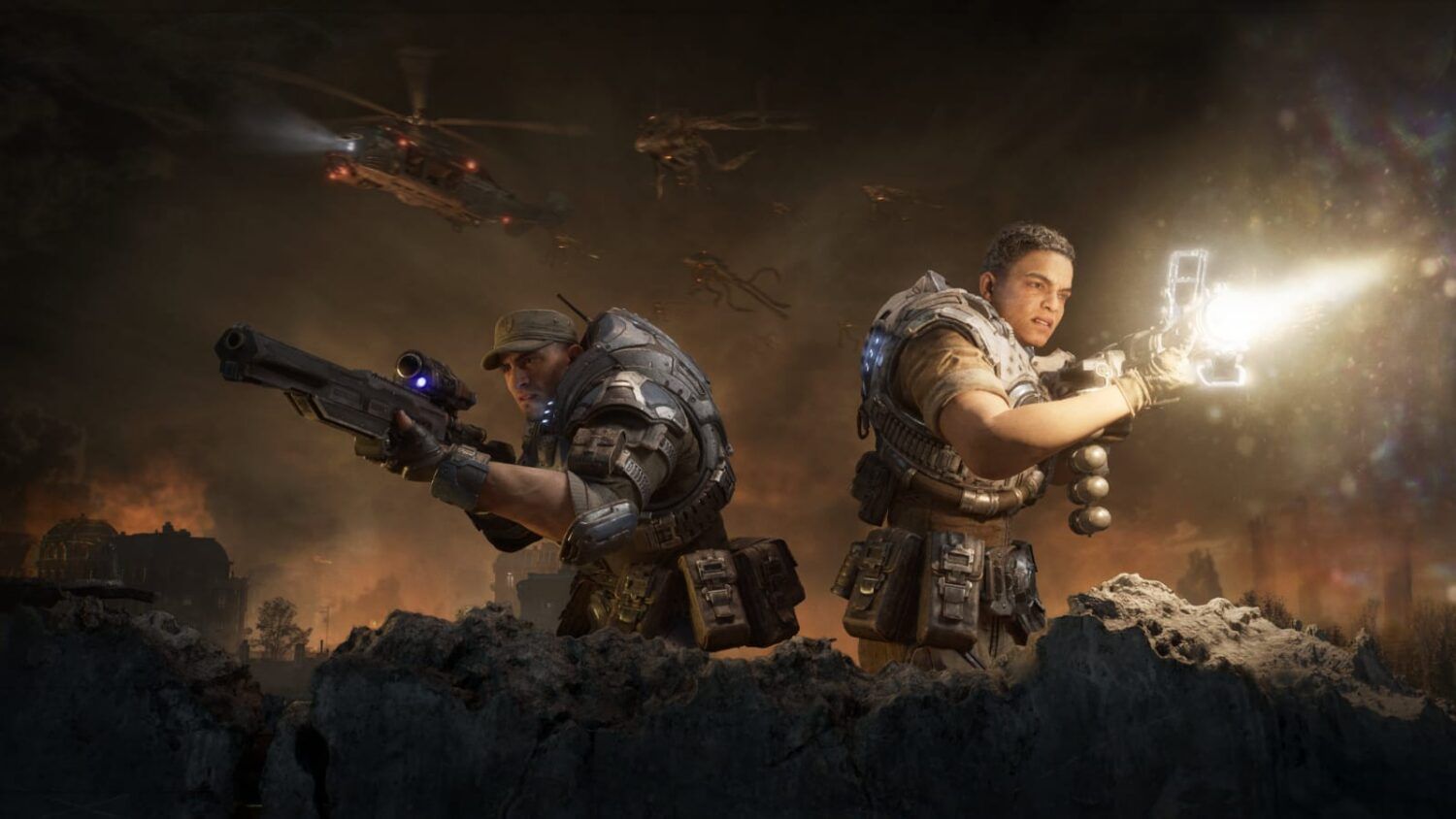

The Coalition used the Xbox Series S SSD as a temporary memory tier for Gears of War: E-Day. Here is what is confirmed, what was cut, and what Series S players should expect.
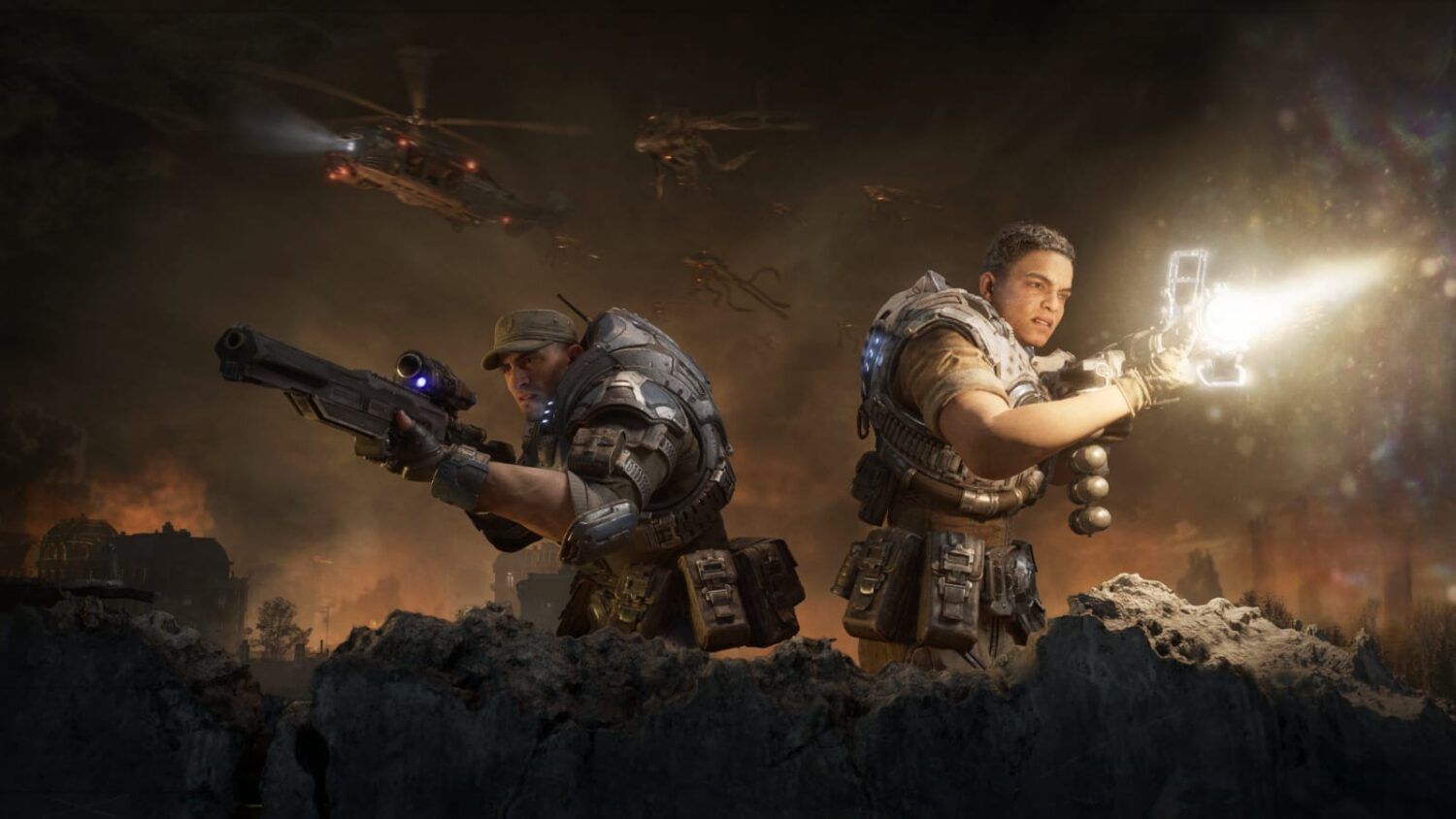
Image: centralxbox.com.br
The Coalition turned the Series S SSD into a memory safety valve
The strongest confirmed detail around Gears of War: E-Day performance on Xbox Series S is also the most revealing: The Coalition used the console’s internal NVMe SSD as a temporary memory tier to help the game fit on Microsoft’s lower-spec current-gen Xbox.
Studio technical director Kate Rayner explained the system in an interview with Digital Foundry, which reported that Gears of War: E-Day uses the SSD to supplement the Series S console’s 10GB of shared GDDR6 memory. Video Games Chronicle, IGN, VGChartz, and other outlets picked up the same Digital Foundry reporting, framing it as an SSD-as-RAM workaround for the memory-limited machine.
That wording needs a little cleanup. The SSD is not suddenly as fast as RAM, and The Coalition is not claiming it erased the hardware gap between Xbox Series S and Xbox Series X. The confirmed point is narrower and more interesting: the studio built a bespoke paging system, developed with Xbox’s platform team and Advanced Technology Group according to Digital Foundry, that moves carefully chosen data out of system memory and onto the SSD until it is needed again.
For a shooter, that distinction matters. Gears lives or dies on immediate input response, cover timing, animation reads, and keeping the screen stable when the fight gets ugly. If this system caused obvious hitching every time the game needed city data, the workaround would lose the match. The Coalition’s job was to find memory that could be moved without blowing the frame budget.
Why Gears of War: E-Day hit the Series S memory wall
The hardware split is the core tension. Xbox Series S has 10GB of RAM, while Xbox Series X and PlayStation 5 have 16GB, as reported by VGC and IGN. Microsoft’s console strategy also requires Xbox Series X games to run on Xbox Series S, a policy VGC notes has forced developers to account for the cheaper console even when building demanding current-gen projects.
Digital Foundry’s reporting adds the scale of the problem: Gears of War: E-Day presents a dense city with around 1.6 million actors. That does not mean 1.6 million enemies on screen. In engine terms, actors can cover many world objects and interactive pieces. The point is that the city is heavy, and The Coalition said fitting that density into Series S memory became the baseline challenge for scaling the game.
The Series S is not described by Digital Foundry as a slow console across the board. Its CPU is identified as far stronger than last-gen machines like Xbox One X and PS4 Pro. The bottleneck here is memory capacity. A cover shooter can reduce resolution, texture quality, shadow settings, reflections, object density, or draw distance, but each cut changes how the world reads in motion. In Gears, where lanes, silhouettes, destructible clutter, and visual clarity affect combat rhythm, those cuts can pile up quickly.
That is why the Gears E-Day SSD RAM story is bigger than a clever tech footnote. The Coalition was trying to protect the shape of the game on Series S without simply gutting the city to make it fit.
How the SSD paging system actually works
Digital Foundry describes the approach as a new tier in the usual memory hierarchy. CPU cache is extremely fast but tiny. RAM is larger and still fast. SSD storage is much larger but far slower to access. Normally, if a game cannot keep data in RAM and has to pull from storage at the wrong moment, the player risks seeing stalls, hitches, or delayed streaming.
The Coalition’s system uses the Xbox Series S SSD as a controlled overflow zone. Memory that is not being actively accessed can be stored on disk, while data needed in the current moment is moved back into system RAM. Digital Foundry compares it to paged virtual memory, but with an important restriction: it is applied only to specific subsets of memory the team judged safe to page out.
The studio’s heuristics are the key piece. According to Digital Foundry, the system tracks access patterns and looks at which data has been used recently. Memory that has not been used in a frame, or across a run of frames, becomes a candidate to move to the SSD. Data that is hit constantly stays in RAM. IGN summarized the same idea as The Coalition strategically deciding what can be offloaded and what has to remain in faster system memory.
The reported gain is concrete. Digital Foundry says a couple of gigabytes of SSD space can yield roughly 1GB of usable system memory. VGC reported the same figure and said this helped The Coalition avoid heavily lowering the game’s quality on Series S.
That extra gigabyte is not magic, but on a fixed-memory console it is meaningful. It can be the difference between keeping a dense environment resident and cutting visible scene complexity. It also shows how tight the margins are on Xbox Series S Gears of War: E-Day. The workaround exists because normal scaling was not enough.
The tradeoff: 60fps with Lumen reflections removed
The confirmed visual compromise is specific. Digital Foundry reported that, with this memory system in place, only one major feature had to be removed on Xbox Series S: Lumen reflections. VGC also reported that Lumen-based reflections were removed to maintain 60 frames per second.
That is the practical Gears of War E-Day performance signal Series S owners should pay attention to. The target discussed in the reporting is 60fps, and the cut named in the available source material is reflections, not the campaign, multiplayer, Horde Siege, or a missing mode. The Coalition’s technique is meant to preserve the broader density and presentation rather than force a larger downgrade.
Still, this is not a free upgrade to Series X territory. Digital Foundry explicitly notes limits. Rayner said overusing the system eventually hurts performance because swapping data has a cost, and frames still need to be produced on budget. Digital Foundry also reported that the operating system takes time to reclaim freed memory, which can leave a game technically out of memory while it waits.
That is the risk every shooter player should understand. A beautiful frame matters less if the game drops inputs or hitches during a push. The Coalition says the system was tuned so it should have no visible performance penalty, according to Digital Foundry, but Digital Foundry also said it would need full review coverage to confirm how invisible that cost is in practice.
So the safe read is this: Series S is targeting the right competitive-feeling number, 60fps, but players should expect a version with at least one confirmed visual feature removed and should watch independent performance testing for frame pacing, streaming hitches, and split-screen behavior.
The launch patch shows the other side of performance work
The SSD memory workaround is the headline tech story, but Gears of War: E-Day also arrived with a stability patch aimed at broader launch problems. GameSpot reported that the October 5 update focused on stability and performance across campaign, multiplayer, and Horde Siege ahead of the worldwide rollout on October 6 for PC and Xbox Series X|S.
According to GameSpot’s patch note summary, The Coalition addressed a split-screen issue tied to a “Bilefrog-Kalona” error, where a split-screen player could be signed out after suspending and resuming the game and then using Quick Resume. GameSpot also reported fixes for Versus Social matches getting stuck on a “Waiting for players” screen, online-session stability, Xbox authentication handling when the system clock is far off, campaign join-in-progress reward issues, players sticking to turrets, and several Act 2 campaign problems.
Those fixes are separate from the SSD memory system, but they matter for judging the full Series S experience. A shooter can hit its target frame rate in a controlled test and still feel messy if Quick Resume, split-screen, online sessions, or objective scripting misfire. Gears has always asked players to snap between cover, active reloads, close-range shotgun decisions, and co-op coordination. Stability problems cut directly into that pacing.
The launch timing also sets expectations. GameSpot reported worldwide rollout beginning October 6, with early access players already surfacing issues The Coalition moved to patch. The source material supports saying The Coalition was actively fixing stability and online problems at launch. It does not support declaring the Series S version fully solved across every mode and scenario.
What Series S players should realistically expect
For Xbox Series S owners, the practical takeaway is encouraging but conditional. The Coalition has publicly explained a targeted Series S optimization path for Gears of War: E-Day, and the reported result is a 60fps-focused version that uses the SSD as a controlled memory overflow while cutting Lumen reflections.
That makes Gears of War E-Day Series S one of the clearest examples yet of a first-party Xbox studio building around the console’s 10GB memory limit instead of treating it as an afterthought. Digital Foundry also reported that other game teams are interested in learning how to replicate the approach, according to Rayner, which suggests Microsoft may see value in turning this into a broader playbook for memory-constrained platforms.
But players should not read “SSD as RAM” as a universal cure for the Series S debate. SSD access remains slower than RAM. The Coalition had to decide exactly which data could be paged safely. The technique has limits when overused. It also required bespoke engineering and collaboration with Xbox teams, which may not be practical for every studio or every engine workload.
If you are playing on Series S, the watchpoints are simple: look for frame pacing consistency, visible asset pop-in, hitching when moving into dense spaces, and behavior after suspend and resume. If you care most about reflections and the cleanest image, Series X or PC will remain the safer bet based on the reported feature cut. If you care most about getting a 60fps Gears campaign, multiplayer, and Horde Siege experience on the cheaper Xbox, the confirmed technical work points in the right direction.
The bigger read is that The Coalition did not pretend the Series S memory gap was irrelevant. It built around it. For a series where every missed frame can make a shotgun duel feel wrong, that is exactly where the engineering fight had to happen.