
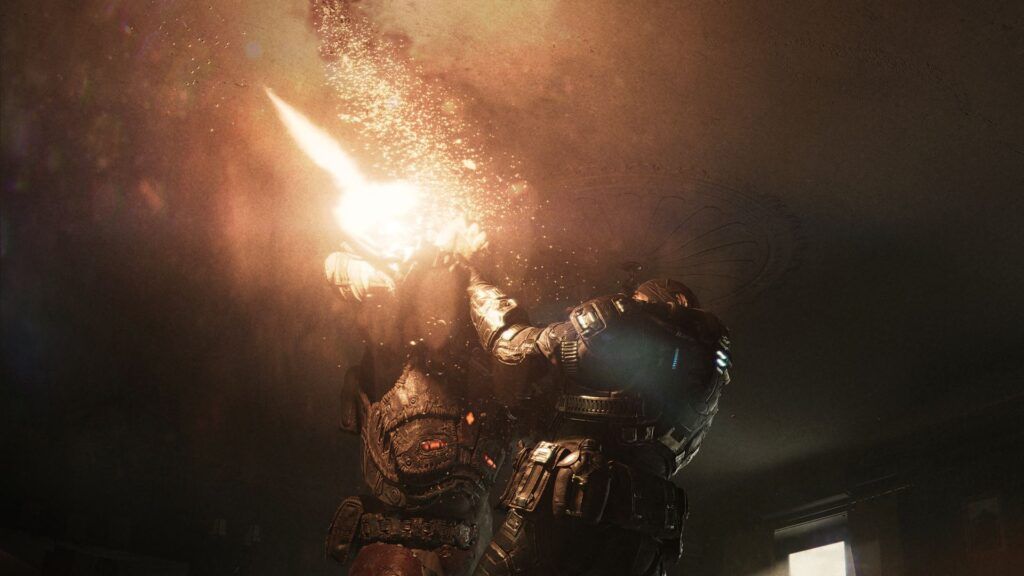

Reported Gears of War: E-Day sales have passed 400,000 across Xbox and Steam, but an unconfirmed $500 million development budget claim raises tougher questions for Xbox exclusivity.
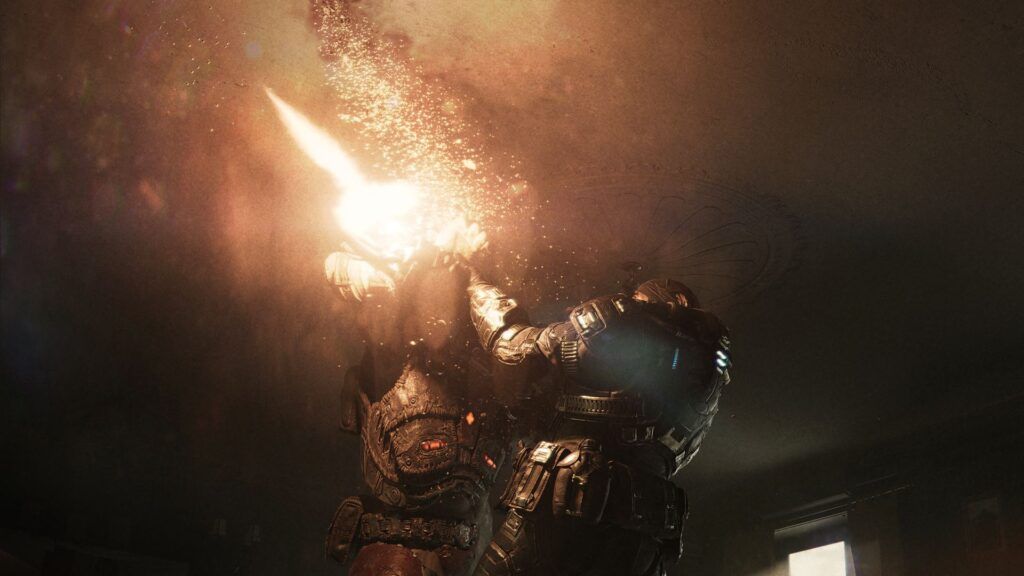
Image: wolfsgamingblog.com
A bigger sales number still leaves Xbox with a hard math problem
Gears of War: E-Day has reportedly sold more than 400,000 copies across Xbox and Steam, according to a source cited by The Verge’s Tom Warren and relayed by GamingBolt and Wolf’s Gaming Blog. That is an improvement over the earlier first-week estimate of 230,000 copies from Alinea Analytics, but it lands against a much larger and still-unconfirmed claim: Kotaku reported that one source familiar with Xbox’s business said E-Day cost over $500 million to develop before marketing.
That pairing is the story. The reported Gears of War E-Day sales figure is not a disaster in normal premium game terms. For many shooters, 400,000 early paid units across console and PC would be a meaningful start, especially with Game Pass muddying the revenue read. But if the Gears of War E-Day budget really did clear half a billion dollars before marketing, then the launch window sales conversation changes from “solid start” to “how is Xbox measuring success?”
Microsoft has not announced official sales, revenue, player count, or Game Pass engagement figures for E-Day in the source material provided. Kotaku said Microsoft did not respond to its request for comment on the budget report. That means the cleanest read is also the cautious one: the 400,000 number is a reported sales claim, the $500 million figure is a single-source budget report, and the platform strategy debate around Gears of War E-Day Xbox exclusivity is still being argued without Microsoft’s full scoreboard.
The confirmed picture is narrower than the debate around it
The public picture around E-Day has several layers, and they should not be treated as equal. Confirmed through store and publisher-facing context in the provided reports, Gears of War: E-Day launched on October 6, 2026, after early access began on October 1. Exputer describes it as an Xbox console exclusive on Xbox Series X|S and PC, with a day-one Game Pass release. HappyGamer notes the Steam listing at $69.99, with The Coalition as developer and Xbox Game Studios as publisher.
The major business figures are not official. Alinea Analytics estimated 230,000 first-week sales and around $37 million in revenue, according to Kotaku and Exputer. Kotaku said a large chunk of that revenue came from Game Pass subscribers paying $30 for the Premium Edition Upgrade to access the game early. Later, GamingBolt reported that a source speaking to Warren claimed the game had passed 400,000 copies sold across Xbox and Steam.
Those figures are useful, but they do not equal Microsoft’s internal view. Game Pass complicates every launch like this because sales units, upgrade revenue, subscription retention, new subscriptions, playtime, and multiplayer activity all sit in different columns. A shooter lives and dies by population health as much as box sales. If E-Day is keeping players in ranked, co-op, and campaign sessions, Xbox may value some of that engagement even if premium sales look light beside the rumored spend. The problem is that none of those engagement metrics have been disclosed here.
The $500 million budget claim is the sharpest number and the least settled
Kotaku’s report is the source of the current $500 million-plus claim. Ethan Gach wrote that one source familiar with Xbox’s business said Gears of War: E-Day cost over $500 million to make, before marketing. Kotaku also said Microsoft did not respond to a request for comment. No cost breakdown was provided in the quoted source material, so there is no public split between staffing, outsourcing, technology, engine work, support studio costs, cinematics, QA, platform work, or other overhead.
That matters because the Gears E-Day rumor did not begin at $500 million. Wolf’s Gaming Blog and Kotaku both point back to Insider Gaming’s Tom Henderson, who said in June that he had heard E-Day’s budget was upwards of $400 million and described the figure as “insane.” Windows Central’s Jez Corden disputed that framing on the Xbox Two podcast, saying E-Day “didn’t cost $400 million” and arguing that The Coalition’s broader work across Xbox complicates any attempt to assign all studio expenditure to one game.
Corden’s point is relevant, but it does not make the bigger number impossible. A studio that supports Unreal Engine work, internal tools, and other Xbox projects can create accounting gray areas. Some technology work may benefit E-Day directly while also helping future projects. Some overhead may be tied to the studio rather than a single SKU. Without Microsoft’s own accounting, readers should treat the Gears of War E-Day budget figure as an unresolved report, not a confirmed price tag stamped on the box.
The marketing exclusion also changes the stakes. If Kotaku’s source is accurate, the reported $500 million-plus number is before the spending required to sell the game through showcases, trailers, ads, platform placement, and launch promotion. For a flagship shooter, marketing is not a rounding error. That makes the break-even question even harder, though no source material provides an official total marketing spend.
400,000 early units is better than 230,000, but it still needs context
The jump from Alinea’s first-week estimate of 230,000 copies to a reported total above 400,000 across Xbox and Steam suggests E-Day did keep selling after launch week. For a premium shooter with Game Pass availability, that is worth noting. Players who already have a subscription can play without buying the $69.99 Steam or Xbox version, and some of the launch revenue appears to have come from the $30 Premium Edition Upgrade rather than full-game purchases, according to Kotaku and Exputer.
That makes direct sales math messy. Multiplying 400,000 by list price would be too crude because platform fees, regional pricing, discounts, upgrades, refunds, and Game Pass behavior all affect actual revenue. Alinea’s earlier estimate, cited by Kotaku and Exputer, put first-week revenue at $37 million despite the 230,000 unit estimate, partly because of Premium Edition Upgrade spending. That helps explain why the sales count alone cannot settle the debate.
Still, the broad comparison is unavoidable. If a game costs over $500 million before marketing, it needs extraordinary revenue or a strategic goal beyond direct recoupment. Kotaku’s source reportedly said E-Day was unlikely to recoup its costs no matter which platforms it came to, while also suggesting exclusivity could help rebuild user activity on Xbox in key areas. That is the strongest case for Xbox keeping it close: the game may be treated as a platform weapon, not only as a boxed-product profit center.
From a shooter perspective, that platform-weapon argument depends on staying power. A Gears launch can spike on campaign nostalgia, but Xbox needs retention if it is using E-Day to strengthen the console ecosystem. Strong reviews can get players in the door. Net population, content cadence, matchmaking quality, and the health of competitive modes decide whether they keep loading in. The provided source material does not include those post-launch metrics, so any confident claim about multiplayer longevity would be premature.
The PlayStation question is messy because even the comparison numbers conflict
The biggest strategic argument around E-Day is whether Xbox cost itself sales by keeping the game off PS5. GamingBolt frames E-Day as part of Xbox’s return to console exclusives on a case-by-case basis and notes reports that a PS5 version was shelved shortly before the June showcase. Wolf’s Gaming Blog similarly says multiple reports indicated a PS5 edition had been planned before Xbox changed course. The provided material does not include a Microsoft confirmation of a canceled PS5 version.
The comparison point is Gears of War: Reloaded, and this is where the source record gets messy. Wolf’s Gaming Blog says Reloaded sold 365,000 copies on PlayStation alone. Exputer, citing Alinea and Kotaku’s math, says Reloaded sold 684,000 copies on PS5 and that a similar showing for E-Day would have added roughly $33 million in revenue after Sony’s platform fees. Those two sales figures do not match, and the source material does not resolve the discrepancy.
Even using the higher comparison, the strategic conclusion is not simple. An extra tens of millions in net revenue would help, but it would not come close to covering a claimed $500 million-plus development bill by itself. The stronger pro-PlayStation argument is less about fully closing the budget gap and more about reducing the loss, growing the audience, and giving the multiplayer pool more oxygen. The stronger pro-exclusive argument is that Xbox may value platform activity, subscription stickiness, and console identity enough to leave some software revenue off the table.
That is a real tension for Xbox. GamingBolt points to Forza Horizon 5 performing well on PlayStation and mentions upcoming multiplatform Xbox releases such as Forza Horizon 6 and Fable. If E-Day’s reported numbers are close to reality, Xbox has to decide whether Gears is an exception built to reinforce Xbox hardware and Game Pass, or evidence that even beloved shooters need the widest possible addressable audience at modern budgets.
Good reviews do not automatically solve a blockbuster budget
The awkward part for Xbox is that the conversation is not centered on E-Day being poorly received. GamingBolt says the game has an 87 Metascore on Metacritic based on 70 reviews, and Kotaku describes it as the highest-scoring Gears entry since the original Xbox 360 trilogy. GamingBolt also points readers to its positive campaign review and multiplayer impressions. In other words, the reported sales debate is happening around a well-reviewed shooter, not a critical miss.
That distinction matters for players. If you are choosing whether to play, the business rumor should not be treated as a quality warning. The available source material points to a strong critical reception, a standard $69.99 Steam listing, Xbox Series X|S and PC availability, and Game Pass access. If you already subscribe to Game Pass, the practical path is obvious: try it there before buying. If you prefer ownership on Steam or Xbox, the question is whether a full-price campaign and multiplayer package is worth buying now versus waiting for discounts or more post-launch content.
The Premium Edition Upgrade is a different case now that early access has already begun and the full launch date has passed in the provided timeline. Since Kotaku and Exputer say a significant chunk of early revenue came from Game Pass subscribers buying the $30 upgrade for early access, that tells us the upgrade mattered commercially at launch. It does not, by itself, prove long-term demand.
For Gears fans, the cleaner takeaway is that E-Day appears to have landed critically while raising uncomfortable questions commercially. That is not rare in the current shooter market. Production values, high-end animation, cinematic campaigns, co-op, multiplayer infrastructure, and ongoing support all push costs up. A good lancer, strong cover rhythm, and polished maps can win players, but they do not automatically make half-billion-dollar accounting look safe.
The next signal has to come from Microsoft, not estimates
Right now, the Gears of War E-Day 400000 units figure is a reported checkpoint, not an official milestone. The $500 million budget claim is even more sensitive because it comes from one unnamed source cited by Kotaku and lacks a public breakdown. The earlier $400 million claim from Henderson and the pushback from Corden show that even well-connected reporters are circling different interpretations of what counts as E-Day spending.
The next meaningful update would be Microsoft releasing its own numbers. Sales would help, but player count, Game Pass engagement, Premium Upgrade conversion, multiplayer retention, and regional performance would tell a fuller story. Kotaku contrasts the silence around E-Day with Microsoft’s 2019 disclosure that Gears 5 reached over 3 million players at launch. Without a comparable E-Day announcement, outside estimates are filling the gap.
Until then, the safest read is that Xbox’s biggest shooter bet is under a microscope because its reported commercial start and rumored cost do not line up cleanly. If the budget report is overstated or includes broader studio technology work, the panic softens. If the $500 million-plus figure is close to the internal reality, then 400,000 reported early sales across Xbox and Steam would put enormous pressure on Game Pass value, player retention, and Xbox’s exclusivity strategy to justify the investment.
For readers tracking the Gears E-Day rumor, the key is to keep the categories separate. The game’s release platforms, Steam price, Game Pass availability, and critical reception are grounded in public listings and reported review aggregation. The sales and budget numbers remain unofficial. They are credible enough to discuss because multiple outlets are now reporting around them, but not settled enough to treat as Microsoft’s final accounting.